

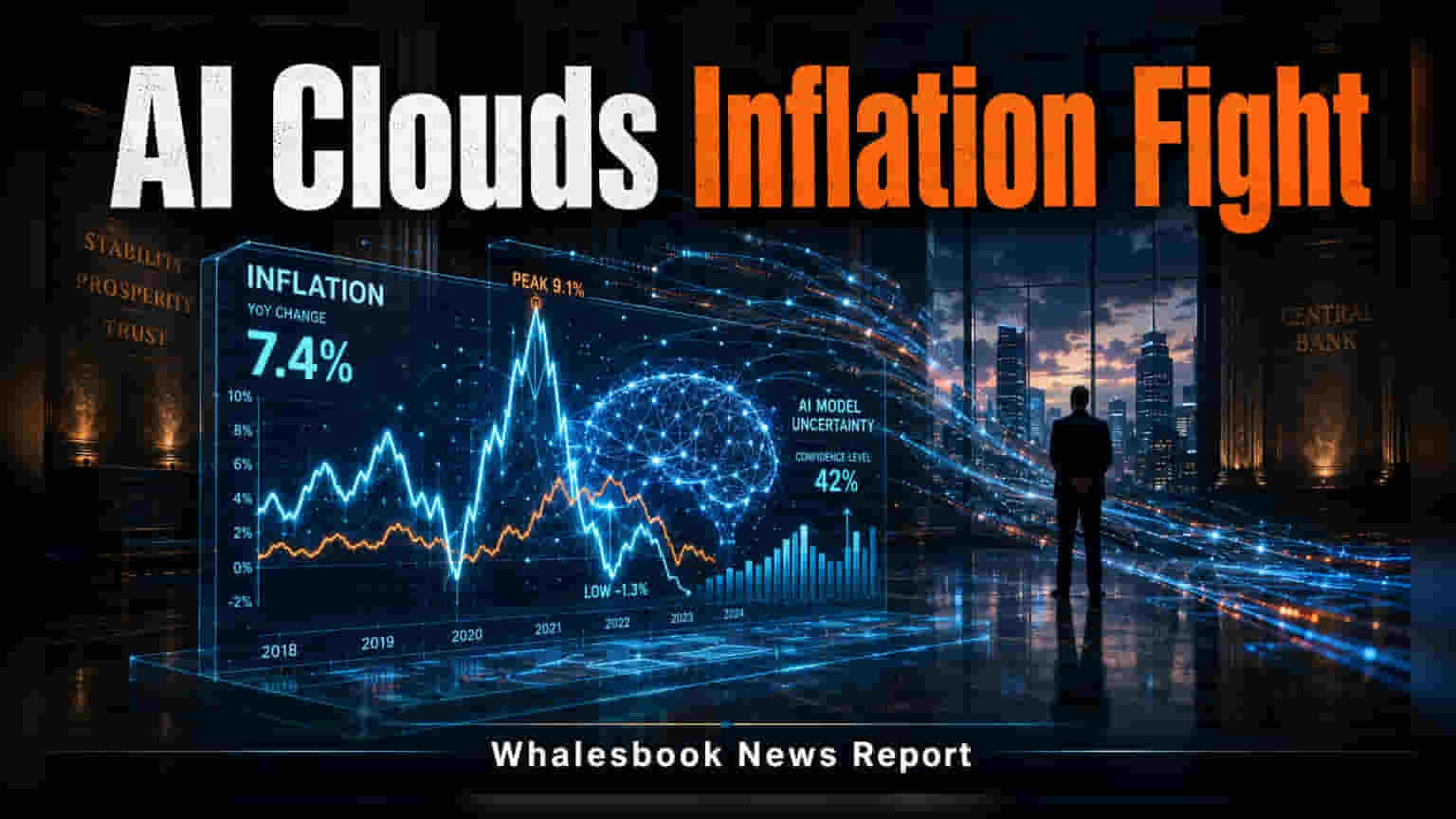
The Bank for International Settlements (BIS) cautions that the rapid AI boom is creating a dual impact on global demand and supply. This creates uncertainty for central banks, making it harder to distinguish between temporary investment-led growth and lasting productivity gains, which could influence future interest rate policies.
Detailed Coverage
The rapid and widespread adoption of artificial intelligence is creating a complex economic environment, according to the Bank for International Settlements (BIS). The global financial body, often referred to as the central bank for central banks, warned on Tuesday that the simultaneous impact of AI on both economic demand and supply is making it significantly more difficult for policymakers to read economic signals accurately.
AI Investment and Inflation Challenges
Central banks rely on clear economic data to determine whether to raise, lower, or hold interest rates. The BIS noted that massive spending on AI-related infrastructure, such as data centers and high-end semiconductors, is currently boosting trade volumes and corporate investment. While this spending drives economic activity, it is often financed through debt, which can add near-term upward pressure on inflation. However, if these investments eventually lead to sustained productivity growth, they could help lower prices in the long term. The core problem for policymakers is that the timing and scale of these future productivity improvements remain highly uncertain.
Risks of Miscalculating Monetary Policy
The BIS identified a significant risk of misinterpreting current economic data. If central banks view the current surge in AI-driven investment purely as a sign of an overheating economy, they might keep interest rates higher for longer than necessary. Conversely, if they ignore the inflationary demand caused by this investment in hopes of future productivity gains, they could accidentally allow inflation to remain above target levels. This creates an environment where central banks may find it difficult to calibrate monetary policy, potentially leading to errors in interest rate settings that could affect global growth.
Global Economic Divergence
The impact of this technological shift is not expected to be uniform across the globe. Nations that are primary manufacturers and suppliers of AI infrastructure, such as those leading in chip design and hardware, may see stronger growth and different inflation trajectories compared to economies that are primarily users of the technology. This divergence adds a layer of complexity for global investors, as monetary policy decisions across different jurisdictions may start to move in different directions depending on how each country is positioned in the AI value chain.
Asset Markets and Future Monitoring
Beyond inflation, the BIS highlighted concerns regarding financial markets. The optimism surrounding AI has contributed to rapid gains in equity markets, particularly in the technology sector. The watchdog warned that these gains could lead to the formation of asset bubbles if investors overprice the speed at which AI will translate into corporate profits. For investors, the key monitorable will be how central banks reconcile these signals. Future updates from major central banks, including the Federal Reserve and the Reserve Bank of India, regarding their outlook on investment-led growth versus productivity-led inflation will be essential to track.