

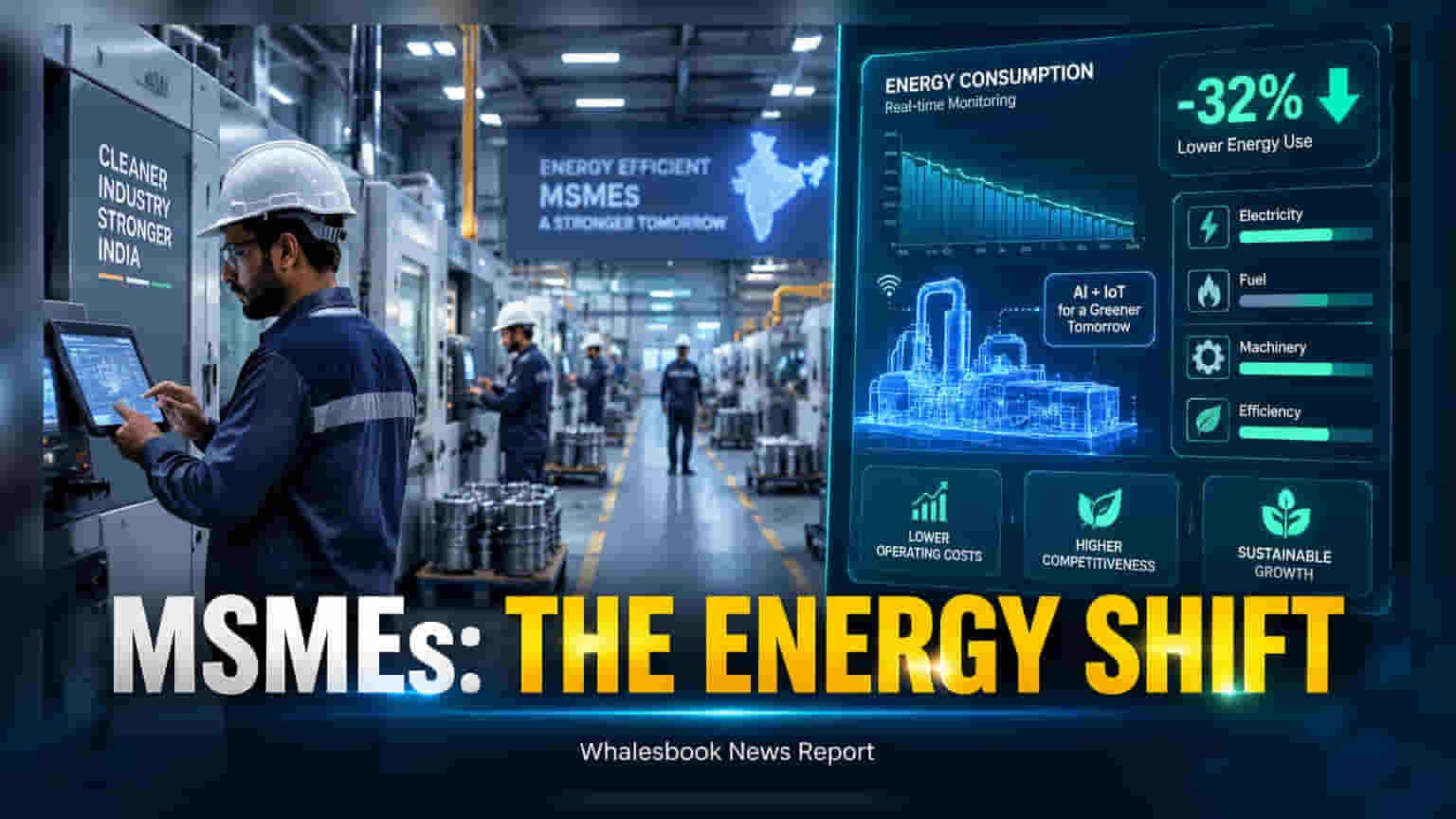
The Bureau of Energy Efficiency is pushing small businesses to adopt new technologies to reduce high operating expenses. Data from the recent CII summit shows that 720 companies invested ₹5,700 crore in efficiency measures, resulting in over ₹7,100 crore in savings. This underscores how energy management can directly protect and improve profit margins for industrial firms.
The Bureau of Energy Efficiency (BEE) has called on Micro, Small, and Medium Enterprises (MSMEs) to prioritize energy-efficient technologies to stay competitive. In a recent industry summit, BEE Director General Krushna Chandra Panigrahy emphasized that adopting energy-saving measures is a strategic necessity for operational survival rather than just a regulatory compliance task.
For industrial firms, power and fuel often represent a major portion of operating expenses. When prices of electricity or industrial fuel rise, businesses that lack energy-efficient infrastructure are often the first to face significant profit margin pressure. The data shared at the summit provides a strong financial case for investment: 720 participating companies invested approximately ₹5,700 crore over three years in various efficiency projects. These investments resulted in savings exceeding ₹7,100 crore, demonstrating a clear and measurable return on capital invested in energy-saving assets.
Beyond physical machinery upgrades, the focus is shifting toward digital tools to manage consumption. Platforms utilizing Artificial Intelligence and Internet of Things sensors are being promoted to help firms with limited engineering resources monitor energy usage in real-time. By identifying waste or inefficiencies in machinery, companies can reduce operational costs without requiring large, specialized technical teams. This is particularly important for MSMEs that often struggle with high manpower costs and lack the scale to absorb inefficiencies.
Despite the clear benefits, financial and technical hurdles remain significant. Many smaller firms find it challenging to access affordable capital for capital-intensive upgrades such as waste-heat recovery systems or advanced heat pumps. The borrowing costs often associated with MSME lending can extend the payback period of these investments, making them difficult for smaller companies to execute.
Investors and stakeholders tracking this space may want to monitor whether companies can successfully integrate these technologies, as those that do are likely to show better resilience in their operating margins compared to peers. The launch of the India Heat Pump Atlas, a new national dashboard designed to track installations and provide data-driven insights, will be a key monitorable to see how effectively the industrial sector adopts these energy-saving solutions in the coming quarters.