 Whalesbook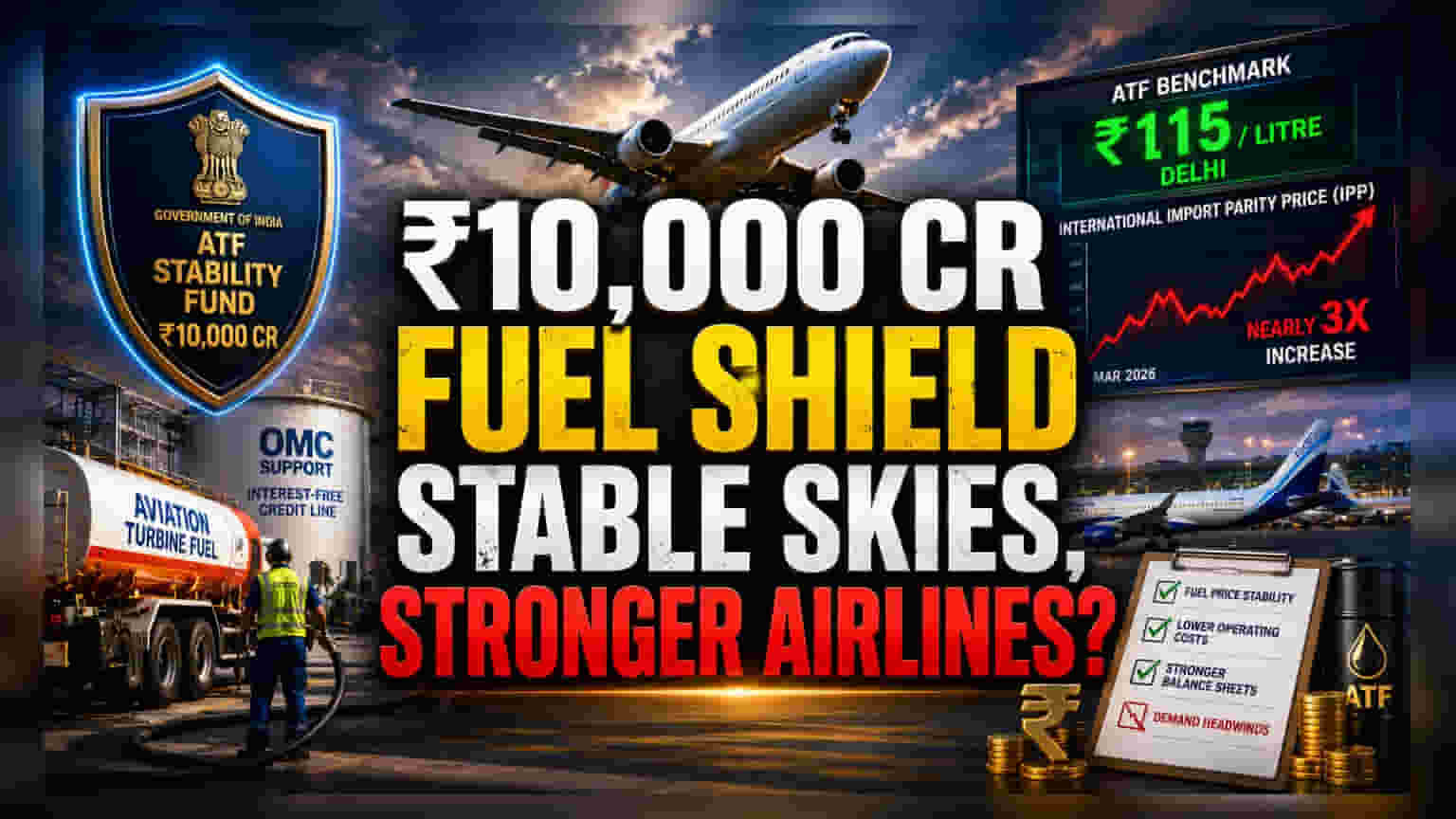


The Mechanism of Stability
The Indian government has introduced a strategic intervention in the aviation sector, establishing a dedicated fund to shield carriers from the violent price swings of Aviation Turbine Fuel (ATF). Under the new framework, the Ministry of Civil Aviation and the Ministry of Petroleum and Natural Gas have authorized a ₹10,000-crore pool to support oil marketing companies (OMCs). This fund acts as an interest-free credit line, allowing OMCs to absorb the delta when international import parity prices (IPP) exceed the newly set benchmark of ₹115 per litre in Delhi. This approach explicitly moves away from previous, less effective cap-and-tax adjustments that struggled to contain price spikes which, by May 2026, had nearly tripled since March levels.
Sectoral Impact and Valuation Pressures
For major players like InterGlobe Aviation, this support package arrives as a necessary offset to significant structural headwinds. With the industry grappling with the dual pressures of currency depreciation—which inflates dollar-denominated lease and maintenance costs—and dampened international travel demand due to the West Asia conflict, airline margins have faced intense scrutiny. While the domestic aviation market remains characterized by aggressive capacity deployment, fuel volatility has historically been the primary determinant of financial health, frequently obscuring operational efficiencies. By fixing the benchmark, the government is essentially capping the downside risk for airline operating expenditure, which had swelled to account for up to 60% of total costs during recent periods of extreme volatility.
The Forensic Bear Case
Despite the immediate relief, the sustainability of this intervention remains under fire from a risk-averse perspective. This mechanism is a temporary, non-permanent stabilization tool rather than a long-term subsidy. The 'true-up' mandate requires that when global energy prices moderate, OMCs must recover these advances to reimburse the Consolidated Fund of India. This implies that if global tensions persist for years, the fiscal burden could escalate, or airlines may eventually face a retrospective price adjustment. Furthermore, smaller, debt-laden carriers like SpiceJet face continued existential threats; while fuel costs are now predictable, the underlying issues of negative book value and constrained cash flow remain unaddressed. Investors should note that market sentiment toward the sector is currently pricing in a high-risk environment, where even with stable fuel costs, persistent passenger traffic declines—down 39% in international segments as of April 2026—suggest that demand, not just supply-side costs, is the critical variable for future recovery.
The Future Outlook
The long-term efficacy of this fund depends on the duration of the geopolitical crisis and the sector's ability to maintain load factors. Analyst consensus remains cautious, emphasizing that while the move provides a 'breathing room' to rebuild balance sheets, structural reform in fuel taxation continues to be the only path toward permanent industry health.