

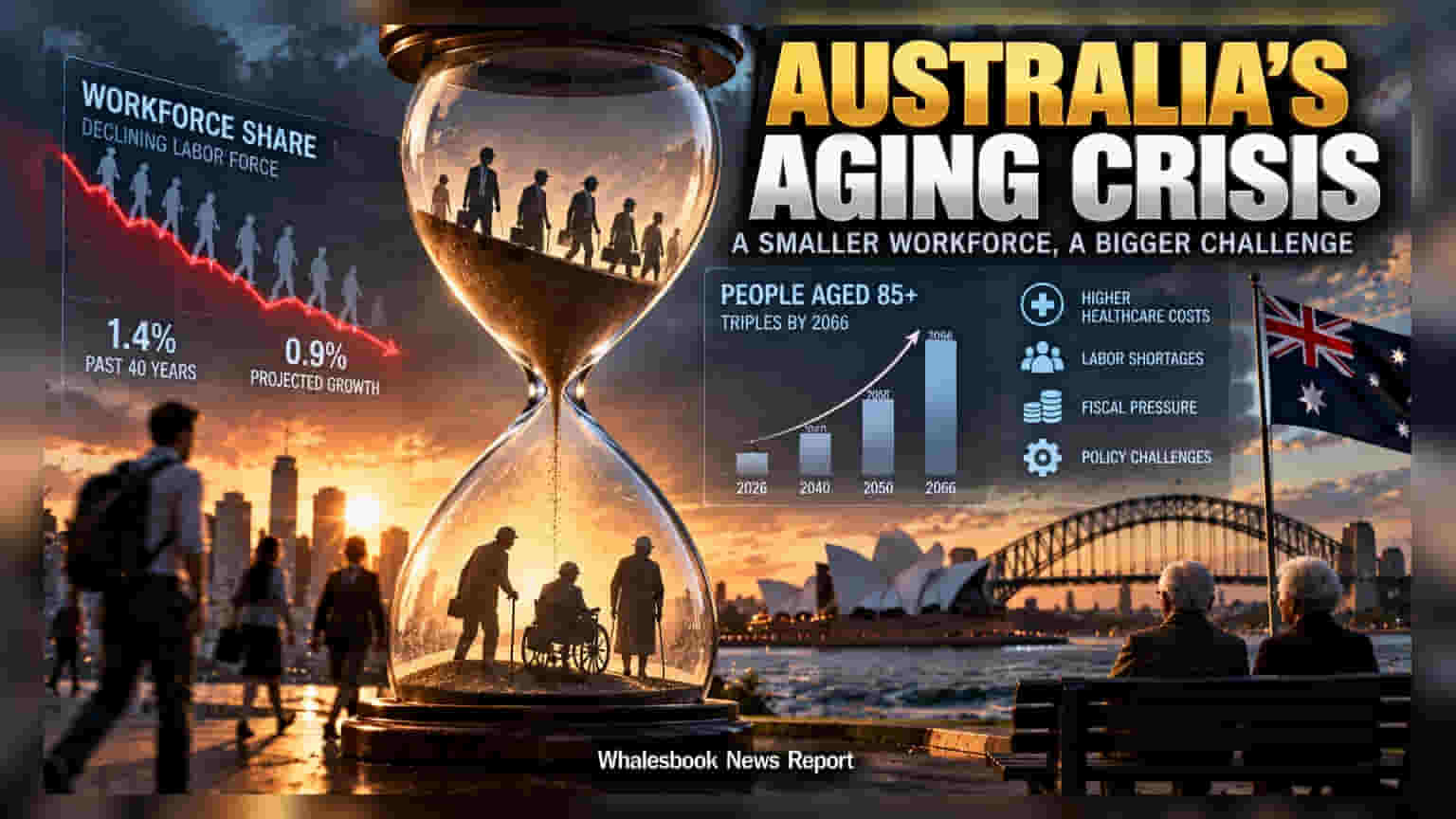
Australia’s Treasury expects deaths to outpace births by the 2060s, marking a shift in its demographic profile. With population growth set to slow to 0.9%, the nation faces labor shortages and increased pressure on its healthcare system, which may affect long-term fiscal planning and demand for social services.
Australia is moving toward a demographic turning point that could reshape its economic outlook over the next forty years. The national Treasury has projected that deaths will start to exceed births by the 2060s, a significant change for a country that has historically relied on consistent population growth to drive its economy.
Impact on Workforce and Labor Costs
Official projections indicate that annual population growth will slow to 0.9 percent, down from the 1.4 percent average recorded over the last four decades. This slowing growth, combined with an aging population, is expected to create a tighter labor market. The number of people aged 85 and older is projected to triple by 2066. This shift creates a structural challenge for the country: as a larger portion of the population retires, there will be fewer workers to support the economy, potentially leading to increased labor costs across various sectors.
Fiscal Pressures on Public Services
The aging trend is set to put substantial strain on the government’s budget. Australia is already experiencing labor shortages in healthcare and aged-care sectors, and the projected demographic shift suggests that demand for these services will grow significantly. To manage these costs, the government is balancing the need for public service investment with the reality of slower economic expansion.
Policy Response and Economic Environment
The government led by Prime Minister Anthony Albanese is currently tightening immigration rules, a move driven by public concerns over housing availability and the cost of living. However, these restrictions are occurring while the economy is also facing high inflation and elevated interest rates, which affect mortgage holders and businesses alike.
For global investors, the Australian economy’s transition toward a service-led model, combined with an aging citizenry, highlights a shift in consumption patterns. The integration of artificial intelligence and the transition to renewable energy are cited by the Treasury as key factors for future economic stability. Investors monitoring this region may track how these structural changes affect demand for services, healthcare infrastructure, and the competitiveness of the domestic labor market in the coming years.