

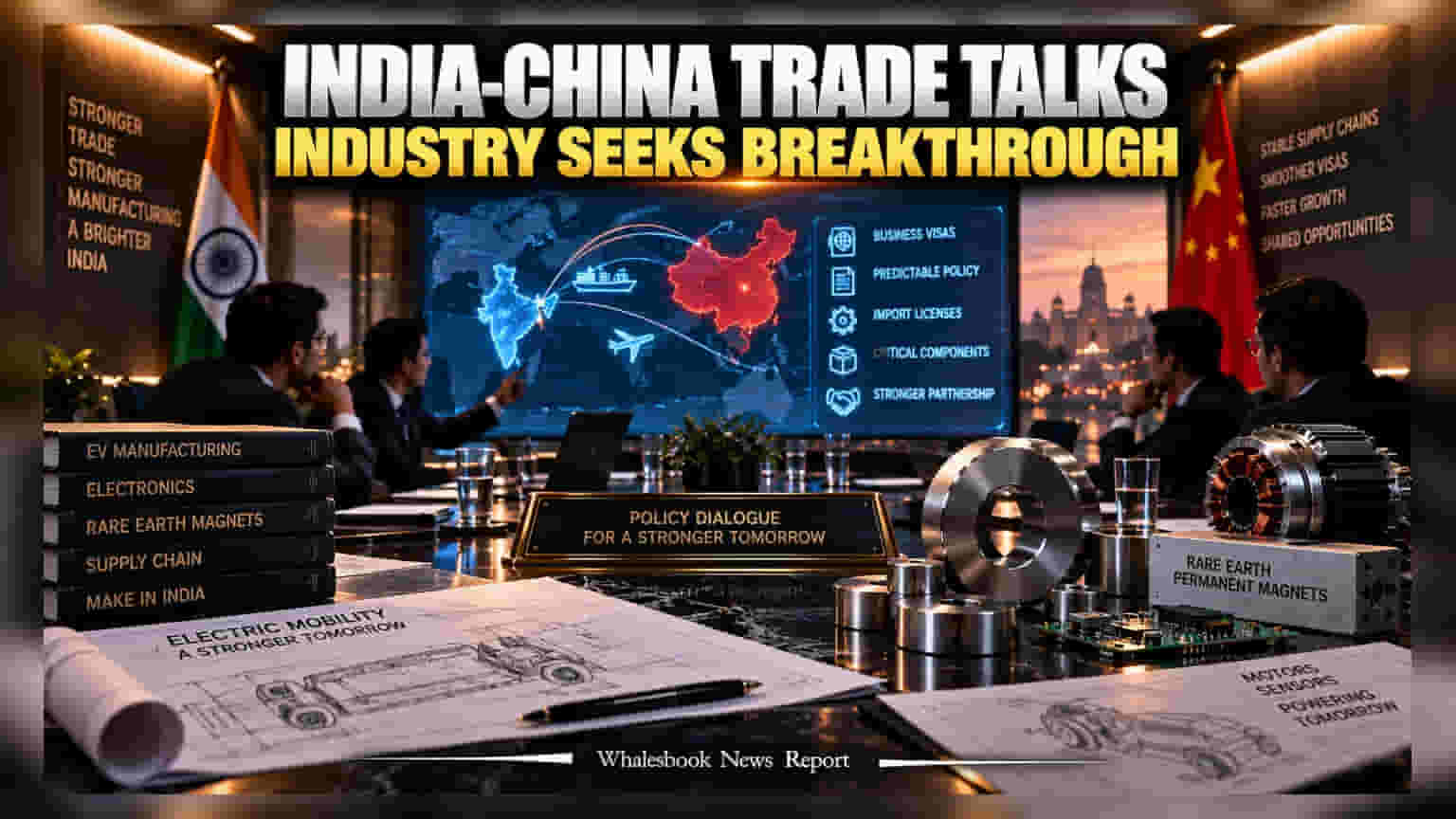
Industry body Assocham has asked the government to resolve visa and trade hurdles with China ahead of the BRICS summit on September 12-13, 2026. Current bottlenecks are delaying project timelines for Indian manufacturers, especially in the electric vehicle and electronics sectors. Investors should track how these administrative constraints may affect project execution and operating costs for dependent firms.
Assocham, a leading industry body, has formally requested that the Indian government prioritize high-level talks with China to resolve ongoing trade and administrative roadblocks. This appeal comes just days before the BRICS summit in New Delhi, scheduled for September 12-13, 2026. The chamber is advocating for a more predictable framework for business visas and import licenses, which are vital for supporting domestic manufacturing goals in sectors like electric mobility and electronics.
At the heart of the issue are significant delays in securing entry for technical personnel. Many Indian companies rely on specialized Chinese engineers to install, calibrate, and maintain imported high-tech machinery. Recent reports indicate that business visa approvals for these professionals have been slow, with some firms seeing only 20% to 40% of their requests cleared in recent months. When factories cannot bring in the necessary experts, they face delays in setting up new production lines or completing critical maintenance, which can result in missed project deadlines.
Beyond personnel mobility, the procurement of critical components remains a concern. Indian manufacturers face uncertainty regarding the import of essential parts such as rare earth permanent magnets, motors, and sensors, which are necessary for electric vehicles and electronic devices. The lack of clarity in licensing timelines makes it difficult for companies to plan production cycles, creating a risk that essential shipments may be held up by administrative hurdles even when contracts are already in place.
This call for action highlights the tension between national security policies and the practical needs of the industrial sector. The Government of India has been working to balance these interests, notably introducing an expedited 60-day FDI approval window for certain Chinese industrial investments in March 2026. However, industry leaders argue that further adjustments are needed to ensure that 'Make in India' projects, which are often capital-intensive, do not face unnecessary stoppages.
For investors, the impact of these bottlenecks is primarily operational. Projects that are heavily dependent on imported Chinese machinery or upstream components may experience cost inflation or delayed commissioning schedules. While many domestic companies are working to diversify their supply chains, this transition takes time. Moving forward, shareholders may watch for government updates regarding visa or trade licensing processes, as any change in these policies will directly influence the speed and cost-efficiency of manufacturing expansion projects.