 Whalesbook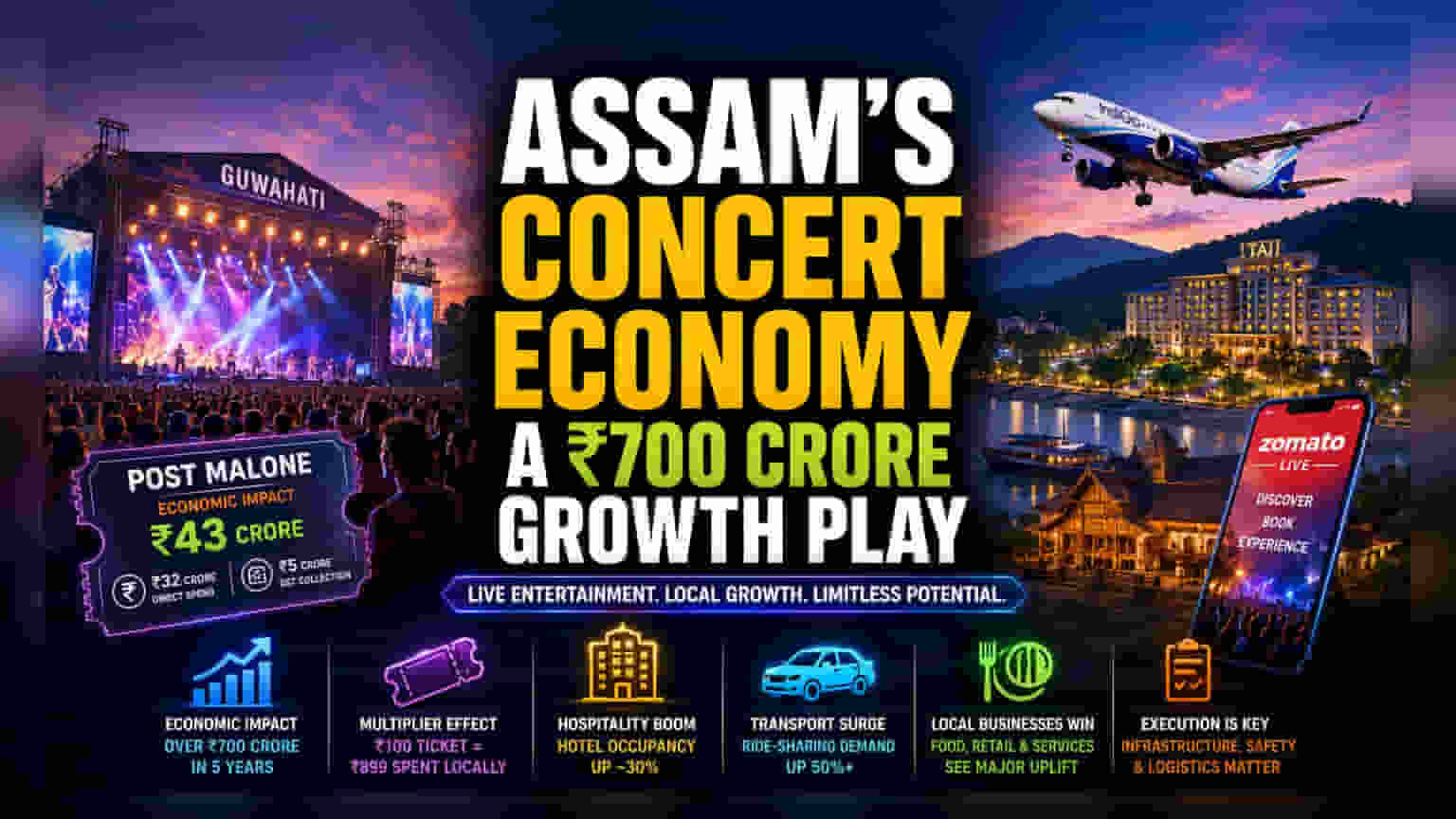


Assam is positioning itself as a new hub for live entertainment, aiming to generate a ₹700 crore economic impact over five years. By tracking spending on travel, hotels, and retail during big events, the state plans to turn concerts into a key economic driver. This model highlights growth opportunities for the hospitality, aviation, and food service sectors, provided infrastructure keeps pace with demand.
What Happened
Assam has announced an ambitious plan to turn the state into a major destination for live entertainment, aiming to generate over ₹700 crore in economic value within the next five years. This initiative, developed in partnership with the Assam Tourism Development Corporation, BookMyShow, and EY-Parthenon, seeks to treat large-scale concerts as a permanent part of the state’s economic strategy rather than occasional cultural events.
The plan follows successful trial runs, including a recent headline concert by Post Malone in Guwahati. According to the report behind the initiative, that single event created an economic impact of approximately ₹43 crore. This included ₹32 crore in direct spending within the state and ₹5 crore in GST collections, providing a roadmap for how future large-scale events could drive regional growth.
Why This Matters For The Local Economy
The central logic of this strategy is the "multiplier effect." The report highlights that attendees do not just pay for a concert ticket; they spend heavily on travel, hotels, local transport, food, and retail. For every ₹100 spent on a concert ticket, attendees spent an estimated ₹899 on ancillary services. During the trial concert, hotel occupancy rates rose by nearly 30%, and ride-sharing demand jumped by over 50%. By institutionalizing these events, the state hopes to attract significant capital toward its tourism and hospitality infrastructure.
The Investor View: Who Benefits
For investors, the "concert economy" represents a broader trend in Indian consumption where spending on experiences is rising faster than traditional goods. If Assam successfully creates a predictable calendar of events, the primary beneficiaries are likely to be companies in the hospitality, aviation, and food and beverage sectors.
Large hotel chains, such as Indian Hotels Company (Taj) and companies like Lemon Tree Hotels or EIH Ltd (Oberoi), often see occupancy spikes during such events. Similarly, domestic airlines like InterGlobe Aviation (IndiGo) and other carriers benefit from increased flight bookings. Additionally, platforms that integrate ticketing and event discovery, like Zomato—which has significantly expanded its footprint in the ticketing and events space—are also central to this ecosystem.
The Infrastructure and Execution Risk
The report correctly identifies that the main challenge is not finding an audience but managing logistics. A successful concert economy requires high-quality venues, reliable local transport, and seamless hospitality services. In India, large-scale events often face hurdles related to obtaining timely regulatory approvals, managing crowd safety, and ensuring that local infrastructure can handle sudden surges in foot traffic.
If the state fails to upgrade its venue infrastructure or struggles with the logistics of managing international-level crowds, the projected economic impact could fall short. Investors should note that without consistent improvements in roads, hotel capacity, and safety management, the long-term sustainability of this model remains unproven.
What Investors Should Track
The future of this initiative depends on execution. Investors may track three key areas. First, the calendar of events: a predictable, high-frequency schedule is needed to make the model sustainable. Second, infrastructure spending: look for updates on venue upgrades or hospitality project approvals in the region. Third, the reaction of ancillary sectors: watch how local hotel occupancy and aviation traffic in Guwahati correlate with the announcement of major concert dates. These indicators will clarify whether the ₹700 crore target is a realistic goal or an optimistic projection.