

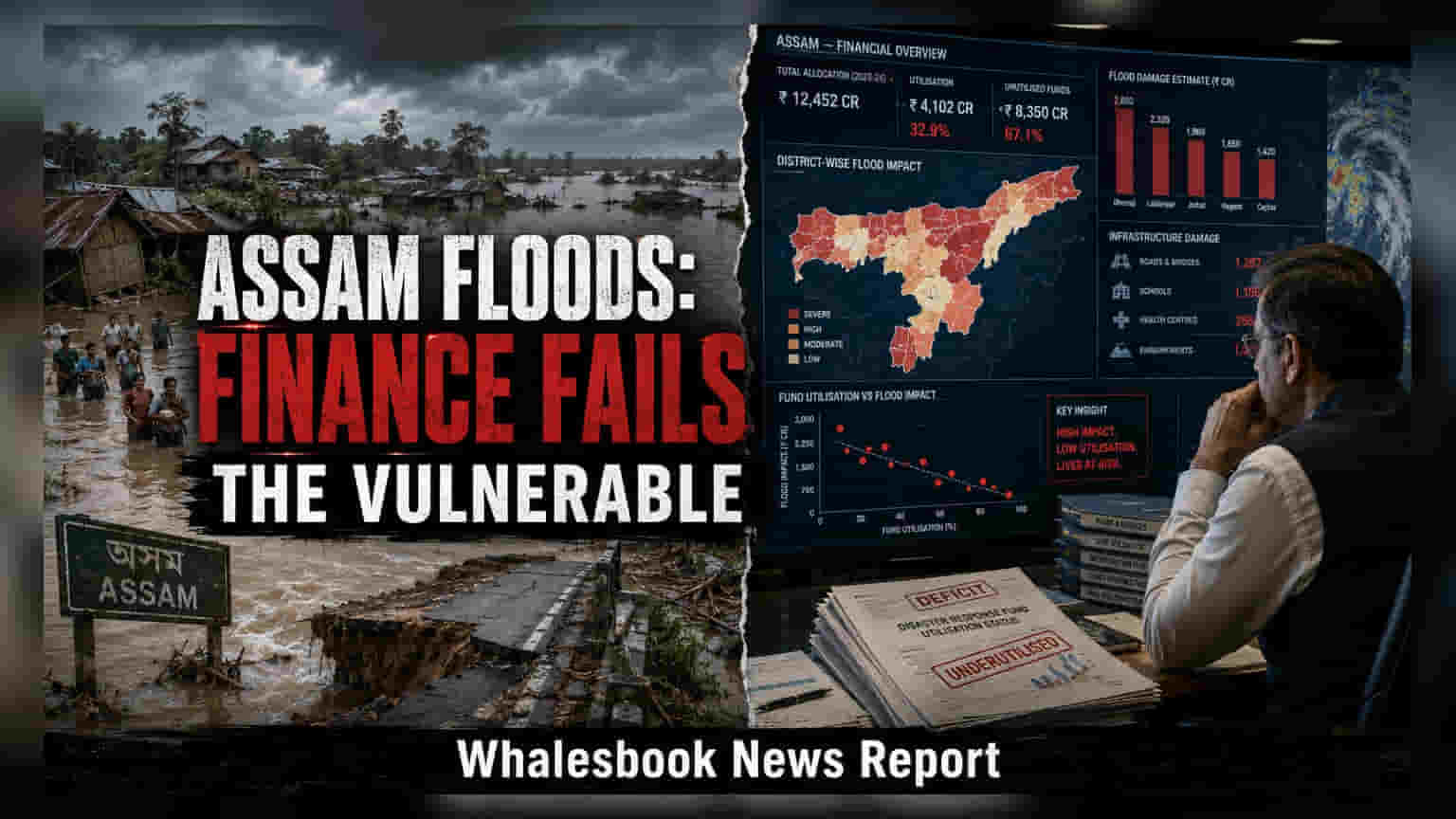
The devastating floods in Assam are exposing gaps in disaster management and climate finance. For investors, this creates material risks for insurance firms facing higher claims and microfinance institutions with high exposure to rural agricultural livelihoods. The situation highlights the urgent need for better climate-adaptive infrastructure planning in India.
The ongoing monsoon crisis in Assam, which has resulted in significant loss of life and displacement, is drawing attention to the disconnect between how disaster funds are allocated and the actual climate risks on the ground. Beyond the humanitarian tragedy, the event has financial implications for institutions operating in the region, particularly in sectors like insurance and microfinance.
Following the destruction, the Insurance Regulatory and Development Authority of India (IRDAI) has directed insurance companies to expedite the processing of flood-related claims. For investors in the insurance sector, this translates into potential pressure on short-term profitability, as a sudden spike in claims can impact underwriting margins. Companies with a significant presence in the Northeast will likely see higher claim volumes in the coming weeks.
Microfinance institutions and banks with strong rural footprints in Assam also face operational and credit risks. A large portion of these portfolios is tied to agricultural livelihoods and small-scale manufacturing, which are highly susceptible to climate-induced disruptions. When infrastructure, such as road networks or storage facilities, is damaged by floods, the income-generating capacity of borrowers drops, leading to potential delays in loan repayments. Investors in this space may monitor future portfolio quality reports for affected districts.
Infrastructure vulnerability remains a core concern, with reports indicating that nearly 3,000 kilometers of the state’s embankment network requires repair or reconstruction. The current fiscal framework, which governs the flow of disaster management funds, has been criticized for relying too heavily on historical spending patterns rather than future-looking risk assessments. This means funding often arrives after damage has occurred, rather than being used to build climate-resilient infrastructure that could prevent future losses.
The situation is further complicated by governance challenges across state borders, particularly in the Dikhow river basin. Sediment flow and upstream activities in neighboring states affect the flood intensity in Assam, but management functions remain fragmented at the state level. This governance gap creates an environment where risks are not managed holistically, potentially leading to recurring economic costs for businesses and the state government.
Looking ahead, the most critical monitorable for investors will be the asset quality of financial institutions in the region and the speed of the insurance claim resolution process. Furthermore, any long-term shift in government policy regarding climate finance—specifically moving toward forward-looking, nature-based disaster mitigation—will be essential to watch. Such a shift could change the capital allocation requirements for infrastructure and climate-resilient industries in the future.