

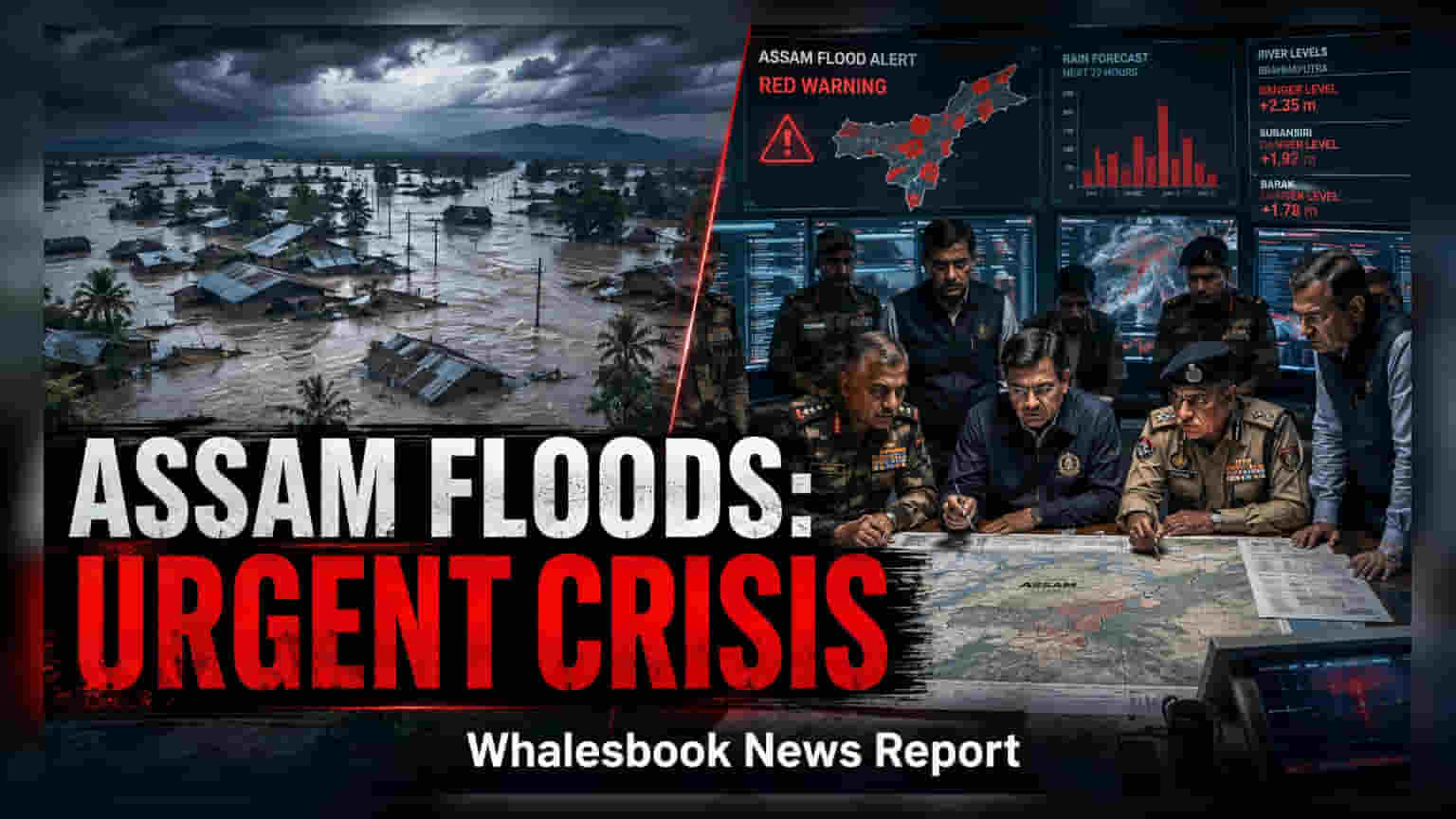
Devastating floods in Assam have displaced over 6.5 lakh people, causing significant damage to agriculture and local infrastructure. The recurring nature of this crisis poses a long-term risk to regional economic stability and supply chains, as heavy rains continue to disrupt livelihoods and transportation networks across the state.
The state of Assam is facing a severe flood crisis, with over 6.5 lakh people displaced as heavy rains push rivers like the Disang above danger levels. The Indian Army has been deployed to assist in rescue and relief operations as rising waters submerge villages, farmland, and essential infrastructure. This recurring disaster continues to threaten the regional economy, causing widespread destruction of crops and disrupting local supply chains.
Economic Impact and Infrastructure Challenges
For investors and observers of the regional economy, these floods are not just a humanitarian issue but a recurring economic challenge. The destruction of agricultural land, particularly in a region where farming is a primary source of income, can lead to localized inflation in food prices and reduced household spending power. Furthermore, the persistent damage to roads, bridges, and railways frequently disrupts the movement of goods in Northeast India, creating logistical bottlenecks for businesses operating in or sourcing from the region. The recurring nature of this devastation raises questions about the long-term effectiveness of infrastructure projects designed to mitigate flood damage.
Accountability and Resource Allocation
While successive governments at both the state and central levels have made pledges to address the flood problem, the severity of the damage this year highlights the persistent gap between policy promises and on-ground results. The lack of a permanent, structural solution to riverbank erosion and flood management continues to drain public finances through repeated emergency relief spending rather than long-term capital investment. For investors tracking regional development, the absence of a durable strategy suggests that unpredictable costs and disruptions will remain a factor in the state’s fiscal and business environment.
The immediate focus remains on rescue efforts and the safety of the affected population. Moving forward, the key monitorables for economic impact include the extent of damage to standing crops, the timeline for restoring transport infrastructure, and any potential shift in government policy regarding long-term flood control infrastructure. Investors and stakeholders will be watching to see if future budget allocations prioritize sustainable disaster-resilient infrastructure over temporary relief measures.