

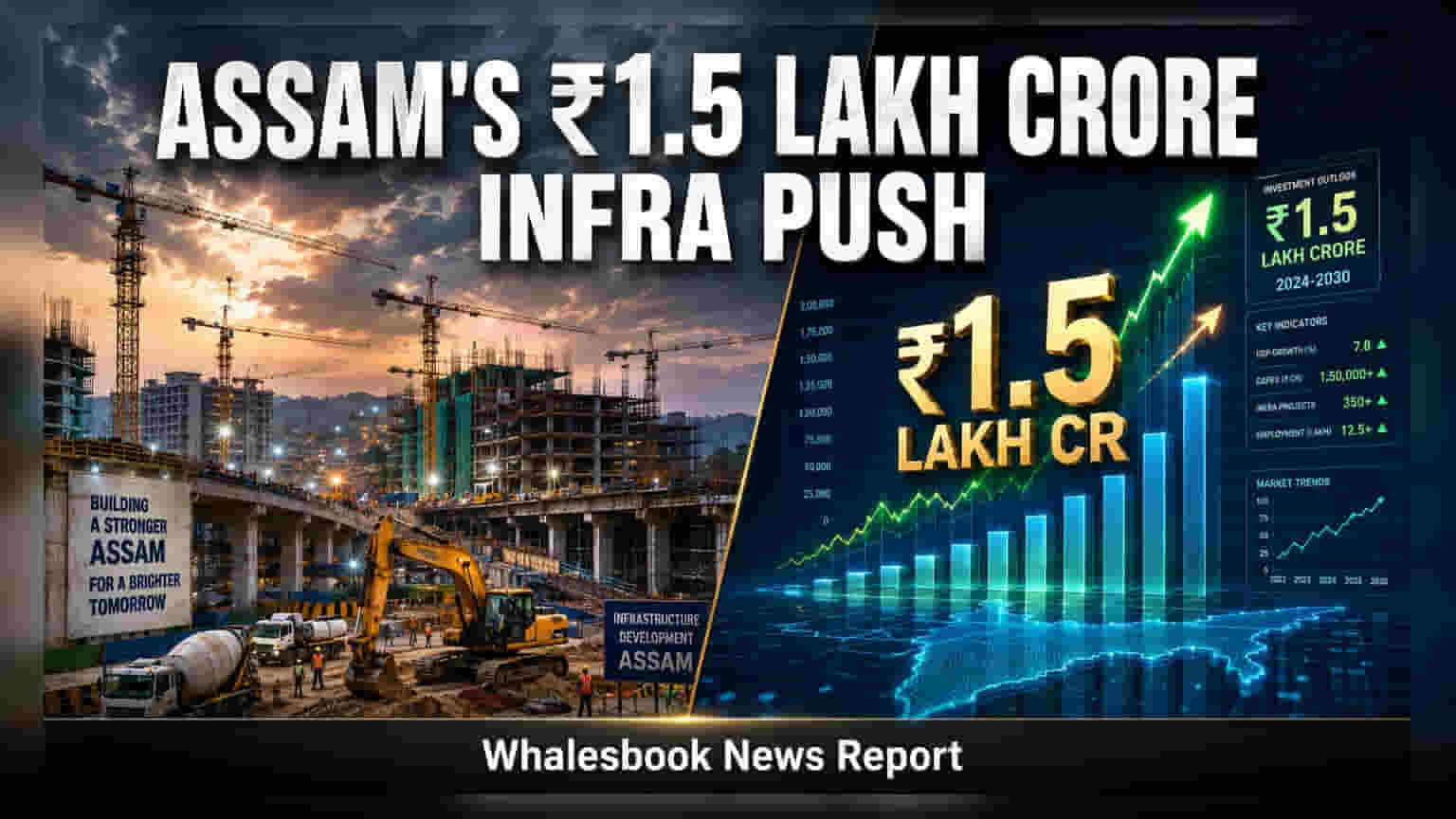
Assam Chief Minister Himanta Biswa Sarma has unveiled a ₹1.50 lakh crore infrastructure spending plan for 2026 to 2031. The project aims to develop roads, schools, and urban areas, with the state seeking ₹1 lakh crore from the Central government. Investors are monitoring the plan for its potential impact on construction, cement, and engineering companies operating in the region.
Assam Chief Minister Himanta Biswa Sarma announced a major infrastructure investment drive during his Independence Day address on August 15, 2026. The state aims to spend ₹1.50 lakh crore on development projects between 2026 and 2031. This initiative is part of a long-term goal to transform the state into a 'Vikshit Assam' (Developed Assam) by 2047.
Funding and Scope
The funding strategy for this massive outlay is split between state and central resources. The Assam government plans to provide ₹50,000 crore from its own budget, while it aims to secure the remaining ₹1 lakh crore from the Central government. The planned spending will focus on core areas including road networks, educational institutions, urban development, and rural growth. For businesses and investors, this commitment signals sustained activity in the construction, cement, steel, and engineering sectors within the region over the coming years.
Challenges and Execution Risks
While the plan is ambitious, investors should consider the logistical and financial realities involved. A significant portion of the total budget—nearly two-thirds—depends on support from the Central government. Any shifts in national budget priorities could impact the pace of these projects.
Furthermore, Assam faces unique geographical challenges that often affect infrastructure execution. The state’s difficult terrain and recurring flood issues have historically complicated large-scale construction timelines. Companies involved in these projects will need to navigate these environmental constraints, which can lead to cost increases or delays. The success of the state-funded portion of the plan will also rely on the government's ability to maintain its own economic growth momentum to generate the necessary revenue.
Growing Industrial Profile
The state is looking to build on its recent economic progress. The Chief Minister noted that the state's economy has tripled in size over the last decade. A key indicator of this industrial evolution is the ongoing development of the semiconductor facility by Tata Electronics, which is expected to change the state’s industrial profile and attract further ancillary businesses.
Moving forward, market participants will track how the government phases these expenditures and secures the required central funding. The progress of initial tenders and the actual release of central funds will be key updates for companies in the infrastructure and construction material supply chains.