 Whalesbook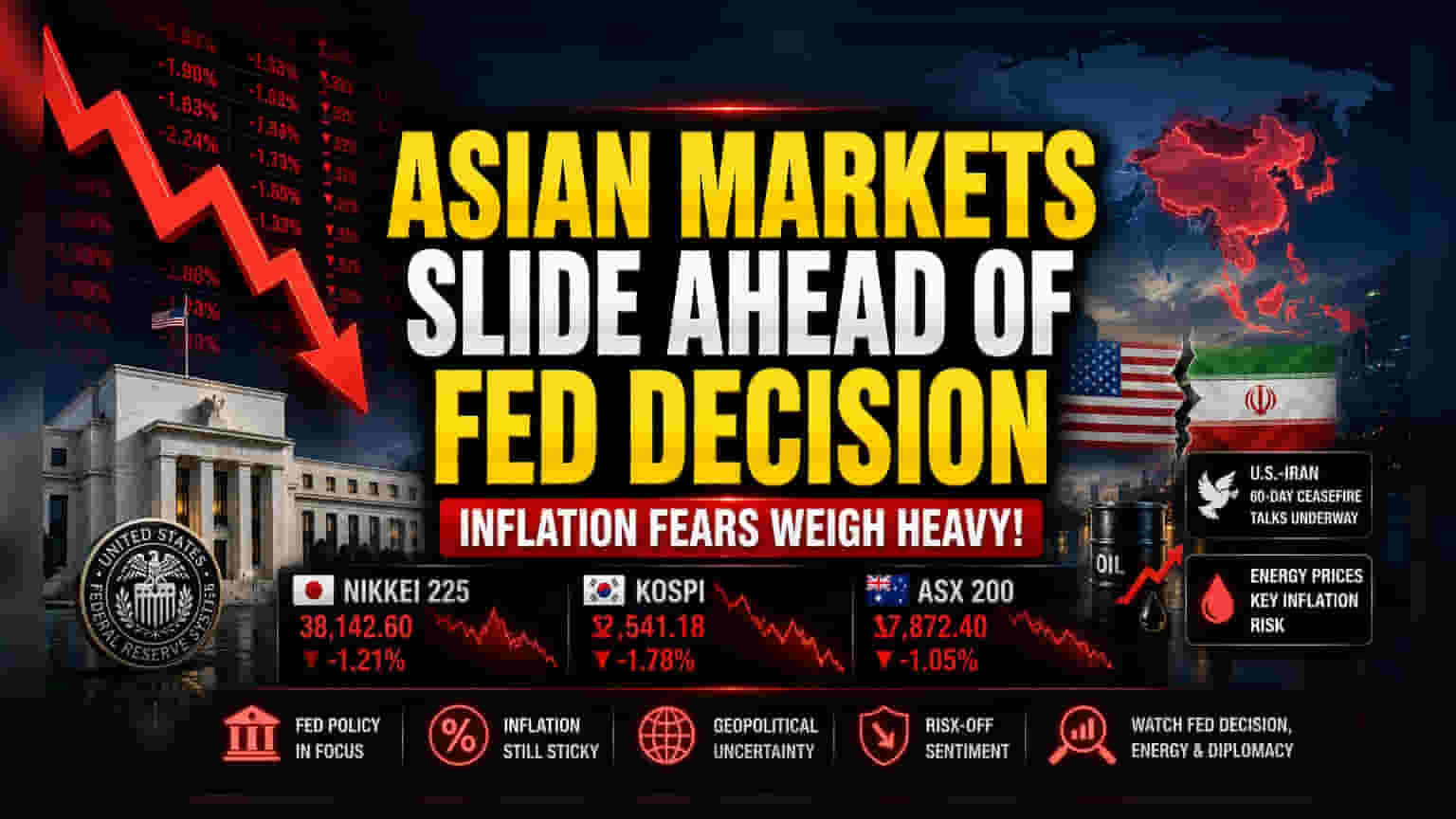


Asian stock markets dropped on Wednesday, with the Nikkei, Kospi, and ASX losing ground as investors braced for the U.S. Federal Reserve’s policy decision. Concerns over stubborn inflation outweighed optimism from potential diplomatic progress between the U.S. and Iran, keeping markets in a state of uncertainty.
What Happened
Asian equity markets opened lower on Wednesday, June 17, 2026, as investors adopted a cautious approach ahead of the upcoming U.S. Federal Reserve policy announcement. Major indices, including Japan's Nikkei, South Korea's Kospi, and Australia's ASX, saw broad selling pressure. The market mood was dominated by anxieties over persistent inflation, which remains a focal point for global investors.
The Inflation and Fed Factor
The core concern for the markets is the direction of U.S. interest rates. The Federal Open Market Committee (FOMC) meeting is currently the most significant event on the calendar. Investors are dissecting every signal from the Federal Reserve regarding monetary policy. There is growing concern that inflation is proving more difficult to tame than previously expected, leading some policymakers to consider removing references to future interest rate cuts from their official language. For stock markets, this is significant because higher interest rates generally increase borrowing costs for companies and reduce the present value of future earnings, which often puts downward pressure on stock valuations.
Geopolitics and Energy
Alongside the central bank narrative, geopolitical events are influencing sentiment. Recent discussions between the United States and Iran have offered a glimmer of hope, with reports of a potential 60-day ceasefire and a framework for future diplomatic negotiations. While such developments are typically viewed as positive for global stability, the market response has been muted. Investors are looking past the initial headlines to gauge the long-term durability of this agreement. Energy prices remain a key variable, as any fluctuation in oil supply, linked to tensions in the Middle East, can directly impact global inflation levels.
How Markets Reacted
The reaction across Asian trading floors on Wednesday was broadly negative. The South Korean Kospi index led the declines among the major regional benchmarks. The Nikkei in Japan and the ASX in Australia also struggled to maintain momentum. The overall trading environment reflected a 'risk-off' sentiment, where investors prefer to reduce exposure to stocks until there is greater clarity on the interest rate environment. Trading volumes in several markets remained sensitive to the ongoing wait for the Fed’s policy language.
What Investors Should Track
For investors, the most critical monitorable is the official communication from the Federal Reserve at the conclusion of their meeting. Specifically, any change in the language surrounding future rate policy will be the primary driver of market direction in the coming days. Additionally, monitoring movements in energy prices is essential, as these often serve as a bellwether for inflation expectations. Investors may also look for further updates on the U.S.-Iran diplomatic track to see if the ceasefire holds, as this could have broader implications for global commodity markets and risk appetite.