 Whalesbook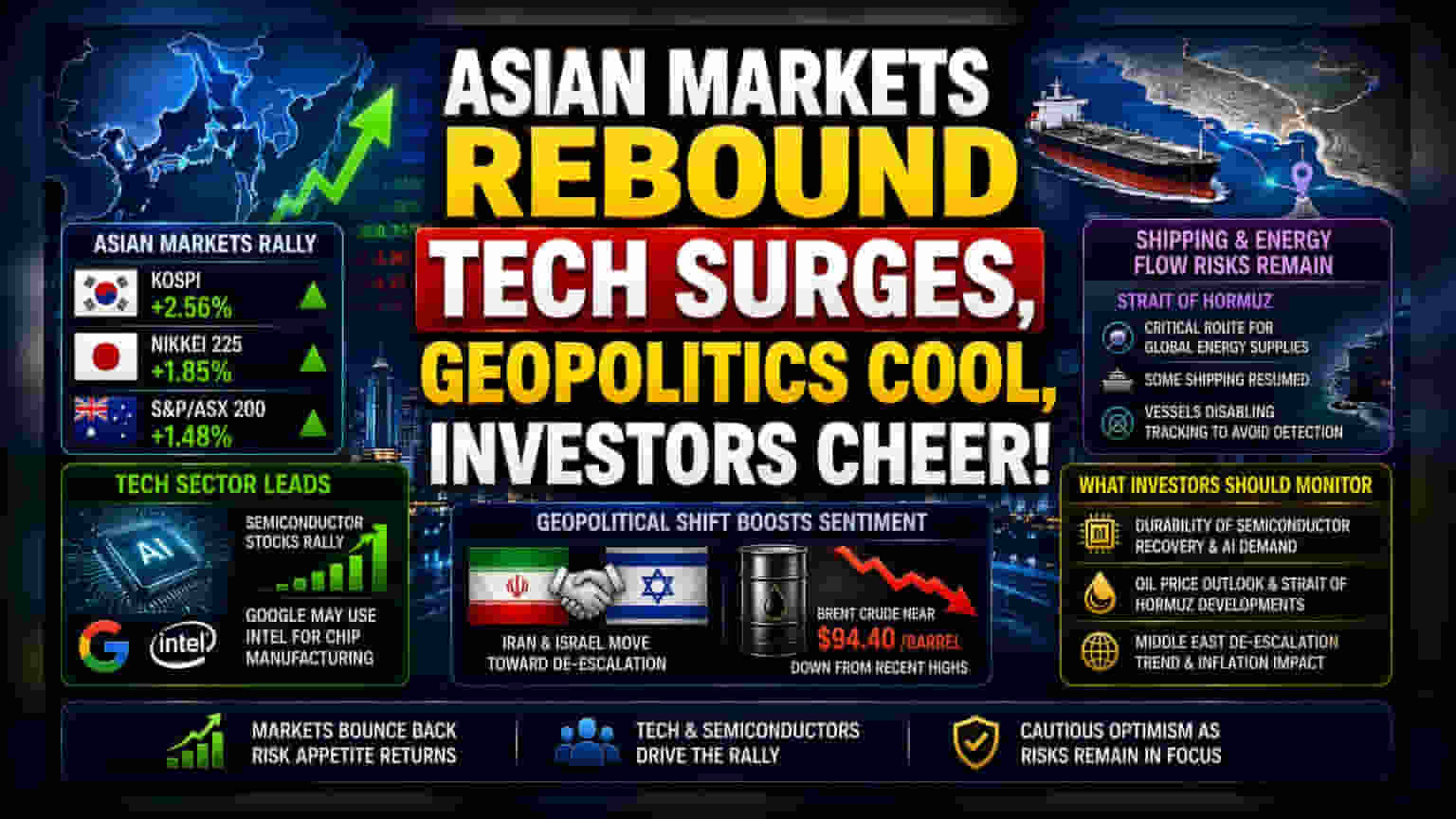


What Happened
Asian equity markets staged a recovery on Tuesday, rebounding from recent declines as concerns over regional geopolitical tensions cooled. Major indices across the Asia-Pacific region recorded gains, with South Korea’s Kospi leading the move. Japan’s Nikkei 225 and Australia’s S&P/ASX 200 also saw solid performance as investors responded to positive developments on both the technology and geopolitical fronts.
Tech Sector Leads Market Recovery
The market rally was largely supported by a rebound in the technology sector, particularly among semiconductor companies. Investor sentiment improved following reports suggesting that Alphabet Inc.’s Google may potentially utilize Intel Corp. for chip manufacturing. This potential partnership provided a significant boost to Intel’s shares and helped lift sentiment across AI-linked and semiconductor stocks, which had been under pressure in recent sessions.
Geopolitical Shift Helps Sentiment
Market sentiment also found support from a shift in Middle East geopolitics. Fears regarding escalating conflict had previously driven oil prices higher and weighed on global markets. However, reports indicated that Iran and Israel appeared to be moving toward de-escalating strikes against each other. Following calls for restraint from U.S. President Donald Trump, energy markets responded with a decline in oil prices, with Brent crude trading near $94.40 a barrel, down from its recent highs.
Shipping and Energy Flow Risks
While the easing of tensions provided temporary relief, participants are keeping a close watch on the Strait of Hormuz, a critical route for global energy supplies. While some commercial shipping has resumed, security concerns remain, with reports that some vessels have been disabling their tracking transponders to avoid detection. The stabilization of this route remains a key factor for energy costs and supply chain reliability.
What Investors Should Monitor
Investors may continue to track a few key areas following this rebound. First, the durability of the semiconductor recovery is important, as tech stocks often remain sensitive to news about AI demand and manufacturing partnerships. Second, while oil prices have moderated, any sudden changes in the status of shipping through the Strait of Hormuz could quickly alter the energy price outlook. Finally, the broader market will likely focus on whether this de-escalation trend in the Middle East holds or if new developments emerge that could affect regional stability and inflation expectations.