 Whalesbook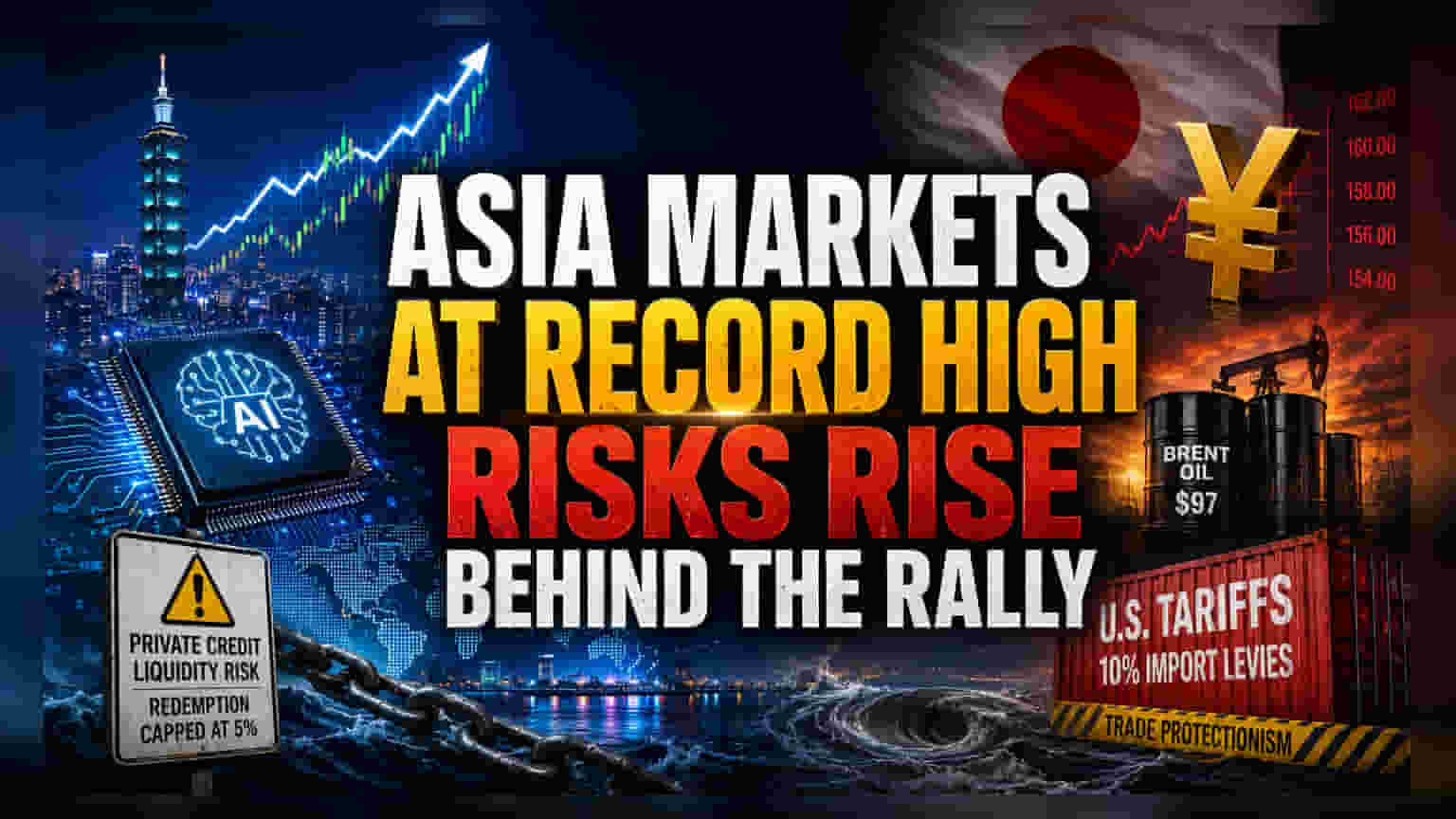


The Semiconductor-Fueled Rally
The record-breaking performance of the MSCI Asia Pacific Index is disproportionately concentrated in the technology sector, particularly among major chip manufacturers. While this surge reflects strong global demand for AI-enabling hardware, the heavy reliance on a few dominant players creates a precarious environment. Investors have largely ignored the cooling effects of broader industrial malaise, choosing instead to capitalize on the sustained momentum in Taiwan and Japan. This concentration risk mirrors patterns observed in previous equity bubbles where market breadth narrows as indexes push toward all-time highs.
The Currency and Energy Trap
The Japanese yen’s persistent weakness near the 160 level poses a significant challenge to the Bank of Japan’s monetary policy credibility. As Governor Kazuo Ueda prepares his next address, market participants are pricing in an increased probability of intervention. The issue is compounded by the rally in Brent crude oil toward $97 a barrel. Higher energy costs act as an implicit tax on the Japanese economy, which remains heavily dependent on imports. With geopolitical instability in the Strait of Hormuz threatening to further disrupt supply chains, the BoJ faces the unenviable task of defending a currency while attempting to normalize interest rates without triggering a deeper domestic slowdown.
Structural Risks and Liquidity Strains
Beyond the equity markets, there are clear signs of stress within the shadow banking sector. The decision by Cliffwater LLC to cap redemptions at 5% for its flagship private credit fund is a harbinger of potential volatility in the $1.8 trillion private debt market. This liquidity constraint suggests that institutional investors are beginning to pull back, wary of the underlying valuation of these assets as interest rates remain elevated. When paired with the Federal Reserve’s hawkish leanings—bolstered by data showing U.S. job openings at their highest levels in nearly two years—the argument for a sustained equity rally becomes increasingly difficult to reconcile with a tightening global credit environment.
The Bear Case: Overvaluation and Trade Protectionism
Market participants should remain skeptical of the current optimism given the mounting regulatory and economic headwinds. The United States’ proposed 10% import levies, framed through the lens of forced labor investigations, represent a significant threat to regional trade volumes. If these tariffs are implemented, Asian export-oriented economies will suffer margin compression, directly impacting the profitability of the very chipmakers currently driving index gains. Historically, such policy shifts have served as immediate catalysts for capital flight from emerging markets, and given the current valuation multiples of regional technology leaders, the downside potential for investors ignoring these geopolitical friction points is substantial.