

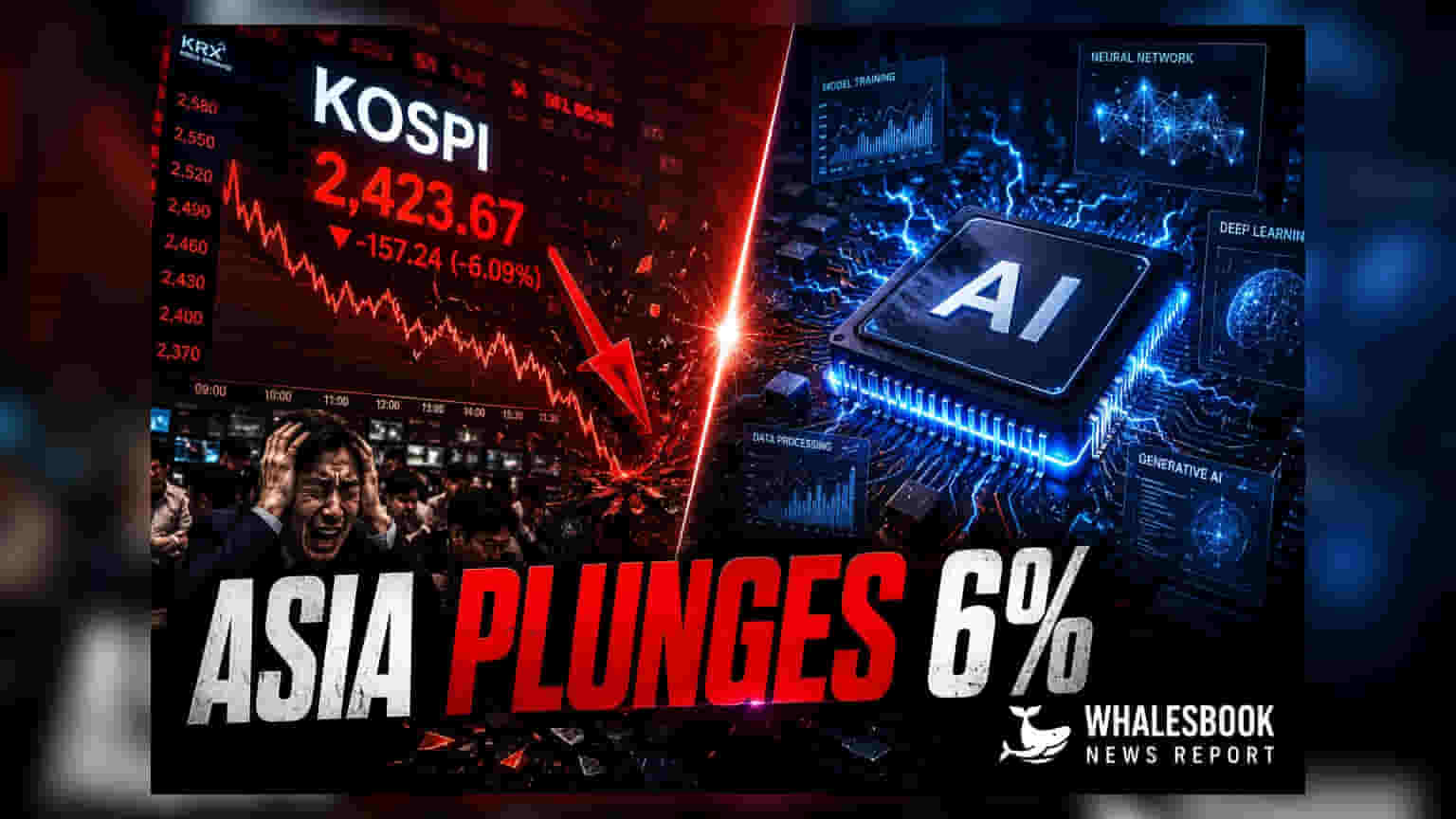
Asian markets fell sharply, with the KOSPI dropping 6% and Nikkei 2% as worries over AI-driven valuations spread from US chipmakers. While the technology sector faces volatility, lower crude oil prices provide a crucial buffer for import-dependent economies like India.
What Happened
Asian equity markets faced a sharp sell-off on July 2, 2026, as investor concerns over the sustainability of artificial intelligence (AI) investments intensified. South Korea’s KOSPI index dropped over 6%, while Japan’s Nikkei 225 fell more than 2%. The broader MSCI Asia Pacific Index also registered a decline. This regional downturn tracked a negative trend in the US, where a sell-off in major chipmaker stocks reignited fears that the rapid rally in AI-related equities may have outpaced fundamental earnings growth.
Why Investors Are Worried
The market correction is primarily driven by anxiety that the massive capital expenditure being poured into AI infrastructure by major technology firms may not generate the expected financial returns quickly enough. Investors are questioning whether the current high valuations of semiconductor and AI-hardware companies are justified. Market sentiment was further impacted by reports of potential oversupply in AI computing power, which has hit semiconductor manufacturers, including industry leaders in South Korea.
The Macro Bright Spot: Falling Oil Prices
While the technology sector is under pressure, falling crude oil prices offer a significant macro cushion for import-dependent economies like India. Brent crude prices have softened to around $71 a barrel, a level not seen since earlier this year. For India, which imports over 85% of its crude oil, this decline helps reduce the import bill, supports the current account deficit, and helps contain inflationary pressures. Economists note that this reduction in energy costs can provide relief to the economy, potentially stabilizing the rupee and reducing the immediate need for aggressive interest rate hikes.
Federal Reserve Signals
Investor focus remains on the US Federal Reserve's policy direction. Chairman Kevin Warsh indicated that inflation risks have moderated in recent weeks, reaffirming the central bank's commitment to its 2% target. Importantly, his comments suggested that policymakers are not currently looking for an immediate interest rate hike in July. While these comments provided some comfort regarding monetary policy, they were secondary to the immediate volatility in technology and semiconductor stocks.
What Investors Should Track Next
Investors are now closely monitoring several key indicators. The primary focus is on the sustainability of earnings for large technology firms—the market will look for proof that AI spending is translating into real profit growth. Additionally, upcoming US employment data will be a critical gauge for the Federal Reserve’s policy outlook. For Indian investors, the contrast between global tech volatility and the potential domestic relief from lower oil prices remains a key area to watch, as the IT sector often mirrors global sentiment while the broader economy benefits from easing energy costs.