 Whalesbook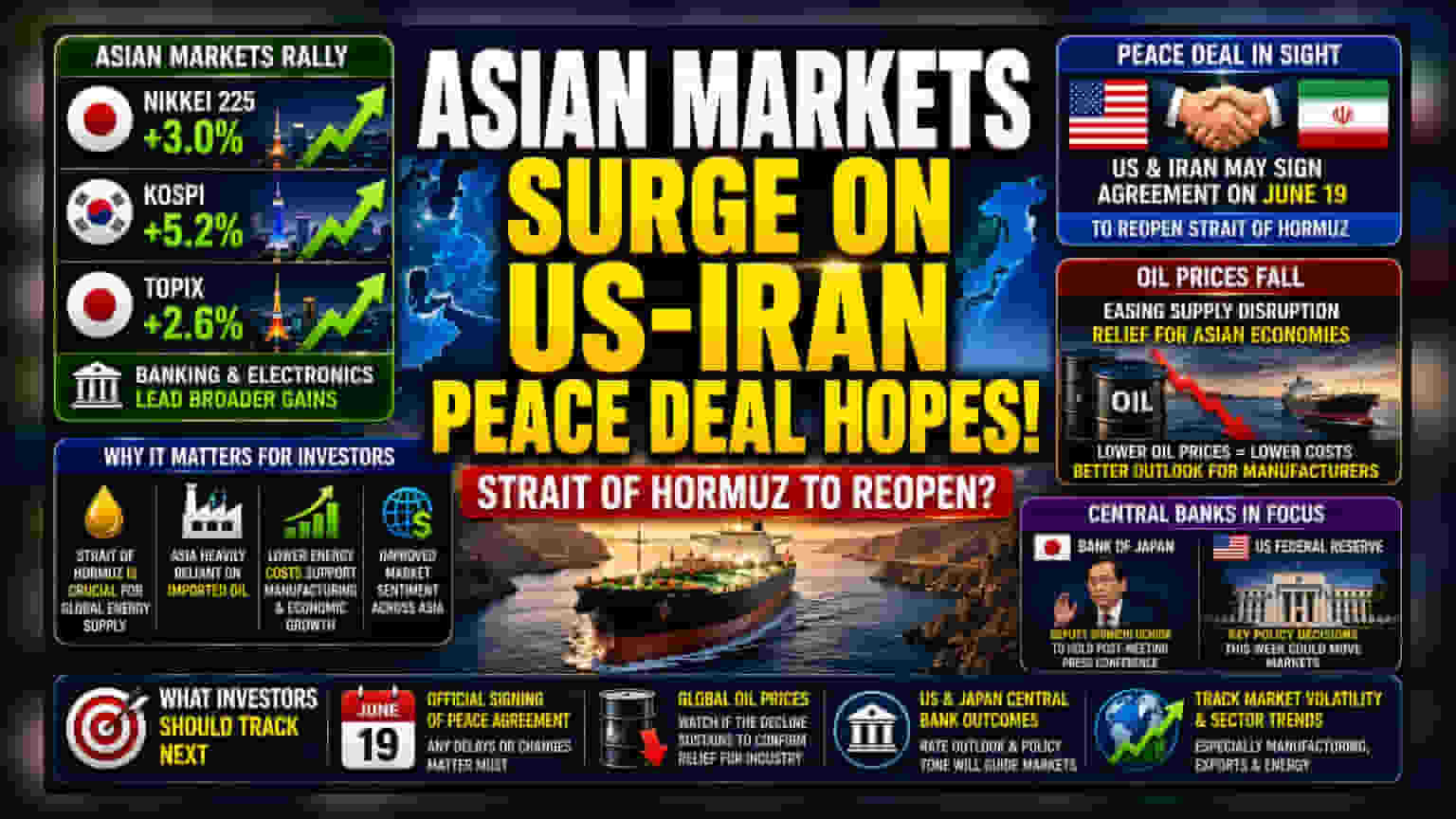


Asian stock markets surged as hopes for a US-Iran peace deal to reopen the Strait of Hormuz lifted investor sentiment. The prospect of lower energy costs and eased supply chain pressure provided a boost to major indices, particularly in Japan and South Korea, as markets await central bank updates.
What Happened
Asian stock markets saw a strong rally today, driven by reports that the United States and Iran may be nearing a peace agreement. The potential deal, which is reportedly set to be signed on June 19, aims to reopen the Strait of Hormuz, a critical shipping route for global oil supplies. Following the announcement, Japan’s Nikkei 225 index rose by 3%, while South Korea’s Kospi index climbed by 5.2%. The broader Topix index in Tokyo also posted gains, supported by positive movement in the banking and electronics sectors.
Why This Matters For Investors
The Strait of Hormuz is a vital channel for the global energy trade. Its potential reopening is being viewed as a significant relief for Asian economies that are heavily dependent on imported oil. For instance, Japan has historically relied on the Middle East for over 90% of its oil imports. When this shipping lane faces closure or tension, it leads to higher energy costs for manufacturers, which can squeeze profit margins and slow down industrial production. The expected decline in oil prices is seen as a positive signal for manufacturing sectors, as it could lower production costs and reduce supply chain disruptions that have persisted due to regional tensions.
How Investors May Read This
While the market reaction has been positive, investors are balancing this optimism with ongoing uncertainties. The rally is based on the expectation of a deal, not yet a signed reality. There are lingering questions regarding the timeline for complex arrangements, such as those related to nuclear holdings. Furthermore, the market was already experiencing volatility. The Nikkei 225, for example, had hit record highs earlier this month but faced pressure last week from fluctuating Middle East tensions and concerns regarding the valuation of the artificial intelligence sector.
Central Bank Updates
Beyond geopolitical news, investors are keeping a close watch on central bank decisions scheduled for this week in both the US and Japan. The Bank of Japan is currently in focus as the market monitors policy direction. There has been a change in immediate leadership duties, with Deputy Shinichi Uchida expected to host the upcoming post-meeting press conference, as Bank of Japan Governor Kazuo Ueda is currently hospitalized. These central bank meetings are crucial as they set the tone for interest rates and currency valuations, which directly influence stock market performance.
What Investors Should Track
The most important monitorable is the official signing of the peace agreement on June 19. Any changes to this timeline or new developments regarding the terms of the deal will be critical. Additionally, investors will be watching global oil prices to see if the market sustains the current decline, as this will confirm whether the anticipated relief for manufacturers materializes. Finally, the upcoming outcomes from the US and Japanese central bank meetings will provide further clarity on the interest rate and economic policy environment, which will likely influence market sentiment in the coming days.