

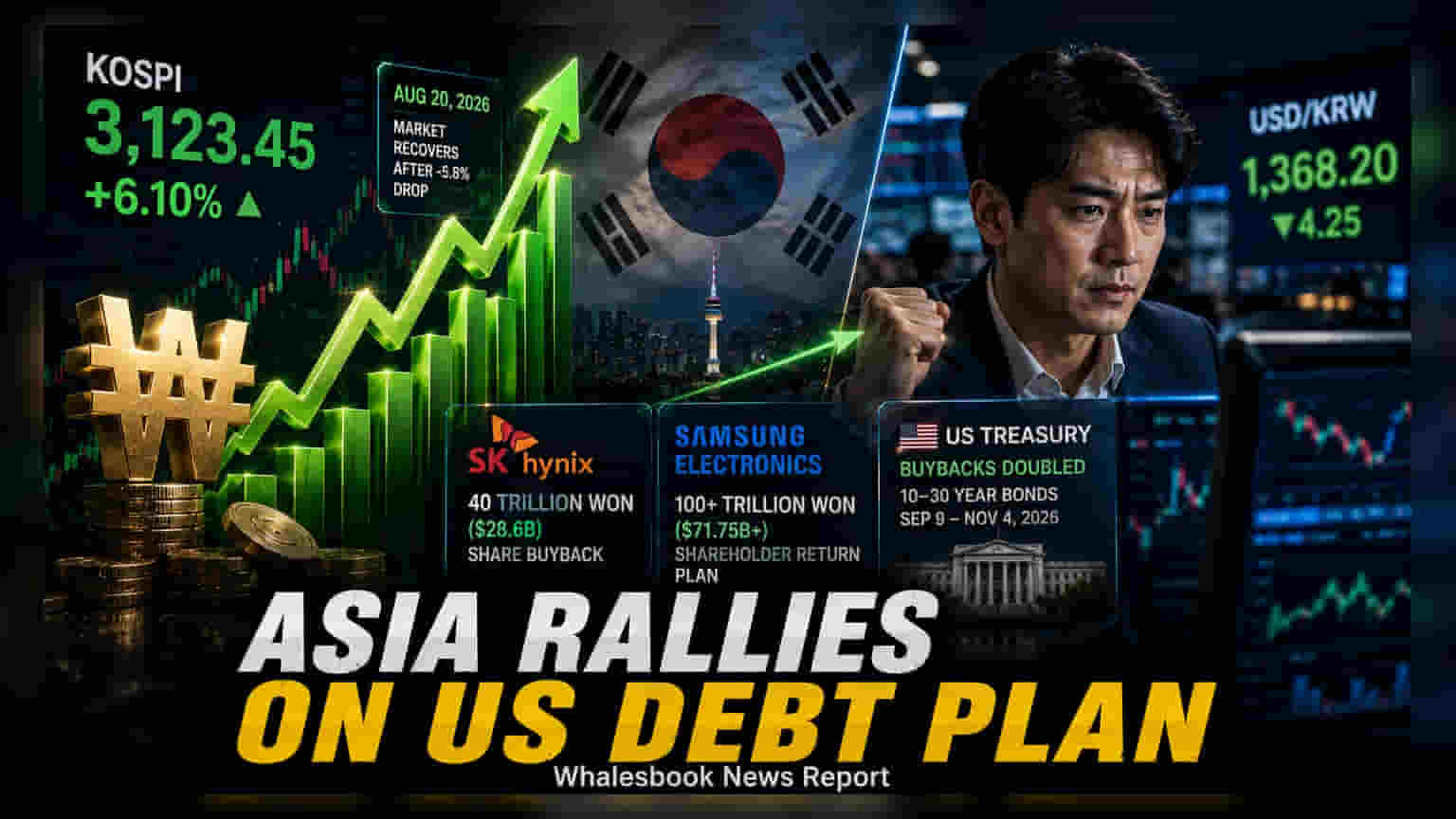
Asian stock markets surged on August 20, 2026, with South Korea's Kospi index rebounding 6.1% after a sharp decline. The rally followed the US Treasury’s decision to double long-term debt buybacks and major share repurchase announcements by Samsung Electronics and SK Hynix. While the move aims to cool bond market pressure, investors remain cautious about underlying macroeconomic risks.
Asian financial markets staged a strong recovery on August 20, 2026, led by a 6.1% surge in South Korea's benchmark Kospi index. The rally arrived after a difficult trading session the previous day, which had seen the index fall by 5.8%. The sudden turnaround was sharp enough to trigger a 'sidecar' volatility curb, a temporary trading mechanism designed to pause activity during extreme market swings, signaling a significant shift in sentiment.
The recovery was primarily driven by a coordinated move in US government policy and major corporate actions. The US Treasury Department announced it would at least double its liquidity-support buyback operations for longer-dated government debt, specifically targeting 10-to-30-year maturities. This intervention is scheduled to take effect from September 9 through November 4, 2026. The goal of this strategy is to stabilize the bond market by pushing prices up and consequently lowering yields, which have been climbing to multi-year highs and pressuring global equity valuations.
In South Korea, major semiconductor firms significantly fueled the market sentiment. SK Hynix made headlines by announcing a record 40 trillion won, or approximately $28.6 billion, share buyback and cancellation program. Additionally, Samsung Electronics is reportedly planning a new shareholder return policy valued at over 100 trillion won, or about $71.75 billion, with official board approval expected later in August. These buybacks are intended to boost investor confidence and increase shareholder value, providing a counterbalance to earlier concerns about the tech sector.
While the market reaction has been positive, financial analysts warn that the US Treasury's bond buyback plan acts as a temporary measure rather than a solution to fundamental economic problems. Structural issues, including fiscal deficits, persistent inflation, and ongoing geopolitical tensions such as the conflict involving the US and Iran, remain unaddressed by these interventions. If bond yields resume their upward trend after the initial relief, the current 'risk-on' momentum could face pressure.
Investors are also closely watching the semiconductor sector for signs of a cooldown. While share buybacks are supporting stock prices, the market is balancing these corporate actions against concerns regarding a potential slowdown in AI hardware spending and memory chip pricing. Furthermore, high levels of retail margin debt within the South Korean market remain a structural concern. Shareholders may monitor the effectiveness of these buybacks in the coming weeks and whether macroeconomic indicators, such as future inflation and interest rate data, provide enough stability to sustain the current rebound.