

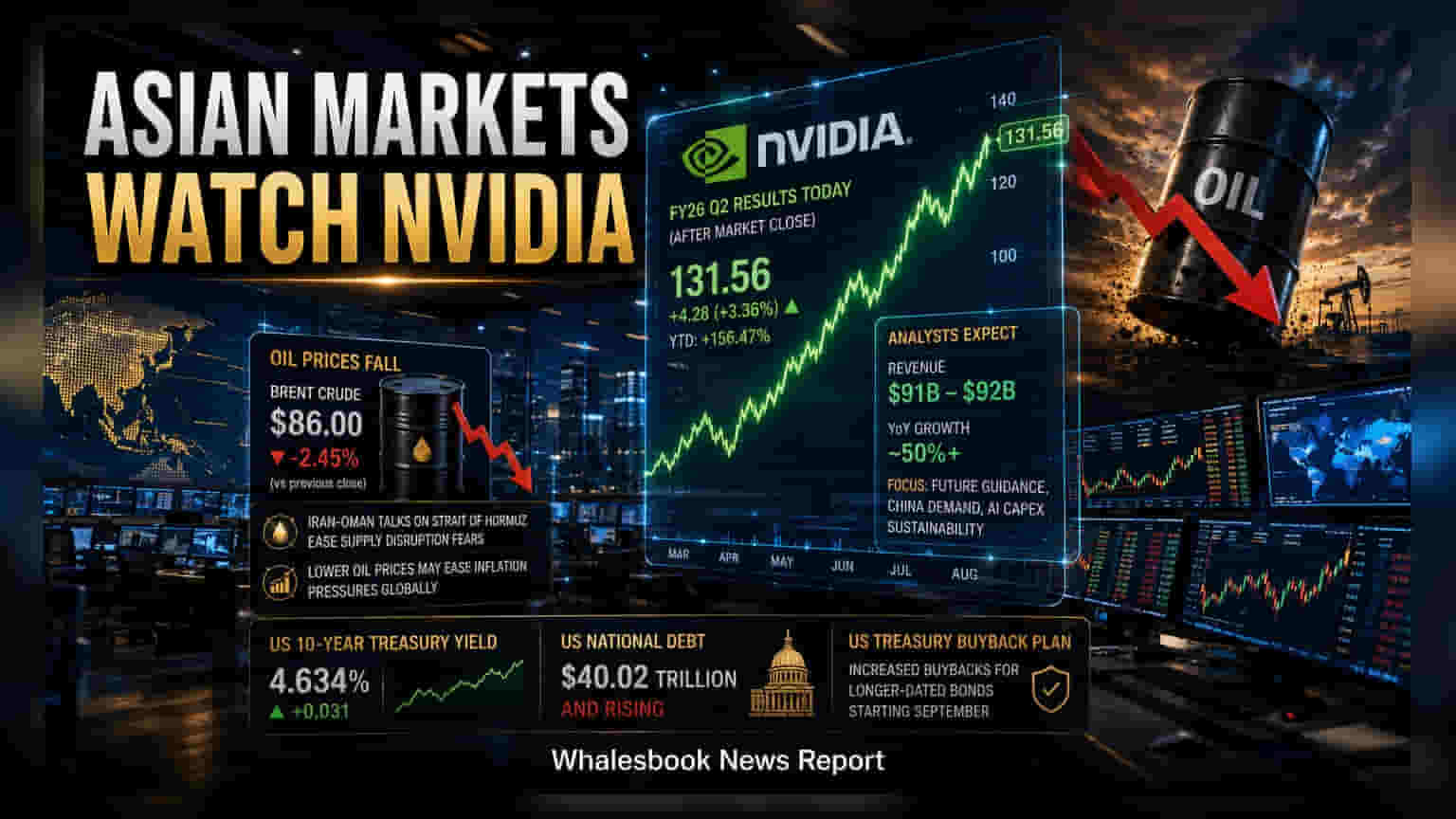
Asian markets are trading with caution today as investors wait for Nvidia’s second-quarter earnings report. Meanwhile, a drop in oil prices due to signs of reduced tension in the Strait of Hormuz is helping to ease global inflation concerns, even as uncertainty surrounding US fiscal debt levels remains.
Investors across Asian exchanges are showing restraint today, balancing optimism over falling energy costs with anxiety over a major technology test. All eyes are on the semiconductor giant Nvidia, which is set to report its fiscal second-quarter financial results after the market close today.
The Nvidia Earnings Test
Nvidia is widely viewed as the primary indicator for the current artificial intelligence investment cycle. Analysts project the company will report revenue between $91 billion and $92 billion for the quarter, which would represent significant year-over-year growth. However, for investors, the actual profit figure may be less important than what the company says about the future.
The central concern for the market is whether the massive capital spending by global companies on AI infrastructure will remain sustainable in the long run. Even if Nvidia meets or beats current revenue expectations, investors are likely to focus heavily on the company's forward guidance and comments regarding demand for its chips, particularly in key markets like China. If the outlook fails to match the market's high expectations, it could lead to volatility in technology stocks.
Oil Prices and Inflationary Relief
Meanwhile, commodity markets are reacting to potential diplomatic progress in the Middle East. Brent crude futures have fallen to approximately $86 per barrel. Reports of renewed discussions between Iran and Oman regarding the management of the Strait of Hormuz—a vital passage for global oil shipments—have helped lower fears of supply disruptions.
This drop in energy prices is generally seen as positive for the broader economy. Lower oil costs can help ease inflationary pressures, potentially reducing the need for central banks to keep interest rates high for longer. This provides some support to sentiment, even as other macro risks remain present.
Macroeconomic Clouds and US Debt
The broader market remains sensitive to fiscal health in the United States. With the US 10-year Treasury yield sitting at 4.634%, investors are keeping a close watch on government debt, which has now crossed the $40 trillion mark. To help manage this, the US Treasury has announced plans to increase its bond buyback operations for longer-dated securities starting in September to support market liquidity.
While these buybacks aim to lower borrowing costs and calm the bond market, the sheer size of the national debt continues to drive uncertainty among long-term investors. Moving forward, market participants will likely look for clues in Nvidia’s management commentary on future demand, as well as any further updates regarding regional stability in the Middle East, to determine the next direction for global markets.