

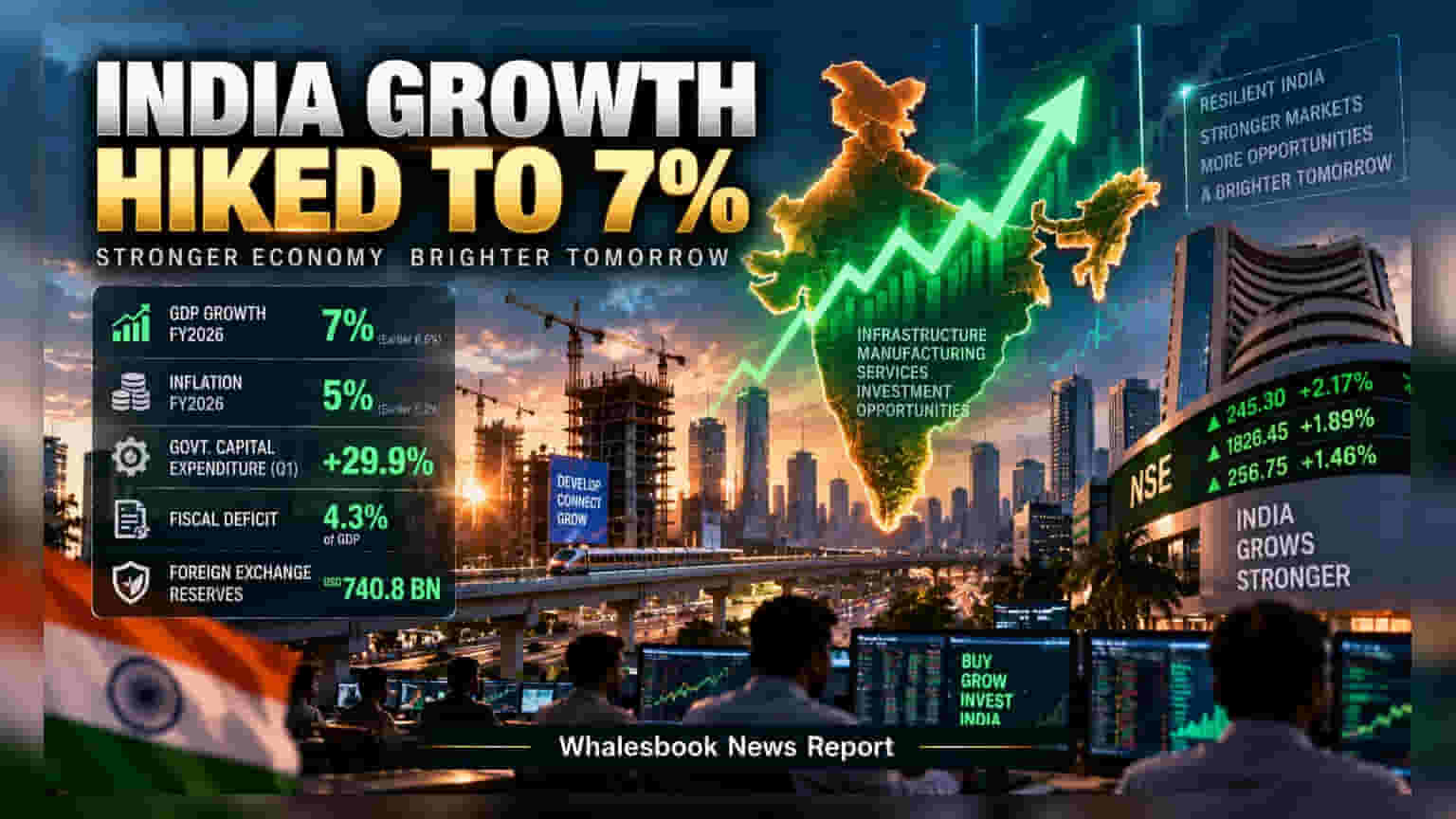
The Asian Development Bank has increased its growth projection for the Indian economy to 7 percent for the current fiscal year. This upgrade follows strong infrastructure spending and resilient performance in the manufacturing and service sectors. Lower inflation expectations further support the positive outlook, though global volatility and climate-related risks remain areas for investors to monitor.
The Asian Development Bank (ADB) has revised its economic growth outlook for India, projecting a 7 percent expansion for the current fiscal year. This is an improvement from the previous estimate of 6.6 percent, reflecting a stronger-than-anticipated performance in the first quarter of the year. The upgrade comes despite various global challenges, including geopolitical tensions in West Asia that have historically affected supply chains and commodity prices.
Drivers of Domestic Growth
A major contributor to this growth is the sustained focus on public infrastructure. The Indian government saw a 29.9 percent increase in capital spending during the first quarter. For investors, this level of spending often supports order books for companies in sectors like construction, cement, steel, and capital goods. The manufacturing and service industries have also shown notable resilience, with increased adoption of logistics technology and artificial intelligence contributing to broader operational efficiency across the economy.
Inflation and Monetary Stability
The ADB has also adjusted its inflation forecast for the current fiscal year to 5 percent, down from 5.2 percent. This shift in the inflation outlook is important for market stability, as it provides more room for the Reserve Bank of India (RBI) to manage monetary policy. While inflation has been brought under control, the central bank maintains a cautious stance. Investors often watch the RBI’s repo rate decisions closely, as any sudden increase in interest rates to combat inflation can raise borrowing costs for corporations and affect their profit margins. Stable inflation generally provides a better environment for corporate earnings and consumer spending.
Fiscal Health and External Buffers
India’s fiscal position remains stable, with the deficit projected at approximately 4.3 percent of the GDP. This stability is largely supported by strong direct tax collections, which help the government maintain high levels of investment even during periods of global economic uncertainty. On the external front, India has built a significant buffer with foreign exchange reserves now reaching USD 740.8 billion. This large reserve pile provides a safety net against fluctuations in global commodity prices and potential currency volatility, which is a positive signal for macroeconomic stability.
Future Outlook and Risks
While the growth outlook is positive, the ADB report highlights certain risks that could affect the trajectory. Climate-related phenomena and unpredictable global energy prices remain key variables. If these factors lead to supply disruptions or sudden cost increases, they could place pressure on profit margins for import-dependent industries. For the coming months, the most specific monitorable for investors will be the RBI’s policy meetings, progress in agricultural productivity, and the consistency of government capital expenditure. These factors will determine whether the economy can sustain this momentum as it moves toward the next fiscal period.