

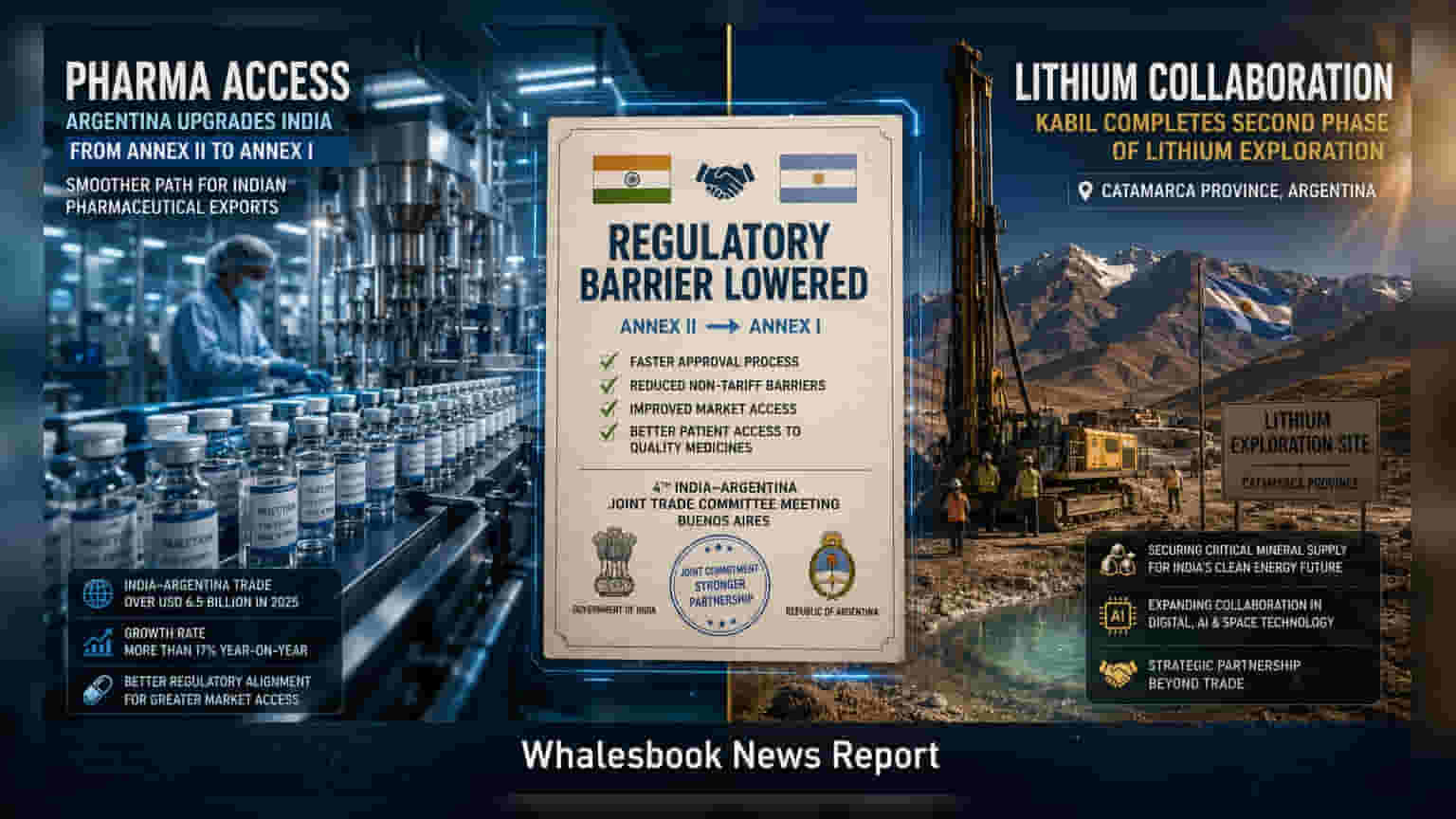
Argentina will elevate India’s status in its pharmaceutical regulatory framework, simplifying market entry for Indian drug exporters. This policy shift, confirmed during recent bilateral trade meetings, aims to reduce trade barriers and strengthen cooperation in energy and technology sectors.
Argentina has committed to upgrading India’s status within its pharmaceutical regulatory framework, moving it from Annex II to Annex I. This shift is designed to eliminate long-standing non-tariff barriers, creating a more direct and efficient path for Indian pharmaceutical products to enter the South American market. The decision follows the 4th India-Argentina Joint Trade Committee meeting held in Buenos Aires, where both nations agreed to streamline procedures to boost medical access.
For Indian pharmaceutical companies, this regulatory change is a positive step toward improving operational ease. By simplifying the approval process, manufacturers may face fewer bureaucratic hurdles when registering or exporting medicines to the region. This development comes as bilateral trade between India and Argentina reached over USD 6.5 billion in 2025, maintaining a steady annual growth rate of more than 17%. The focus is now on deepening this integration, with both countries working to update the India-Mercosur Preferential Trade Agreement to further reduce transaction friction.
Beyond the immediate benefits for the pharmaceutical sector, the trade discussions highlighted broader strategic collaborations. India’s state-owned mineral company, Khanij Bidesh India Ltd (KABIL), has completed the second phase of drilling for lithium exploration in the Catamarca province. This project marks a significant move for India to secure critical mineral supplies, though investors often track such international mining ventures for risks related to project timelines, operational costs, and geological feasibility. The collaboration is also extending into high-growth areas, including digital infrastructure, artificial intelligence, and space technology.
While the regulatory easing for pharma exports presents an opportunity, stakeholders may monitor the broader risks associated with trade in this region. High logistics costs due to geographical distance and the potential for economic volatility in Latin American markets can influence the profitability of exports. Additionally, while regulatory upgrades generally support easier market access, the final impact on individual company margins will depend on their ability to manage supply chain costs and navigate the competitive landscape in South America. Investors and industry participants will likely watch for the formal implementation of these regulatory changes and the subsequent impact on export volumes and market share for Indian firms.