

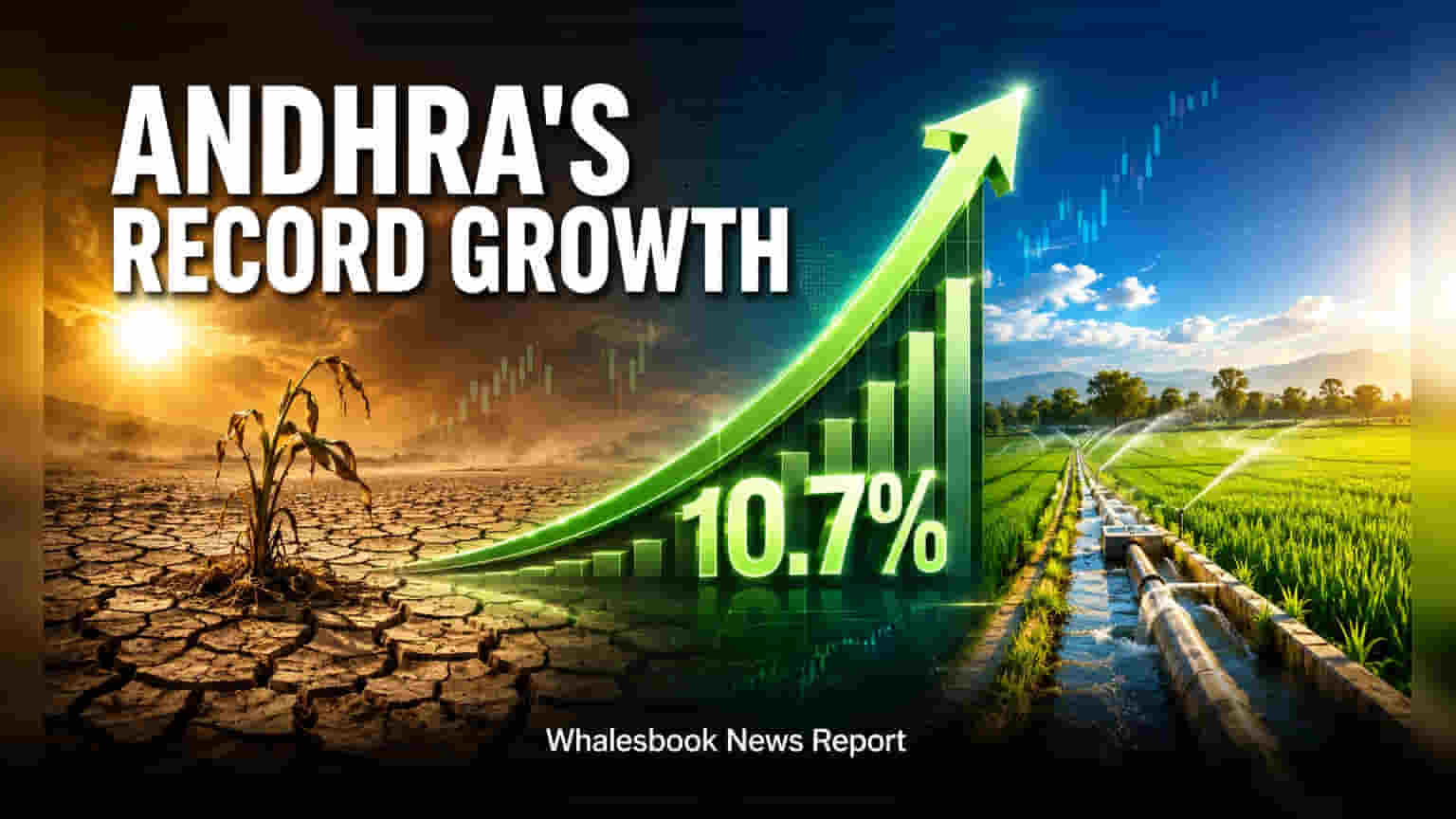
Andhra Pradesh reported 10.7% economic growth in the second quarter of 2025-26, led by strong gains in agriculture and industry. While GSDP trends are improving, the state faces a critical 51.8% rainfall deficit. Observers are tracking how the government manages these climate-related resource challenges alongside rising GST collections.
Andhra Pradesh has recorded a strong 10.7% economic growth rate for the second quarter of the 2025-26 fiscal year. This expansion, outlined in the latest monthly economic report, highlights a shift in the state's fiscal performance, with GSDP growth rising to 9.9% for the year, up from 6.5% in 2023-24. While these figures indicate positive momentum, the state’s economic outlook remains closely tied to managing significant climate-related challenges.
The growth was broad-based, with the agricultural sector leading at 13.5%, followed by the industrial sector at 10.6% and the services sector at 9.9%. Notably, GST collections have also seen a positive trend, increasing by 21% to reach ₹13,282 crore, providing a useful indicator of underlying economic activity and tax compliance within the state.
Despite the strong headline growth, the state is navigating a difficult weather pattern. A cumulative rainfall deficit of 51.8% was recorded for June and July 2026, largely attributed to El Niño conditions. This deficit has caused concerns regarding water availability, particularly in major reservoirs like Srisailam and Nagarjuna Sagar, which are essential for both irrigation and power generation. The reliance on mining and electricity to support industrial growth, while manufacturing activity remains varied, is a dynamic that businesses operating in the region are monitoring closely.
Chief Minister N. Chandrababu Naidu has set an ambitious goal to reach a 15% growth target. To achieve this, the administration is focusing on integrating technology across government departments to improve resource management and operational efficiency. Adaptive strategies, such as the diversion of Godavari floodwaters to support the Krishna Delta, are being used to mitigate the immediate impact of the water shortage.
For readers, it is important to clarify that this information pertains to the economic performance of Andhra Pradesh as a state, not a publicly traded company. There are no share prices, stocks, or exchange filings associated with this government entity. Instead, this data serves as a macroeconomic indicator for businesses and investors with exposure to the region's infrastructure, agriculture, and consumer markets.
The most important factors to monitor in the coming months will be rainfall distribution patterns, water levels in key reservoirs, and their subsequent impact on agricultural output and food inflation. The government's ability to maintain high growth while managing these resource constraints will be the primary measure of the state’s economic resilience.