

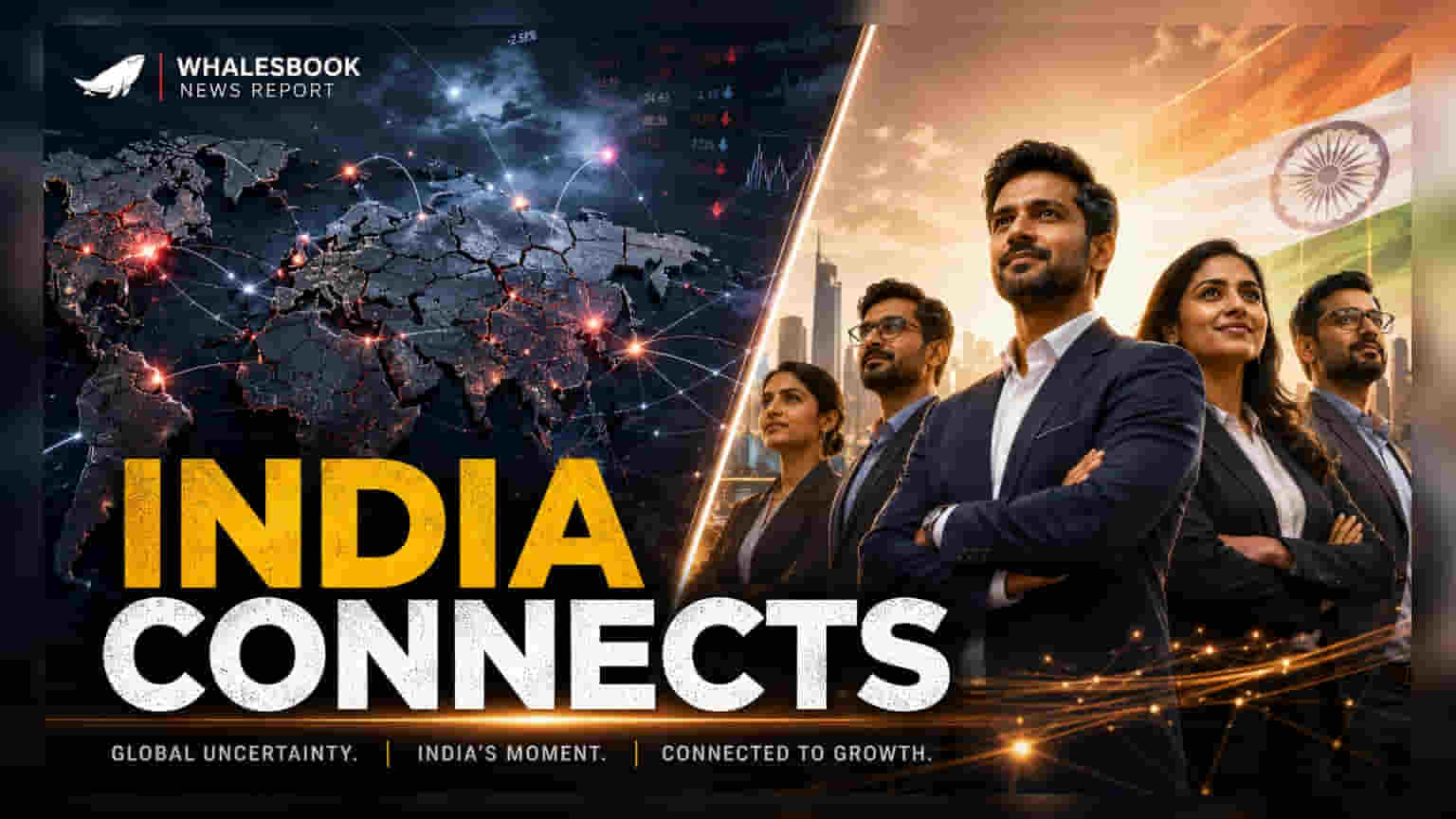
Mahindra Group Chairman Anand Mahindra has identified India's potential to act as a vital 'connector economy' in a divided global market. By leveraging its democracy and strategic neutrality, the country can bridge economic gaps between different global blocs. For investors, this vision underscores a long-term shift toward a 'multi-aligned' trade strategy intended to capture growth as global supply chains rebalance.
Anand Mahindra, the Chairman of Mahindra Group, has proposed that India is uniquely positioned to emerge as a central 'connector economy' in a global environment marked by persistent uncertainty. Speaking to shareholders, he noted that the era of episodic shocks has been replaced by continuous global upheaval, creating a scenario where nations capable of bridging geopolitical and economic divides may gain a distinct advantage.
India’s Strategic Position in Global Trade
Mahindra highlighted several structural assets that he believes support this role, including India’s democratic framework, consistent political stability, and its geographic location. He argued that these factors, combined with the country's growing domestic market and international trust, provide a foundation for India to shift from its historical policy of 'non-alignment' toward a more proactive 'multi-aligned' stance. This approach aims to position the country as a trusted partner that can navigate and connect flexible coalitions rather than being restricted by rigid, traditional trading blocs.
Shifting to an 'Attack Mode' Growth Strategy
The business leader advocated for a transition into what he described as 'Attack Mode.' Drawing a comparison to Formula E racing, he suggested that India must be prepared to accelerate decisively even when global conditions are imperfect. This strategic pivot is intended to help Indian enterprises move beyond passive navigation of the global economy and instead capture market opportunities that arise as the world moves toward a more distributed economic structure.
Investor Context and Market Implications
For investors, the 'connector economy' narrative reflects a broader strategic focus on how domestic industrial leaders intend to participate in shifting global supply chains. As global manufacturers look to diversify their production hubs outside of traditional centers, India’s ability to act as a bridge is often viewed by analysts as a potential driver for sectors like manufacturing, technology, and logistics.
However, the success of this vision depends heavily on the country’s ability to execute infrastructure improvements, maintain competitive cost structures, and navigate complex international trade regulations. Investors monitoring this long-term trend may look for updates on how large industrial groups—including those under the Mahindra umbrella—align their capital spending and business expansion plans with this 'multi-aligned' global environment. The next key monitorables will include shifts in export-import data, progress on large-scale infrastructure projects, and the ability of domestic firms to secure integrated roles in new, flexible global supply chains.