 Whalesbook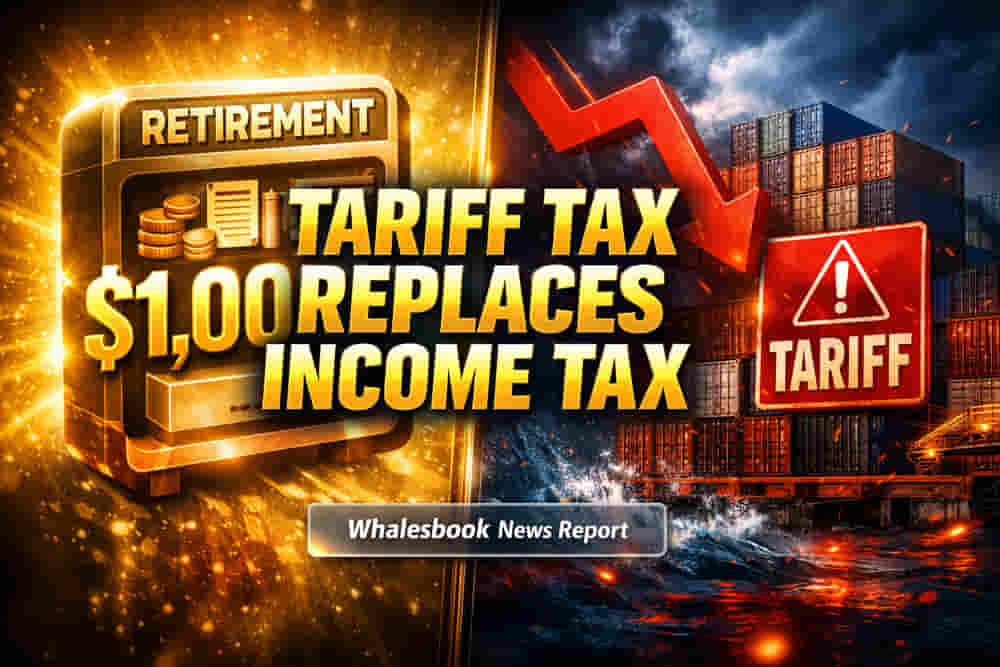


### The Seamless Link
The President's vision, as articulated during his address, pivots towards a significant restructuring of America's fiscal architecture. Beyond the surface-level announcements of expanded retirement options and tax adjustments, a deeper examination reveals the complex interplay between grand policy pronouncements and their practical economic implications, setting the stage for considerable market vigilance.
### The Grand Fiscal Ambitions
Central to the administration's agenda is a new retirement savings vehicle designed to support private-sector workers lacking employer-sponsored plans. This federally backed initiative aims to provide a structured savings avenue, promising a government match of up to $1,000 annually for eligible non-governmental employees. This proposal seeks to address the disparity in retirement benefits between federal and private sector workers, a gap characterized as a "gross disparity." However, the landscape of retirement savings is already populated by established structures. Federal employees, for instance, are covered by the Federal Employees Retirement System (FERS), which includes a defined benefit pension, a Thrift Savings Plan (TSP) akin to a 401(k) with substantial government matching contributions, and Social Security coverage. In contrast, the private sector increasingly relies on defined contribution plans, with fewer companies offering traditional defined benefit pensions. While the new federal match is intended to bolster private savings, its impact will depend on uptake and how it integrates with, or competes against, existing private and public sector retirement frameworks, where federal workers often hold a significant benefit advantage on average.
Simultaneously, the declaration of "no tax on Social Security" warrants a closer look. While the intent may be to alleviate financial burdens, reporting indicates this benefit is temporary, slated to expire in 2029, and is subject to significant exclusions. These exclusions encompass lower-income seniors already exempt from taxation on their benefits, individuals claiming benefits before age 65, and those exceeding specific income thresholds. The deduction phases out as income rises [cite: original news]. Furthermore, Social Security benefits themselves can be subject to federal income tax, potentially up to 85%, depending on an individual's "combined income" (adjusted gross income, tax-exempt interest, and half of Social Security benefits), with defined thresholds for single filers and couples. The payroll tax itself, which funds Social Security, is levied only up to an annual earnings maximum (e.g., $184,500 in 2026), meaning high earners cease contributing long before those with lower incomes, making the "no tax" claim nuanced.
### The Tariff Gambit's Economic Tightrope
Perhaps the most economically charged proposal is the suggestion that tariffs could eventually supplant a substantial portion of the modern income tax system. This pivot in tax policy rhetoric, positing that tariffs paid by foreign countries would "substantially replace" domestic income taxes, is met with considerable skepticism from economists. Analysis consistently shows that tariffs are mathematically incapable of fully replacing the revenue generated by income taxes, given the vastly larger base of income relative to imports. Replacing the approximately $2.7 trillion in federal income tax revenue with tariffs would necessitate astronomically high rates on imports, which would likely shrink the import base itself, creating a self-defeating cycle. Historically, tariffs have acted as taxes paid by importers, leading to higher prices for consumers and businesses due to pass-through costs, rather than being absorbed by foreign entities. The Smoot-Hawley Tariff Act of 1930 serves as a stark historical reminder, widely believed to have exacerbated the Great Depression through retaliatory measures and increased consumer prices. While tariffs can generate revenue and protect domestic industries, their broader economic effects often include reduced purchasing power, potential job losses in import-dependent sectors, and inflationary pressures.
### The Hedge Fund View: Sustainability and Unintended Consequences
From a risk-averse institutional perspective, the ambitious fiscal proposals present a challenging outlook. The fundamental viability of replacing income tax revenue with tariffs is questionable; economic models and historical data suggest tariffs fall far short of generating the required trillions in revenue and would impose significant costs on consumers and businesses. For example, tariffs implemented in 2025 generated an estimated $194.8 billion in additional revenue, with an effective rate of 11.7%, but also saw imported goods prices rise significantly. This passthrough means American consumers and businesses bear the brunt of these duties, not foreign governments. The threat of retaliatory tariffs from trading partners looms large, potentially igniting trade wars that disrupt supply chains and harm economic output.
The Social Security tax claims, while offering immediate relief, are undermined by their temporary nature and specific exclusions, potentially failing to benefit the most vulnerable or creating confusion for higher earners. Furthermore, the existing Social Security payroll tax already has a cap, meaning wealth is not taxed proportionally on earnings above a certain threshold. The proposed retirement plan, while intended to broaden access, must be assessed against the robust benefit packages historically offered to federal employees, which often include defined pensions, employer matches, and healthcare subsidies that are increasingly rare in the private sector. The core risk lies in the potential for these large-scale fiscal shifts to create economic instability, ignite inflation, and increase federal deficits if revenue projections based on tariffs prove overly optimistic or if economic growth falters under trade tensions.
### Market Anticipation and Policy Undercurrents
The address occurred amidst heightened political tension and a market environment keenly attuned to signals on trade, fiscal policy, and regulatory direction. Entering 2026, inflation, while moderating, remains above the Federal Reserve's target, and interest rates have stabilized around 3.5%-3.75% after cuts in 2025. Economic growth is projected to remain solid, but market sentiment has shown a notable pivot from growth to value stocks in early 2026, indicating a demand for tangible returns amidst broader uncertainty. Historically, trade policy pronouncements from the administration have triggered significant market volatility, with sharp declines often followed by sharp, but sometimes temporary, rebounds when tariffs are paused or altered. The S&P 500 experienced substantial drops, such as a nearly 20% decline in seven weeks following a major tariff announcement in April 2025. Investors will be scrutinizing the details and feasibility of these proposals, balancing optimistic projections of economic growth and consumer income against the potential headwinds of increased trade costs, inflationary pressures, and mounting federal debt, projected to increase by $3.4 trillion over a decade due to legislation like the "One Big Beautiful Bill Act".