 Whalesbook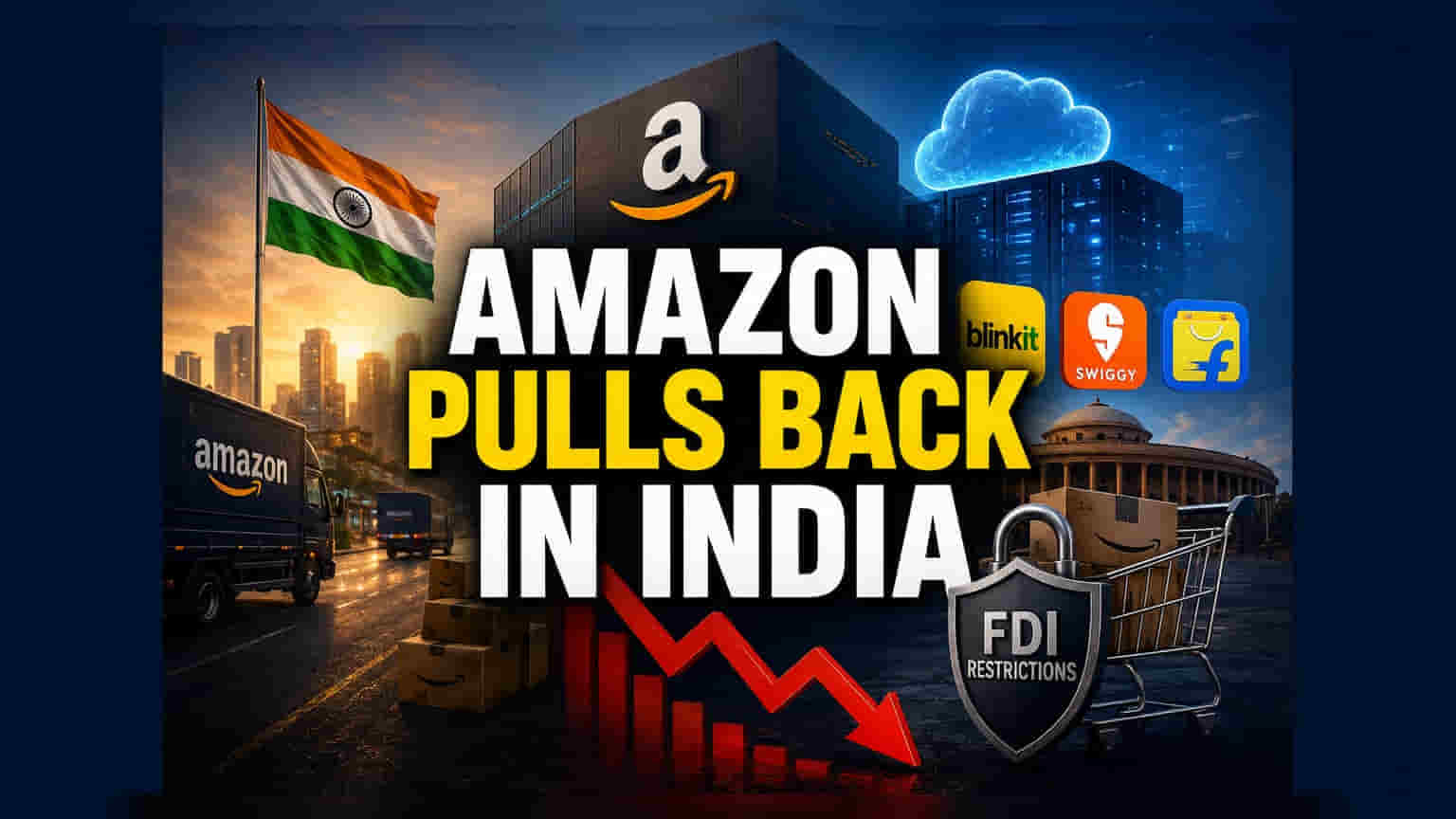


The Institutional Retreat from Aggression
The strategic recalibration within Amazon’s Indian operations reflects a broader institutional mandate under CEO Andy Jassy to enforce fiscal discipline globally. While the company once viewed India as a growth engine that necessitated unlimited capital injection, the current approach emphasizes a shift toward asset-light, high-margin services. This evolution mirrors the company’s broader transition into a cloud-and-logistics infrastructure provider rather than a pure-play retailer, effectively reducing its exposure to the volatile and highly regulated Indian consumer goods market.
Competitive Disadvantages and Structural Limits
Amazon currently faces a multifaceted challenge from domestic entities that benefit from entrenched brick-and-mortar networks and favorable regulatory standing. Reliance Retail’s integration of the Jio ecosystem provides a vertical dominance that Amazon cannot replicate without circumventing India's FDI restrictions. Furthermore, Walmart-owned Flipkart has demonstrated a superior ability to navigate local market nuances, particularly regarding the rapid rise of quick-commerce. While Amazon remains a dominant player, its historical reliance on inventory-heavy logistics has become a structural liability. Data shows that quick-commerce platforms like Blinkit and Swiggy have successfully captured significant market share in high-frequency urban consumption, a segment where Amazon's delivery model has historically underperformed in terms of speed and unit economics.
The Risk of Regulatory Exposure
Operating in India requires constant maneuvering around strict foreign direct investment rules that mandate third-party inventory management rather than direct ownership. This structural limitation has historically inflated operational costs and limited margin expansion. The failure to secure key strategic assets, such as the now-defunct Future Group acquisition, has forced Amazon to compete against a fully formed, integrated digital and physical retail landscape. Analysts note that continued reliance on complex partnerships makes the firm vulnerable to sudden shifts in the regulatory environment, potentially impacting the scalability of its marketplace operations if government scrutiny intensifies toward foreign-owned platforms.
Future Outlook and Capital Allocation
Looking forward, the company's commitment to invest in India by 2030 is increasingly tied to AWS and AI-driven data infrastructure rather than retail expansion. This indicates that Amazon views its cloud division as the primary driver for future profitability in the region, while the retail arm is being managed for cash flow stability rather than explosive growth. Investors are observing a cautious management team that is willing to sacrifice top-line growth in exchange for bottom-line stability, a stark contrast to the aggressive, growth-at-any-cost strategy that defined the previous decade.