

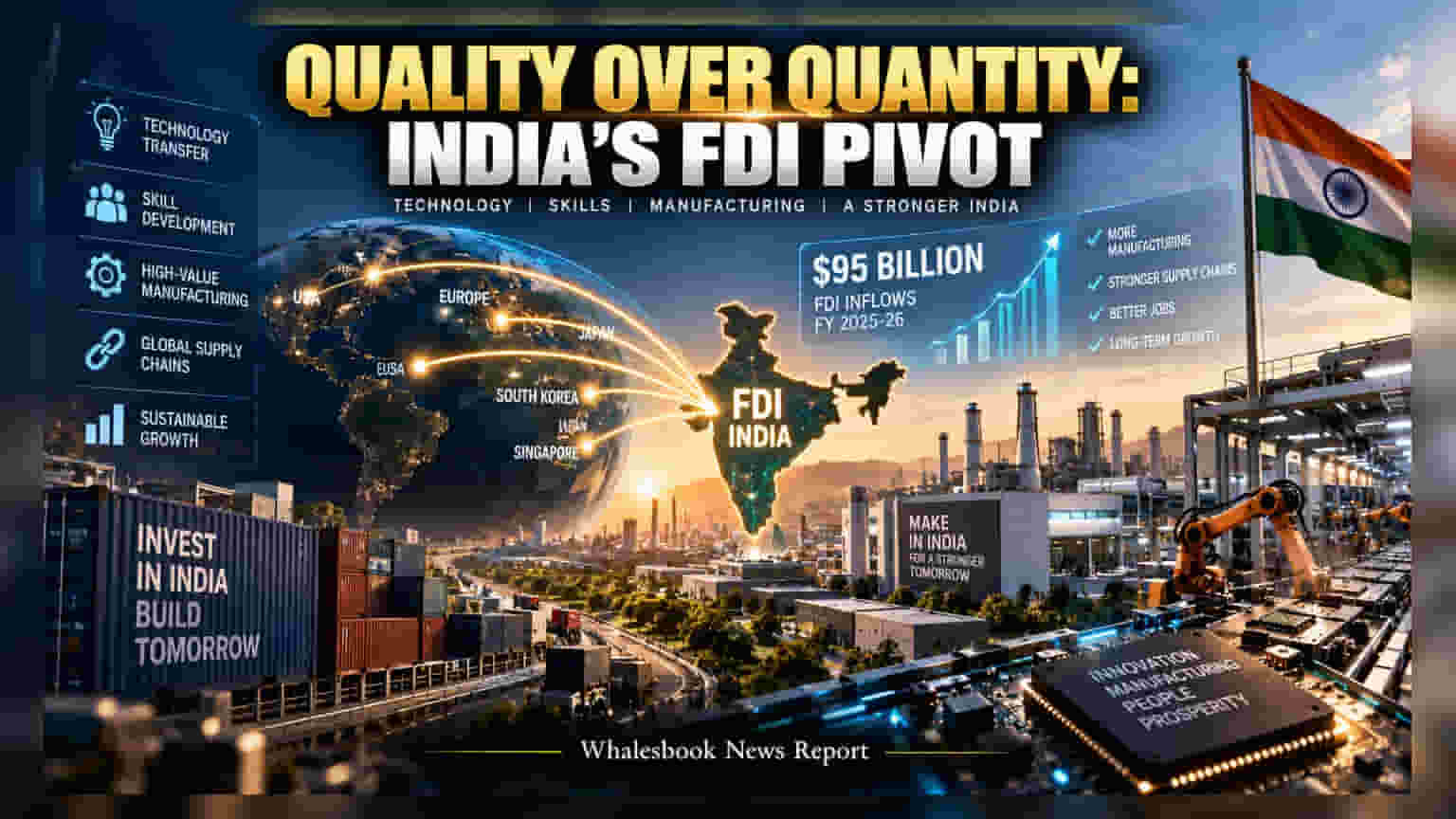
Industry body ASSOCHAM has proposed a new framework to prioritize high-value foreign investments that support technology transfer and job creation. Moving beyond volume-based metrics, this shift targets sustainable growth in manufacturing and R&D. For investors, this could signal more policy focus on long-term industrial capability, potentially impacting how foreign capital interacts with key growth sectors.
The Associated Chambers of Commerce and Industry of India (ASSOCHAM) has formally proposed a strategic shift in how India measures and attracts foreign direct investment (FDI). Moving away from a pure volume-based approach, the industry body is calling for an 'FDI Quality and Impact Framework.' This proposal seeks to prioritize capital inflows that deliver tangible benefits such as technology transfer, skill development, and integration into global supply chains.
India has seen total FDI inflows rise significantly, reaching $95 billion in the 2025-26 fiscal year. While this figure highlights the growing appeal of the Indian market, industry leaders argue that economic utility matters more than the raw total. The proposed framework aims to assign an 'FDI Quality Score' to projects, which would allow the government to streamline approvals for investments that contribute to local manufacturing depth and sustainable regional development.
Historically, the services and software sectors have attracted the largest share of cumulative FDI equity, totaling approximately $791 billion. While these sectors have been crucial for growth, the new framework specifically aims to encourage more foreign participation in high-value manufacturing. This aligns with ongoing government efforts to scale up production capabilities, such as those seen in electronics, defense, and semiconductor manufacturing, where the goal is to shift from simple assembly to value-added production.
Operational friction remains a key concern for global investors. The proposal highlights that lengthy dispute resolution and regulatory unpredictability often hinder the efficiency of foreign capital. To address this, ASSOCHAM suggests replacing the current single-window clearance system with a more integrated 'single process' portal. This digital upgrade aims to manage approvals through a centralized dashboard with strict time-bound mandates.
For investors, these policy discussions are important monitorables. If adopted, a quality-first framework could lead to more targeted policy support for sectors that bring advanced technology and high-quality jobs to India. This change would likely influence how multinational corporations structure their expansion plans, prioritizing operational efficiency and long-term integration into the local economy. The final impact will depend on how the government balances the need for quality-focused screening with the objective of keeping the entry process simple and attractive for global businesses.