 Whalesbook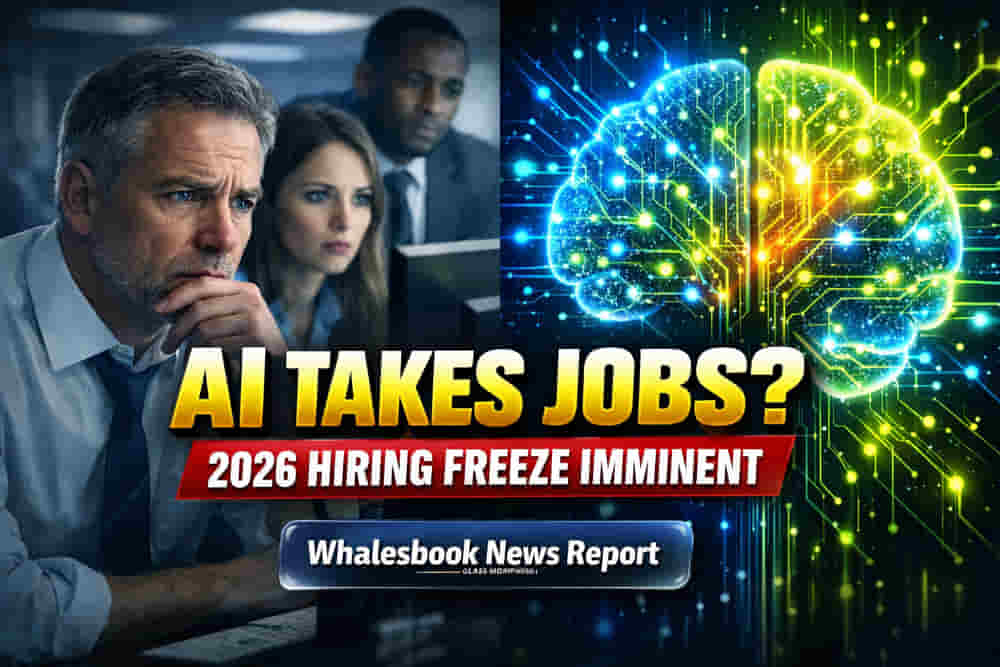
Corporate America Eyes Leaner Future, Pauses Hiring for 2026
Corporate leaders across the United States are signaling a significant shift in strategy for 2026, with a pronounced emphasis on maintaining lean operations and a distinct reluctance to expand workforces. The prevailing sentiment suggests a future where technology, particularly artificial intelligence, will absorb an increasing share of tasks, leading to minimal anticipated hiring growth.
The Core Issue
Forecasters from jobs site Indeed predict a landscape of relatively subdued hiring in 2026. Companies like e-commerce giant Shopify and financial technology firm Chime Financial have already publicly committed to keeping their employee bases largely unchanged. This trend was further underscored at a recent gathering of chief executive officers organized by the Yale School of Management, where a striking 66% of surveyed leaders indicated plans to either reduce staff or maintain current team sizes. Only one-third of respondents expressed intentions to hire new personnel.
Economic Uncertainty and AI's Role
This hiring pause is not a new phenomenon, extending back several months. The U.S. unemployment rate climbed to 4.6% in November, its highest point in four years. While sectors like healthcare and education continued to add jobs, the white-collar labor market is showing signs of stagnation. Prominent employers, including Amazon.com, Verizon, Target, and United Parcel Service, have recently implemented cuts in their white-collar divisions, contributing to worker anxiety. This reluctance to add staff stems from broader economic concerns and a growing conviction that artificial intelligence can handle a greater volume of work within major corporations. Additionally, some companies are still adjusting after overhiring in the post-pandemic era.
Official Statements and Responses
Federal Reserve governor Christopher Waller remarked at the Yale summit that the labor market is approaching zero job growth, which he described as unhealthy. He noted that many CEOs are delaying hiring decisions, waiting to assess AI's potential for job replacement. "Everybody's afraid for their jobs. I'm dead serious," Waller stated, highlighting the pervasive fear among workers.
International Business Machines CEO Arvind Krishna reported that employee departures from the technology firm are at their lowest rate in three decades, with voluntary attrition below 2% in the U.S. This reduced turnover naturally leads to less need for new hires. Similarly, Shopify's Chief Financial Officer Jeff Hoffmeister indicated no plans to increase head count in the coming year, emphasizing continued discipline on staffing levels. Wells Fargo CEO Charlie Scharf confirmed the bank anticipates a reduction in staff as it moves into the next year, a continuation of a trend that has already seen its workforce shrink significantly since 2019. Scharf believes AI's impact on staffing will be "extremely significant," acknowledging the difficulty executives face in discussing future headcount reductions.
Future Outlook
Economists at Indeed foresee a continuation of these trends into 2026, predicting the unemployment rate to remain around 4.6%. Industries such as data analytics, software development, marketing, and entertainment are experiencing weaker demand for new openings, while healthcare and construction show stronger posting numbers. However, if the economy experiences robust expansion, some employers might eventually need to increase hiring to meet growth objectives. "You can't have this low-hire, low-fire (environment) with growing GDP for too long," noted Laura Ullrich, director of economic research at Indeed, suggesting that a shift in dynamics is inevitable if economic growth accelerates.
Impact
The current hiring environment suggests increased job security for existing employees in some sectors but presents significant challenges for job seekers, particularly in white-collar fields. Companies relying heavily on AI and automation may see efficiency gains but could face public scrutiny regarding job displacement. The broader economic implication points towards a potential slowdown in consumer spending if wage growth stagnates due to limited hiring.
Impact Rating: 7/10
Difficult Terms Explained
- White-collar: Refers to employees in professional, managerial, or administrative jobs, typically performed in an office setting.
- Voluntary attrition: The process where employees choose to leave a company, for instance, by resigning, rather than being terminated or laid off.
- Artificial Intelligence (AI): A field of computer science focused on creating systems that can perform tasks typically requiring human intelligence, such as learning, problem-solving, and decision-making.
- Gross Domestic Product (GDP): The total monetary or market value of all the finished goods and services produced within a country's borders in a specific time period.
- Head count: The total number of employees in a company or organization.