 Whalesbook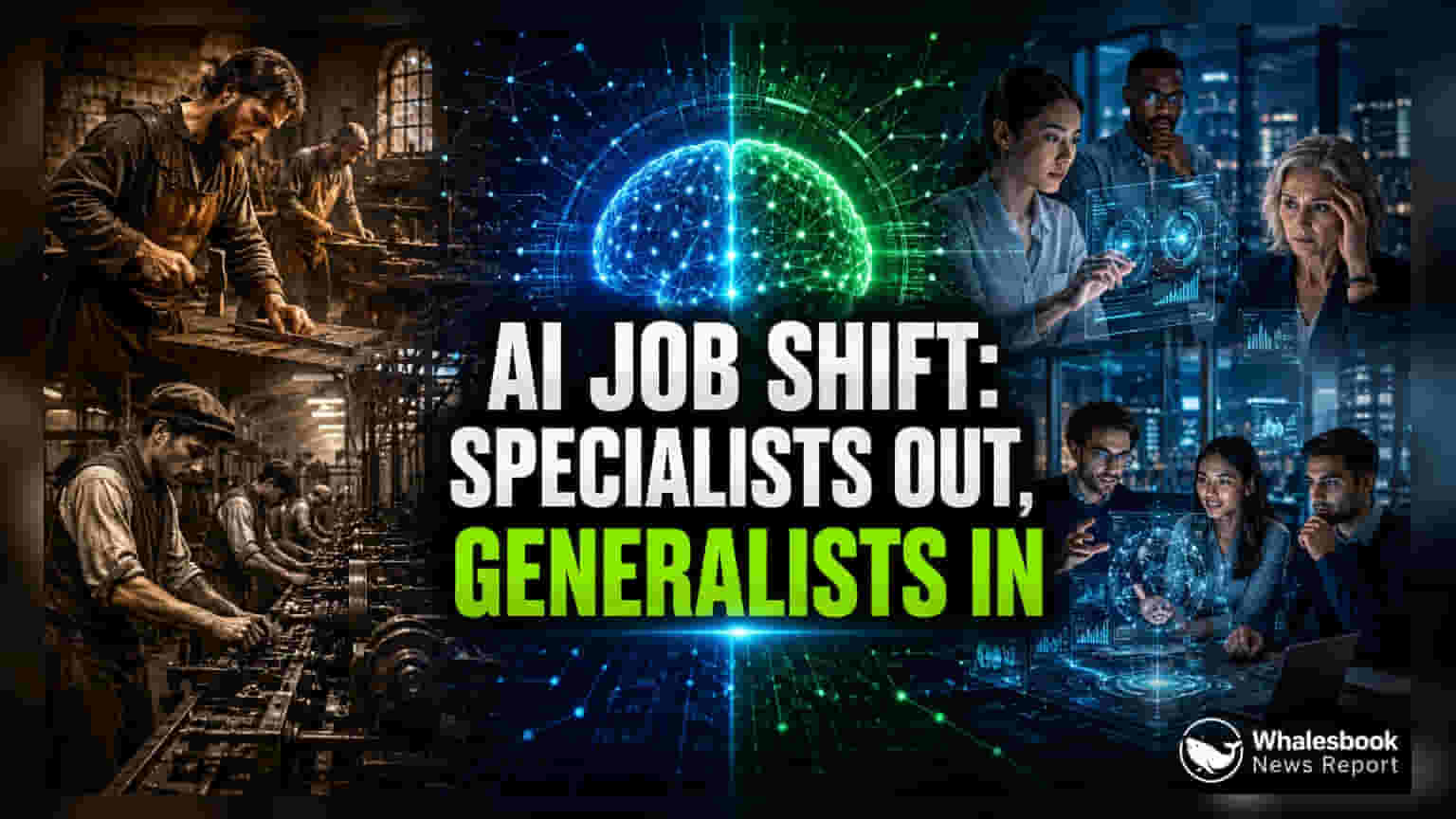


AI Challenges Deep Specialization
AI is driving a major change in how work is valued, moving away from narrow specialization. AI tools can now help people manage complex tasks like investing and tax preparation without needing human experts. In companies, AI is assisting managers with tasks like writing documents and scheduling, potentially leading to smaller teams. This shift poses a challenge for countries like India, whose economy relies on providing specialized outsourced services. AI's ability to automate these tasks could reduce the cost-effectiveness of traditional outsourcing.
Specialized Roles That Remain Secure
Not all specialized jobs are equally threatened by AI. Roles requiring physical work, nuanced decision-making, creativity, and the ability to handle unpredictable situations are likely to remain safe. These include jobs like scientists, engineers, surgeons, chefs, and therapists, where deep experience and interaction with the physical world are key. For these professions, AI will likely serve as a powerful assistant rather than a replacement.
Jobs Most Affected by AI
Process-specific roles are expected to see the biggest impact from AI. Jobs such as junior stock analysts, software testers, HR screeners, and customer service agents are particularly vulnerable. These jobs often involve repetitive, codifiable, and screen-based tasks that AI can readily automate.
The Rise of the Generalist Worker
As AI handles more specialized tasks, many workers may shift to related functional areas. This could mean moving from compliance work to advisory roles or from pure software development to product management. This signals a move towards a more generalist profile, broadening an individual's expertise. Such a change might lead to flatter company structures, with top leadership focusing on strategy and overall responsibility, while other roles become more versatile with AI support. This transition may be difficult for mid-career professionals who have spent years developing highly specialized skills. While AI may not cause mass unemployment, it is fundamentally changing the nature of work, reducing the need for hyper-specialization in knowledge-based, repetitive tasks. This requires continuous learning and adaptation, though access to resources for this development varies across the workforce.