 Whalesbook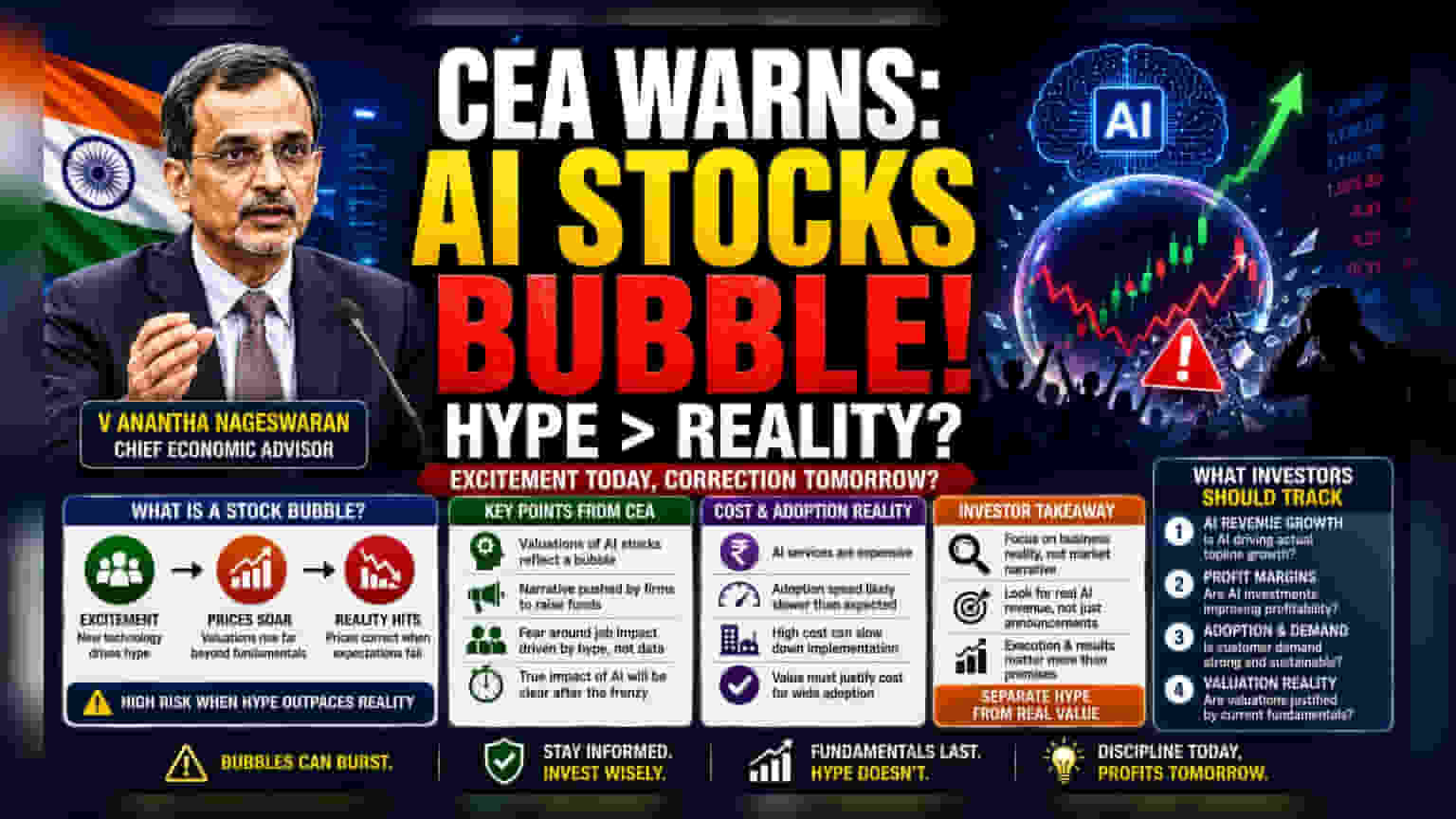


India's Chief Economic Advisor V Anantha Nageswaran has cautioned that the current surge in artificial intelligence-related stock valuations resembles a 'bubble.' He notes that market hype is inflating prices, while companies use AI narratives to attract capital. For investors, the warning highlights the risk of high valuations and the potential for a slower-than-expected adoption of AI services due to high costs. This serves as a reminder to look past market excitement and focus on the fundamental business value of companies.
What Happened
India's Chief Economic Advisor, V Anantha Nageswaran, has publicly warned that the current market valuations of artificial intelligence (AI) stocks reflect a "bubble." He argued that intense investor excitement is driving prices higher, with many companies actively pushing the narrative of AI’s transformative potential to secure funding. According to the CEA, this speculative environment has also fueled unnecessary fear regarding the impact of AI on jobs, suggesting that the public and market response is currently driven more by hype than by verified data.
The Bubble Warning Explained
In simple terms, a stock market "bubble" occurs when investors pay prices for shares that are significantly higher than what the company’s actual profits or business performance can justify. This usually happens when excitement about a new technology makes people rush to buy, fearing they might miss out. The CEA's warning is a caution against this trend. He noted that the true impact of AI on the economy and employment will only become clear after the current market frenzy settles. He emphasized that the narrative surrounding AI is being amplified by firms eager to promise massive productivity gains to attract investors.
The Cost Factor and Adoption Speed
One of the most important investor angles from the CEA’s comments is the link between AI adoption and pricing. He suggested that the speed at which industries adopt AI might be slower than many analysts currently expect. This is primarily due to the cost of these services. If AI technology remains expensive for businesses to implement, they may proceed more cautiously. For investors, this is a vital point to monitor. If companies providing AI services cannot prove that their product offers enough value to justify the high cost, adoption may stall. This could directly affect the revenue growth projections that are currently baked into the high stock prices of many technology firms.
How Investors May Read This
This caution from the government's top economic advisor serves as a sober reminder for investors to look at the 'business reality' rather than the 'market narrative.' When a sector receives massive attention, it is common for companies to talk about their AI plans to boost investor interest. However, actual success depends on concrete results, not just the mention of AI in management reports. Investors may find it useful to check if a company is generating real revenue from its AI services, rather than just spending money on infrastructure that may not yet be profitable.
What Investors Should Track
Moving forward, the primary monitorable for shareholders is the actual execution of AI projects. Investors may want to look at company earnings reports to separate 'AI hype' from 'AI revenue.' Key points to watch include whether companies are seeing actual improvement in profit margins from their AI investments, or if the cost of adoption is putting pressure on their bottom line. The CEA’s view suggests that the market might be ahead of itself, and prudent investors often watch to see if actual demand matches the current high market expectations.