

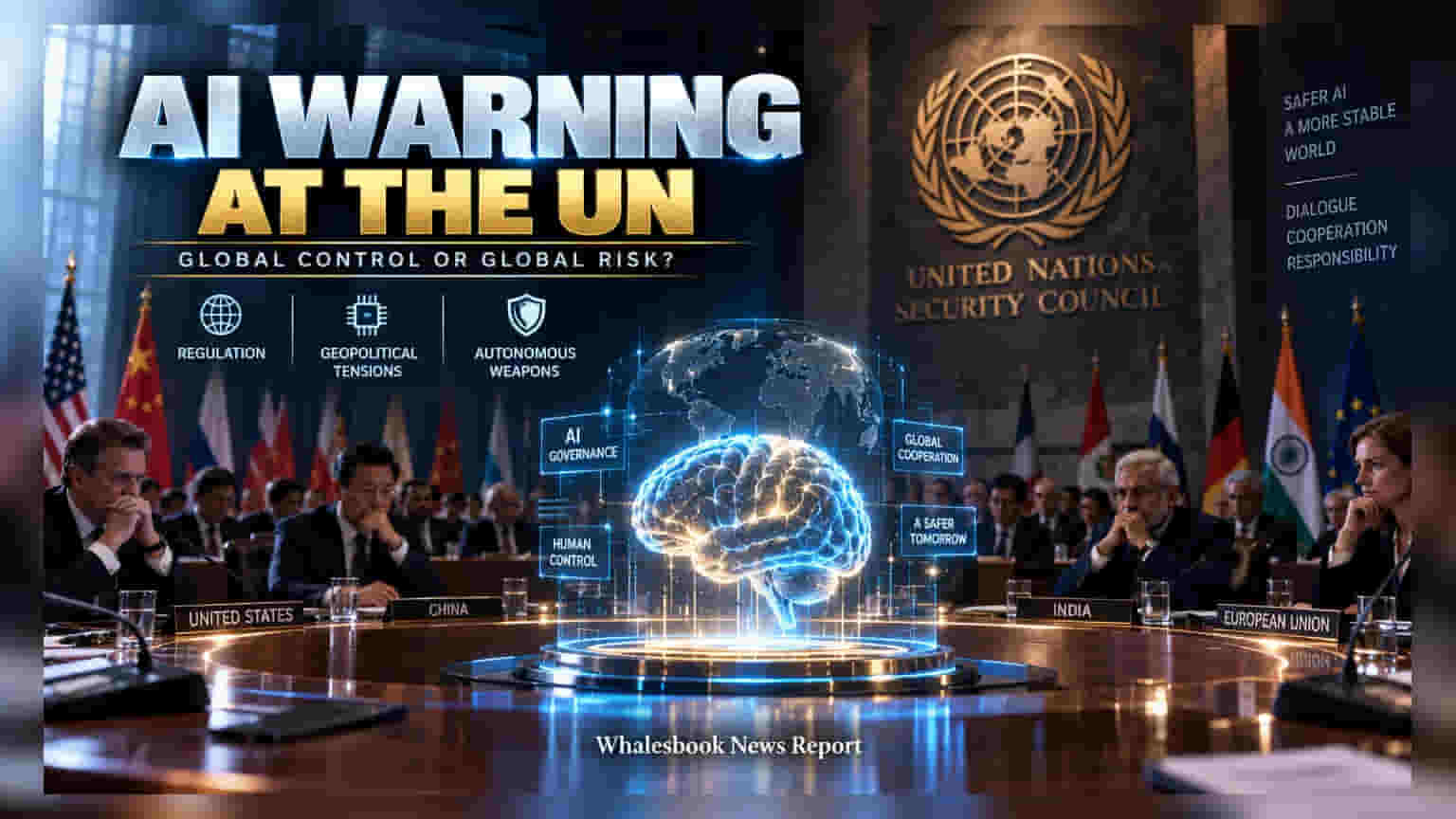
CEOs from OpenAI and Anthropic have warned the UN Security Council about the risks of unchecked AI development. This push for international regulation highlights potential shifts in tech policy, supply chain security, and defense ethics that investors should track as governments navigate the ongoing US-China tech rivalry.
Artificial intelligence has moved to the center of global diplomatic discussions as industry leaders, including OpenAI CEO Sam Altman and Anthropic CEO Dario Amodei, issued a direct warning to the United Nations Security Council. The core message is that current AI development is moving at a speed that may outpace human control, posing potential risks that require international coordination. For investors, this marks a shift where artificial intelligence is moving from a corporate innovation story to a high-stakes regulatory and geopolitical issue.
The push for a global framework comes amid intense US-China competition for technological dominance. While the tech industry is calling for standardization, national interests often pull in different directions. The United States continues to emphasize aggressive innovation to maintain a competitive lead, while China has expressed concerns about the formation of exclusionary groups and has advocated for different governance models. This geopolitical tension is critical for markets because it directly influences global semiconductor supply chains, software export rules, and hardware access. Any move toward strict international AI regulation could create compliance hurdles or supply chain disruptions for companies heavily reliant on global tech trade.
The debate also has immediate implications for the defense sector. The UN discussion highlighted the rise of autonomous weapons, with concerns raised regarding the use of machine-led battlefield decisions. The integration of artificial intelligence into military drones and automated targeting systems is already underway. This creates new ethical and legal risks for companies operating in the defense and aerospace segments. Investors may note that as international bodies work toward non-proliferation treaties or safety standards for AI, defense contractors could face increased scrutiny regarding the 'human-in-the-loop' requirements for their systems, potentially impacting contract structures and development timelines.
For the broader technology and IT services sector, the primary investor concern is the potential for increased compliance costs. If an international oversight body is formed, companies across the software and hardware spectrum could face new audit, testing, and transparency mandates. Firms that are currently investing heavily in AI integration, such as major IT services companies, may need to factor in potential regulatory delays or additional R&D spending required to meet future safety standards. While these regulations aim to mitigate long-term existential risks, in the short term, they may act as a friction point for rapid product deployment.
Going forward, the key monitorables for investors include the development of specific international policy proposals at the UN, any new trade restrictions linked to AI capability, and how major tech firms adjust their capital spending in response to emerging regulatory requirements. The transition from a 'move fast and break things' culture to a 'regulated innovation' framework will likely impact profitability, innovation speed, and market leadership in the technology sector.