 Whalesbook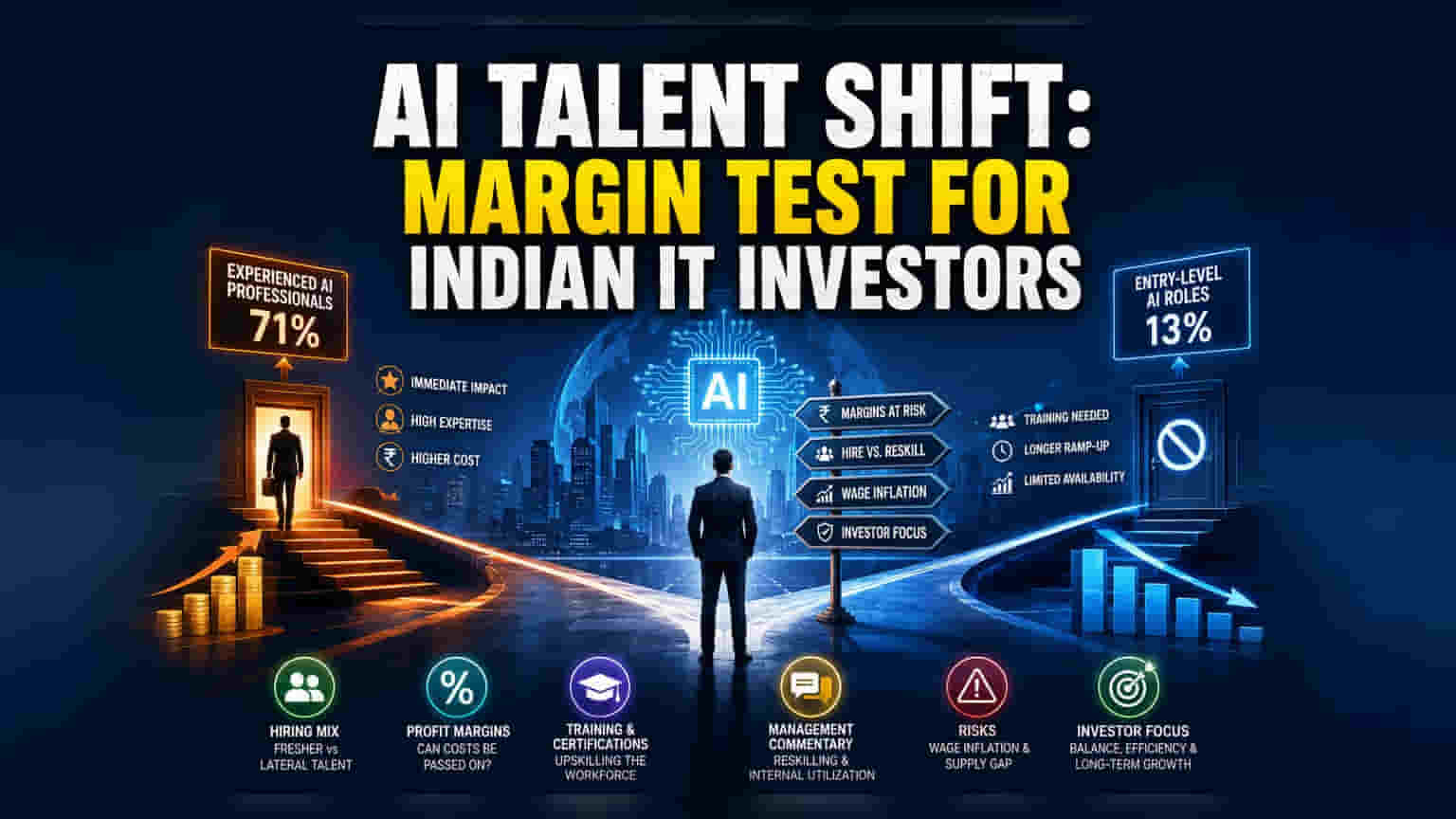


A new report shows 71% of AI job openings target experienced professionals, with only 13% for juniors. For Indian IT investors, this 'senior-first' hiring shift threatens the traditional business model of hiring large batches of freshers to control wage costs, potentially putting pressure on future profit margins.
What Happened
Recent data from the AI-Driven Enterprise (AIDE) Institute highlights a distinct shift in the global job market. After analyzing over 160,000 job postings, the report found that 71% of AI-related roles are being created for experienced professionals. In contrast, entry-level opportunities remain scarce, accounting for just 13% of the total openings. This trend suggests that companies are prioritizing immediate, high-level expertise over training fresh talent.
Why This Matters For Indian IT
The Indian information technology (IT) services sector has historically relied on a 'pyramid model.' This business model involves hiring large numbers of entry-level graduates at lower salaries, training them internally, and slowly increasing their billing rates as they gain experience. This structure keeps wage costs under control and supports healthy profit margins.
If the global demand for AI talent continues to skew heavily toward senior professionals, the traditional hiring model may face disruption. If Indian IT companies are forced to hire expensive, experienced AI experts instead of training freshers, their salary bills could rise significantly. This would put pressure on operating margins unless these companies can pass the higher costs on to their clients through higher service fees.
The Margin Test
Investors may need to pay close attention to how IT companies manage this transition. There is a potential conflict between the need for high-end AI talent and the need to maintain profitability. Companies that cannot successfully retrain their existing workforce in AI technologies may have to enter the competitive market for expensive senior talent. This shift, if it persists, could squeeze profit margins. The core investor monitorable here is the balance between hiring expensive external talent and the company's ability to effectively upskill its current, lower-cost staff.
How Investors May Read This
The shortage of entry-level AI roles also highlights the importance of internal company training programs. Investors should look for management commentary in upcoming quarterly results regarding 'reskilling' and 'internal utilization.' Companies that can move their existing employees up the value chain will likely manage their wage bills better than those forced to rely on external, high-priced talent.
Risks And Concerns
The primary risk for investors is wage inflation. When demand for senior experts significantly outstrips supply, salaries for these roles can rise rapidly. If IT firms cannot maintain their current margin levels due to these rising employee costs, it could affect overall shareholder returns. Additionally, a slowdown in hiring fresh graduates could create a long-term supply gap in the labor pool, making future scaling of operations more difficult and expensive.
What Investors Should Track
Investors may monitor a few key areas in the coming quarters. First, watch for management comments on the hiring mix—whether the company is continuing to hire freshers or shifting toward more lateral, senior-level hiring. Second, look for updates on profit margins and whether the company is successfully passing on cost increases to clients. Finally, observe trends in internal training and certification numbers, as these indicate how effectively the company is preparing its existing staff to meet the demand for AI skills, which is critical for protecting profit margins in the long run.