

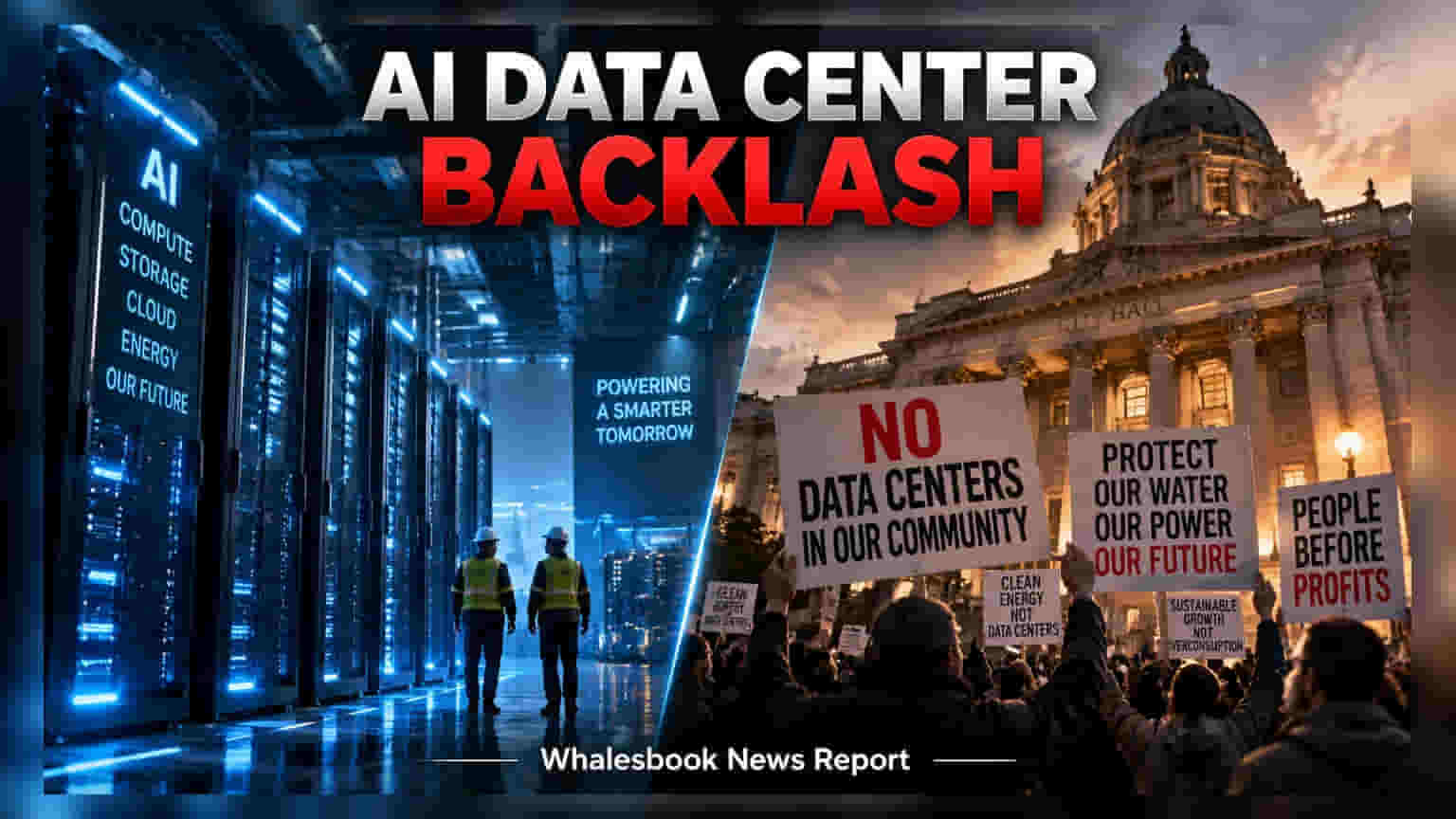
The rapid growth of AI infrastructure is hitting a wall as local communities and regulators block new data center construction over energy and water usage concerns. With over $130 billion in projects delayed or stalled, investors are now facing increased execution risks in a sector previously seen as a guaranteed path to growth.
The narrative of unstoppable growth for artificial intelligence infrastructure is hitting a significant roadblock in the real world. As tech companies rush to build massive data centers to support AI, they are encountering a wave of local resistance and legislative pushback that threatens to derail project timelines and inflate costs.
Projects Stalled by Grid and Resource Limits
What started as scattered community complaints has turned into a major challenge for the data center industry. Recent data indicates that between $130 billion and $162 billion in planned AI data center projects across the United States have been delayed or canceled. This is not simply a matter of neighborhood protests; it is a fundamental clash over resources. Modern AI facilities require immense amounts of electricity and water. In many regions, the local power grid is simply unable to handle the surge in demand. This has led to long interconnection queues, where even finished data centers cannot be turned on because they cannot access the necessary power. In some areas, these delays now stretch beyond five years.
Legislative Hurdles and Regulatory Risk
The resistance has moved from town hall meetings to legislative chambers. Local governments are increasingly enacting moratoriums—or temporary bans—on new data center developments. A notable example occurred in July 2026, when New York State implemented a one-year freeze on permits for large-scale data centers. This trend is repeating across multiple U.S. cities, where officials are demanding more transparency regarding how much water these facilities consume and the actual impact they will have on local power grids and public health.
For investors, this shift introduces a new layer of execution risk. Previously, the primary focus was on the demand for AI computing power. Now, the ability to actually deliver that capacity on schedule has become a critical business hurdle. When a project is delayed by local opposition or an inability to secure power, the money spent on land acquisition and initial construction sits idle. This can drag down returns on investment and force companies to seek out alternative sites, which often comes with higher costs and further administrative complications.
The Operational Reality for Investors
The tension between digital expansion and physical infrastructure limitations is changing how the market views data center investments. The sector is no longer just about building faster computers; it is now about managing a complex relationship with local utilities, governments, and residents. Investors may need to track several factors closely moving forward, including the success rate of permitting applications, the proximity of new projects to reliable power sources, and any company-specific partnerships with utility providers.
While demand for AI infrastructure remains high, the 'social license' to operate has become a variable that can directly affect the bottom line. As power scarcity becomes a defining issue for the sector, companies that can prove they have secured sustainable energy and community support may have a significant advantage over those facing litigation and local blockades.