

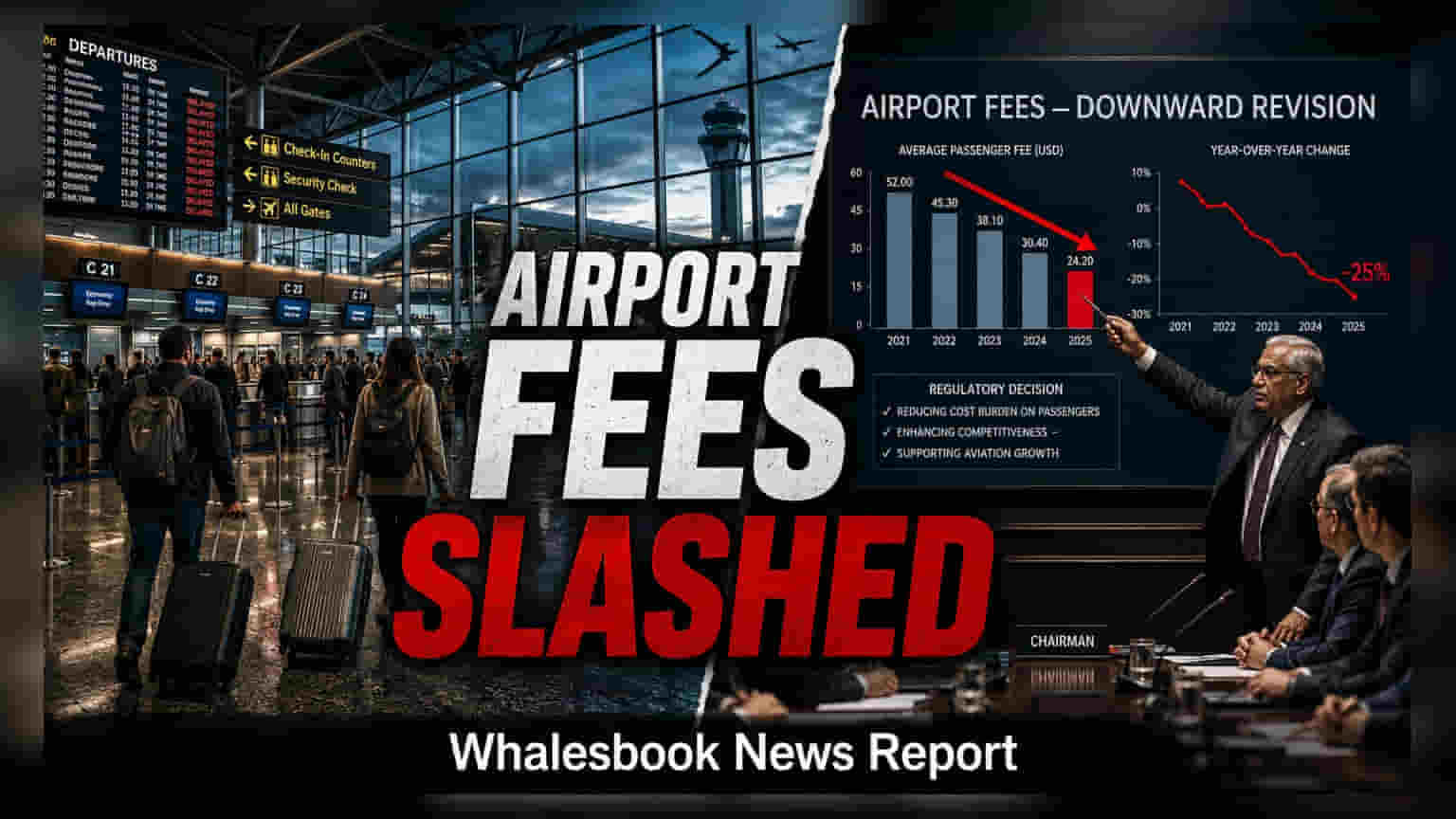
The Airports Economic Regulatory Authority (AERA) has proposed using more non-aeronautical income to lower airport fees for passengers and airlines. This shift could reduce user development charges by changing how commercial revenues, like retail and parking, cross-subsidize operations.
The Airports Economic Regulatory Authority (AERA) has submitted a proposal to the Ministry of Civil Aviation to revise how airport tariffs are determined in India. The proposal aims to increase the share of non-aeronautical revenue—money earned from airport retail, dining, advertising, and parking—that is used to lower the fees charged to airlines and passengers. By using a larger portion of these commercial earnings to offset operating costs, the regulator intends to reduce the burden of aeronautical charges and potentially make user development fees (UDF) negligible for travelers.
Revising the Hybrid Till Framework
Currently, India operates under a 'hybrid till' mechanism established by the National Civil Aviation Policy (NCAP) of 2016. In this system, airport operators retain 70% of their non-aeronautical revenue, while 30% is used to cross-subsidize airport fees. AERA has indicated that this policy may require a review. The regulator suggests that as India’s airport sector matures and traffic grows, the business risk for operators has decreased, potentially justifying a move toward a 'single till' model where a higher percentage of commercial revenue is used to lower passenger costs.
Global Comparisons and Policy Shifts
To support this proposal, AERA has pointed toward international practices in countries such as the United Kingdom, France, and Spain, which predominantly utilize the single till mechanism. Data suggests that in markets where the single till is applied, overall airport tariffs for airlines and passengers tend to be lower than in hybrid systems. However, implementing this change in India would require formal amendments to the National Civil Aviation Policy 2016, a process that involves significant government and stakeholder deliberation.
Investor and Industry Impact
For listed airport operators and infrastructure companies, this shift represents a potential change in earnings visibility. If a single till model is adopted, the ability of operators to retain commercial profits would be curtailed, which could impact their profit margins. Conversely, lower airport charges could stimulate higher air traffic, benefiting the broader aviation ecosystem, including airlines and ground service providers. Investors should track the Ministry of Civil Aviation’s response and any subsequent legislative steps, as the final decision will determine whether the regulatory environment remains investor-friendly for private airport operators or shifts toward maximizing consumer affordability.