

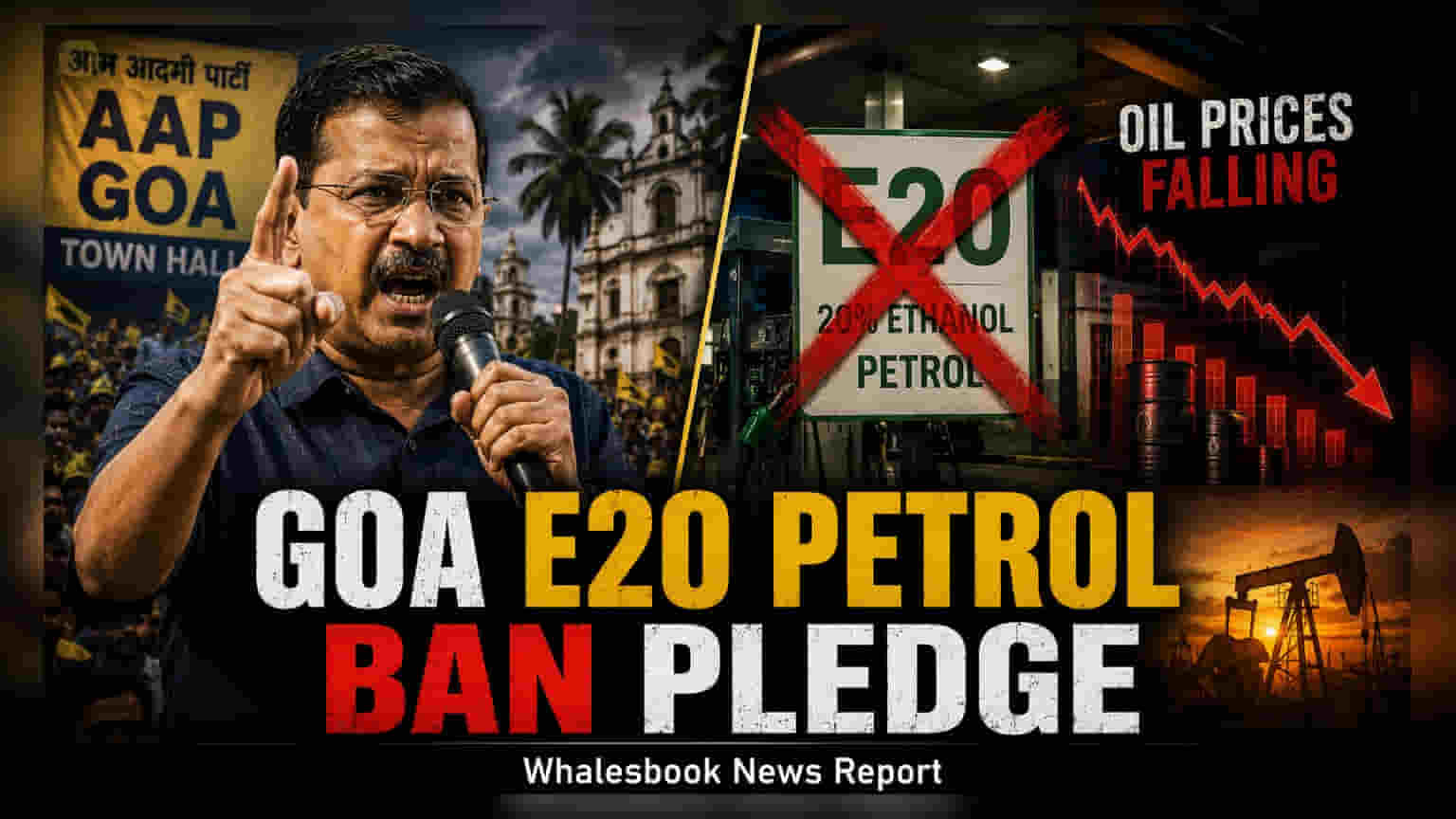
Aam Aadmi Party leader Arvind Kejriwal has promised to ban E20 ethanol-blended petrol in Goa within five days of forming a government after the 2027 state elections. This campaign pledge puts regional political rhetoric in focus against India's national fuel policy. Investors in the automotive and energy sectors should note the potential for policy-related debates as election cycles approach.
Aam Aadmi Party (AAP) national convener Arvind Kejriwal has declared that his party would ban the sale of E20 petrol—fuel blended with 20% ethanol—in Goa within five days if elected to power in the 2027 state assembly elections. This announcement, made during a town hall in Panaji, marks a clear campaign position against the current fuel standards implemented in the state.
The E20 fuel blend is a significant part of India’s national energy strategy. The central government has introduced E20 petrol nationwide to reduce the country’s dependence on crude oil imports, save foreign exchange, and lower carbon emissions. Government officials and industry experts have consistently emphasized that E20 is technically validated and safe for modern engines, designed to work alongside existing vehicle infrastructure without requiring major modifications.
The AAP’s campaign in Goa has focused on consumer concerns, alleging that E20 fuel may lead to higher fuel consumption, potential engine damage, and increased maintenance costs. These points form the basis of the party's promise to roll back the mandate if they take office in 2027. This framing serves as a distinct point of differentiation from the incumbent government, which supports the central policy. The party has previously held public discussions to highlight these concerns.
For investors, the announcement highlights the intersection of national economic policy and regional political narratives. While E20 blending is a key pillar of India's long-term energy security and a significant growth area for the sugar and biofuel sectors, it remains a subject of public debate. Any potential shift in policy in a single state would involve complex jurisdictional and constitutional questions, given that fuel standards and petroleum marketing are largely governed by central regulatory frameworks. Historically, national mandates for fuel quality have remained consistent to ensure stability across the country.
As of August 25, 2026, the promise is a political campaign statement for a future election cycle and has not triggered any shift in national fuel policy or direct impact on the financial performance of listed oil marketing companies (OMCs), auto manufacturers, or sugar producers. The market reaction to such political pledges is often muted unless there is a clear pathway to significant policy reversal.
The key for observers will be to monitor how the debate evolves during the lead-up to the 2027 Goa Assembly elections. While the pledge targets a state-level change, the broader national focus remains on the transition to higher ethanol blends to meet India's energy goals. Investors in the energy and auto sectors generally monitor national policy updates for stability, viewing fuel standard mandates as a baseline for the industry.