 Whalesbook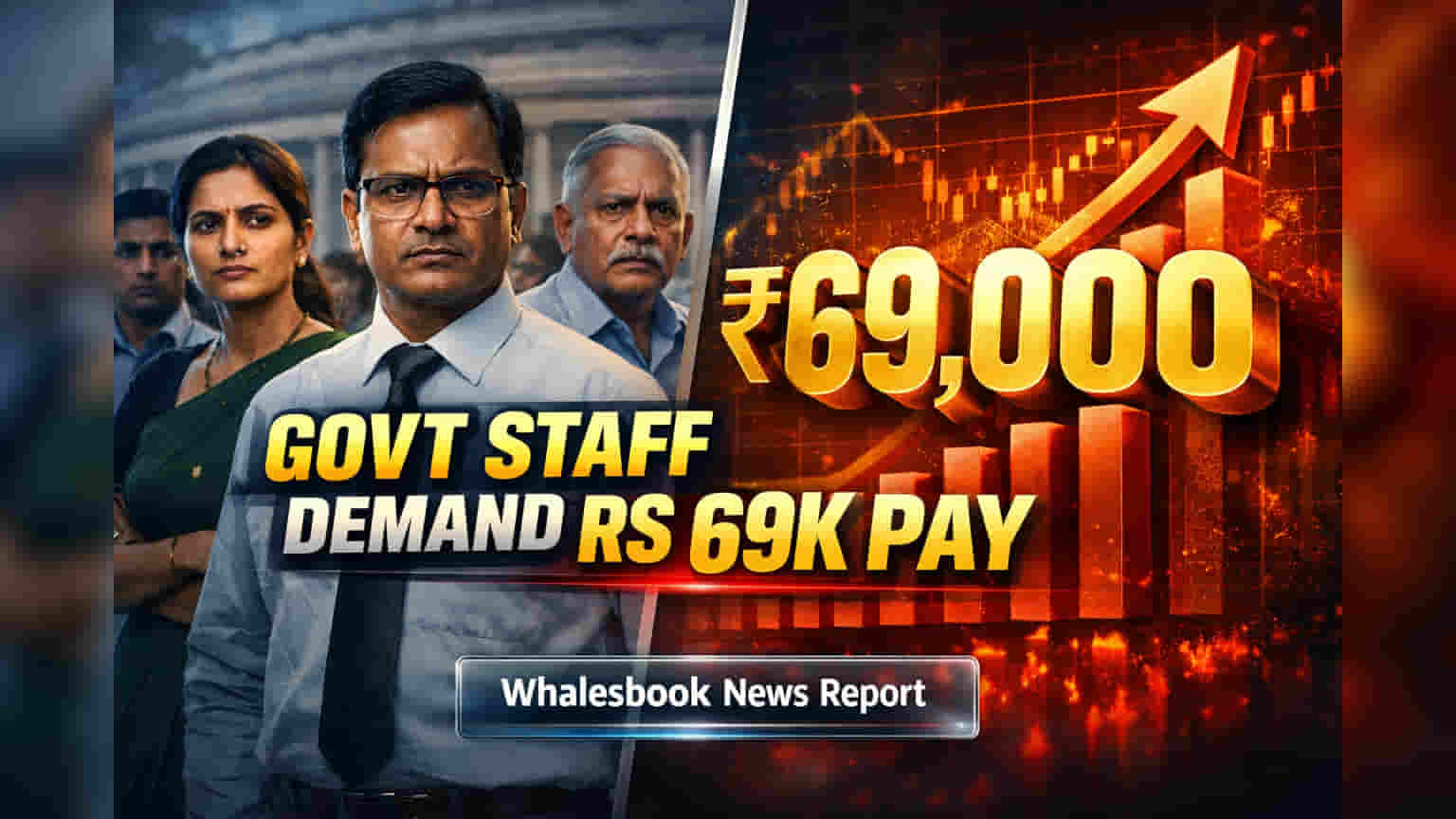


Proposals from central government employee unions for the 8th Pay Commission are more than just pay adjustments. They signal significant potential impacts on public finances, requiring careful thought given India's current economic situation.
Union Proposals for 8th Pay Commission
The National Council of Joint Consultative Machinery (NC-JCM) has submitted its recommendations for the 8th Central Pay Commission. Key demands include a fitment factor of 3.833, which would raise the minimum basic pay for government employees to Rs 69,000. This is a significant jump from the 2.57 fitment factor used in the 7th Pay Commission, where minimum basic pay was set at Rs 18,000. The unions also propose increasing the annual increment rate from 3% to 6%, aiming to better match pay with economic changes. The proposals also redefine the family unit for calculating allowances, expanding it from three to five units to include dependent parents, aligning with recent legislative changes. The union's memorandum also seeks adjustments to Dearness Allowance (DA) calculations, proposing a move to a six-month average and clearer proportionality.
Pay Commissions: Past Impacts and Economic Context
Historically, pay commission recommendations have significantly affected government spending and the wider economy. The 7th Pay Commission, effective January 1, 2016, cost an estimated INR 849 billion (0.6% of GDP) mainly due to salary and allowance increases. However, its implementation boosted consumption, benefiting sectors like automobiles, housing, and consumer goods. The 6th Pay Commission (effective January 1, 2006) led to major recurring costs and has been linked to inflation. The unions' proposed 3.833 fitment factor is much higher than the 2.57 used in the 7th CPC and 1.86 in the 6th CPC, indicating potentially larger fiscal consequences. India currently targets a fiscal deficit of 4.3% of GDP for FY 2026-27, with projected liabilities at 55.6% of GDP. Consumer Price Index (CPI) inflation was around 3.4% in March 2026, while wholesale inflation was 3.88%, suggesting some price pressures. The union's demand for a 6% annual increment, double the current rate, further adds to fiscal considerations.
Fiscal Concerns and Government Balancing Act
While unions argue strongly for employee welfare, their proposals often serve as an initial negotiating stance. The government's response will likely be shaped by the need for fiscal caution, given current deficits and debt levels. Largely meeting these demands for higher salaries and pensions could significantly pressure the Union Budget, possibly diverting funds from infrastructure or social programs. Moreover, a large wage increase could fuel inflation, complicating the Reserve Bank of India's monetary policy goals. Past pay commission awards have sometimes raised concerns with international rating agencies about fiscal sustainability, a risk policymakers aim to avoid. Implementing pay commission recommendations has historically involved a fiscal balancing act for the government, even as it improves employee pay.
Commission's Path Forward
The 8th Pay Commission was officially formed in January 2025 with its Terms of Reference approved. Its report is expected within 18 months. Recommendations usually take effect January 1st of the year after the report is submitted, although past implementations have sometimes faced delays. The commission, led by Justice Ranjana Prakash Desai, will consider the unions' demands alongside current economic conditions and fiscal realities. The government's final decision will likely involve negotiation, aiming to balance employee pay with the nation's fiscal health.