

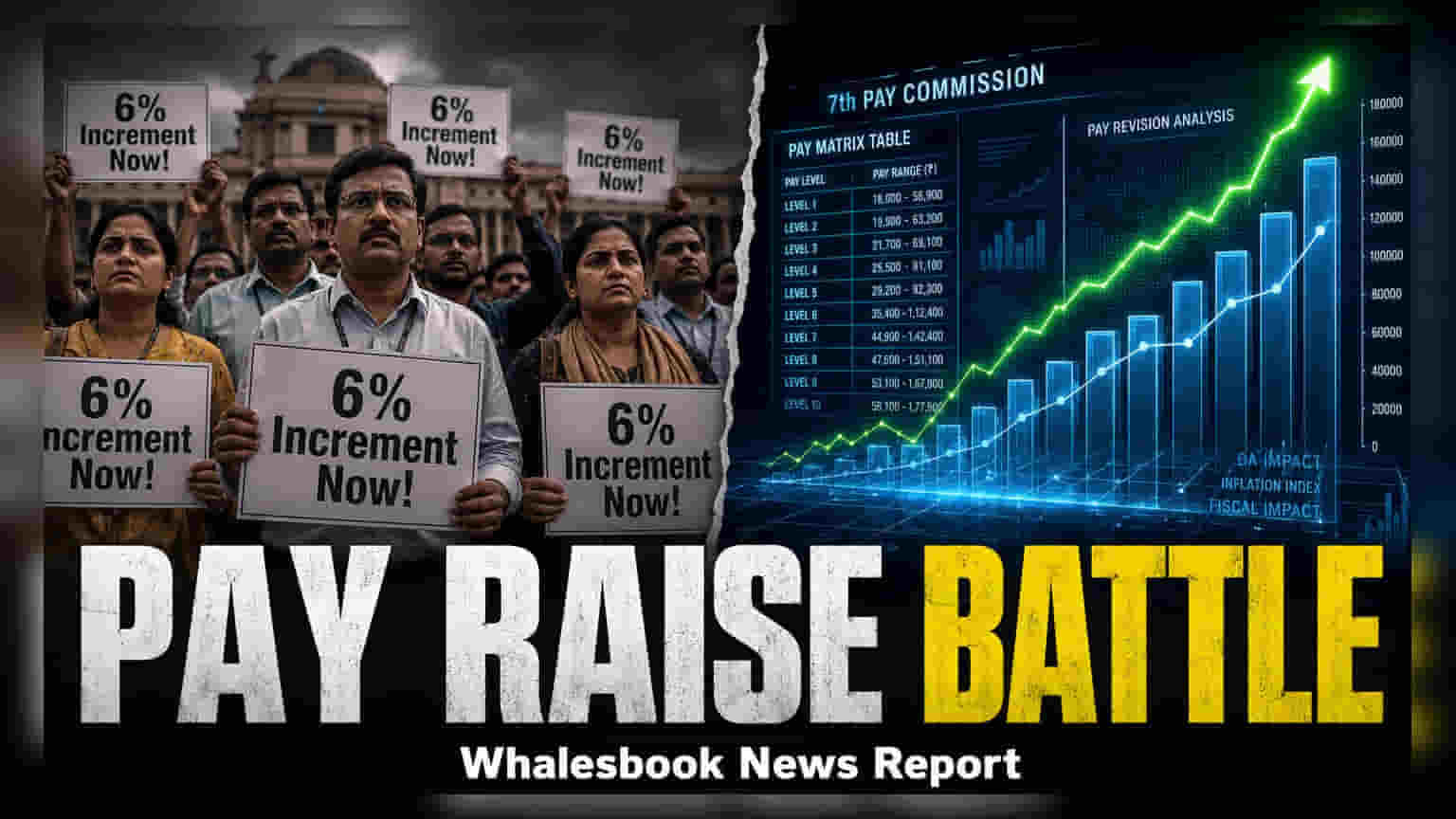
Central government employees are demanding a 6% annual pay increment, doubling the current 3% rate, as 8th Pay Commission discussions begin. This proposal, if accepted alongside a revised fitment factor, could lead to significant increases in base salary levels for millions of staff and pensioners.
As discussions regarding the 8th Pay Commission gain momentum, central government staff associations are seeking a major revision to the salary structure. The central demand involves doubling the annual increment rate from the current 3 percent to 6 percent. This push is being led by organizations such as the National Council-Joint Consultative Machinery (NC-JCM), which argues that a higher increment rate is necessary to keep pace with economic changes.
Potential Impact on Salary Growth
The annual increment is a critical component of public sector compensation, as it determines how an employee’s base pay grows over their career. While the fitment factor—the multiplier used to determine the initial salary revision—sets the starting point for pay in a new commission, the annual increment dictates the speed of salary progression in subsequent years. For example, a Level 4 employee currently earning a basic pay of Rs 25,500 would see their salary rise significantly faster under a 6 percent annual increment structure compared to the existing 3 percent model. Financial projections suggest that a 6 percent annual raise could compound to nearly 33 percent more in total basic pay over a decade compared to the current 3 percent increment.
Administrative and Financial Context
Implementing such a change would involve more than just a departmental decision. Legal and administrative experts note that any adjustment to these structures would require formal amendments to the existing Central Civil Services (Revised Pay) Rules. This process typically concludes with a formal Gazette notification. Historically, the 7th Pay Commission utilized a 2.57 multiplication factor for initial pay fixation and maintained a 3 percent annual progression.
Investors and observers should note that the government has not yet provided specific details regarding the new pay matrix or the final fitment factor for the 8th Pay Commission. Any decision to increase increments would have a direct impact on the government's wage bill, which is a major part of the annual union budget. A higher wage bill could lead to increased revenue expenditure for the government, influencing fiscal deficit targets. The final outcome remains subject to government deliberations, which will need to balance employee demands against the broader fiscal health and budget constraints of the country. Market participants often track these pay commission updates as they influence consumer spending patterns, particularly in sectors reliant on middle-class disposable income.