

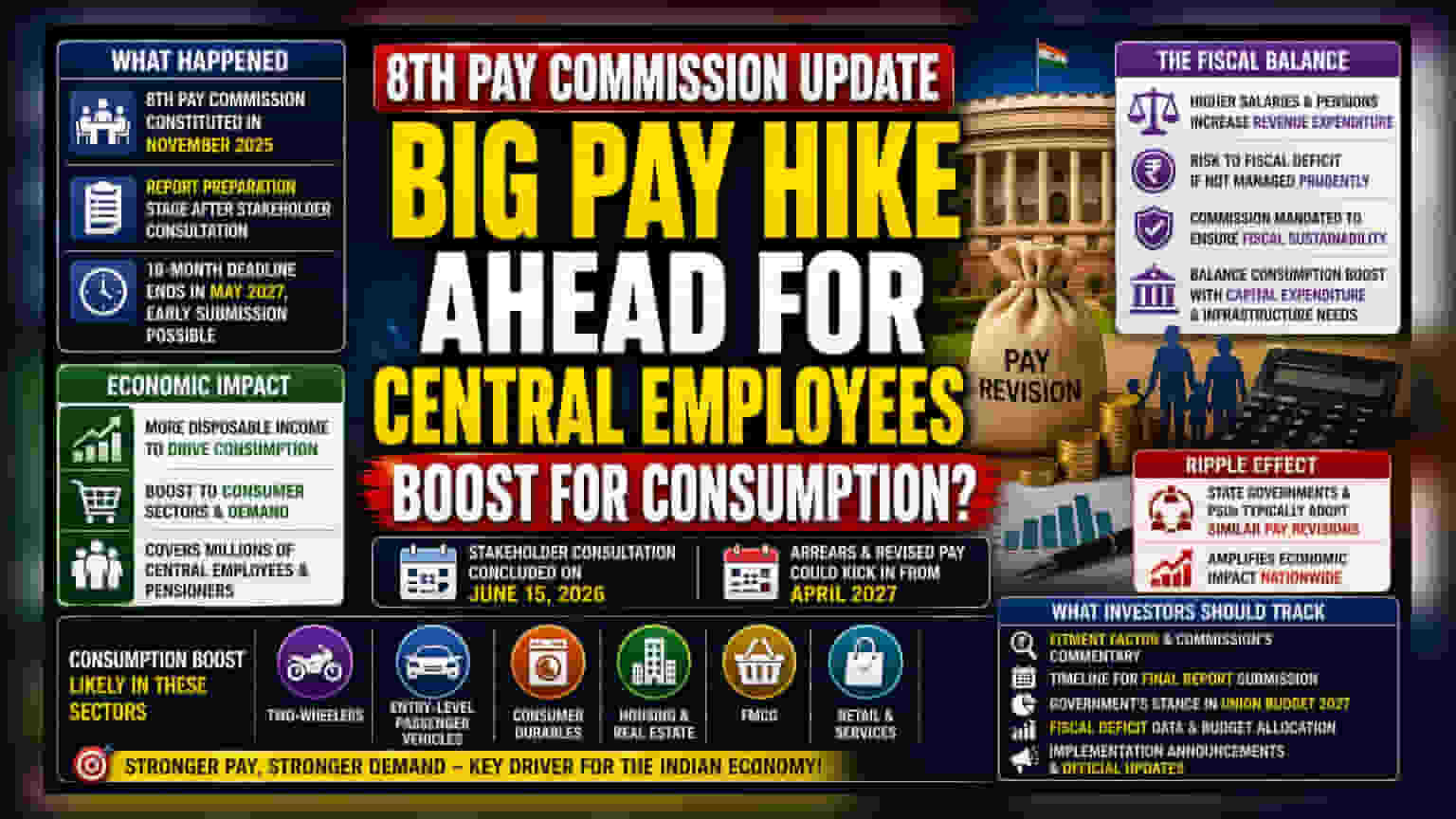
The 8th Central Pay Commission has moved into the report-preparation phase following the closure of its consultation window. With employees optimistic for an early submission, any salary and pension revisions by April 2027 could influence disposable income and consumer demand across sectors like auto, banking, and FMCG.
What Happened
The 8th Central Pay Commission, constituted by the Government of India in November 2025, has progressed to the report-preparation stage after concluding its stakeholder consultation window on June 15, 2026. While the commission has an official 18-month deadline ending in May 2027, employee unions and representatives are optimistic about an earlier submission, possibly ahead of the Union Budget 2027. If this timeline holds, central government employees and pensioners could see revised pay structures and potential arrears as early as April 2027.
Why It Matters For The Economy
Historically, pay commission recommendations act as a significant trigger for the Indian consumption story. An increase in the basic pay and pension for millions of central government employees and defence personnel typically leads to a surge in disposable income. In the past, this improved purchasing power has provided a lift to consumer-facing sectors. Analysts often look for increased demand in areas like two-wheelers, entry-level passenger vehicles, consumer durables, housing, and FMCG products following such announcements. However, this boost is weighed against the fiscal impact. Increased revenue expenditure on salaries and pensions can strain the government’s fiscal deficit, forcing a delicate balance between supporting public demand and maintaining fiscal prudence.
The Fiscal Balance
The government’s primary challenge lies in balancing the expectations of government employees—who are seeking adjustments for inflation and cost-of-living increases—with the country's broader macroeconomic goals. Past commissions have demonstrated that while salary hikes can stimulate consumption, they can also contribute to inflationary pressures if not managed alongside supply-side improvements. The 8th Pay Commission’s terms of reference specifically mandate the assessment of fiscal sustainability, requiring the panel to align recommendations with India's fiscal deficit targets and economic growth trajectory. Policymakers must ensure that the payout does not divert funds from critical capital expenditure and infrastructure development.
Indirect Market Impact
While the Pay Commission recommendations technically apply only to central government employees, their implementation often triggers a ripple effect. State governments and many public sector undertakings typically adopt similar pay revision patterns, which can amplify the economic impact. For investors, the focus remains on whether the pay hike will be substantial enough to sustain consumer sentiment or if it will be moderated to preserve fiscal space. Historically, market expectations of such hikes have led to sentiment-driven movements in stocks related to discretionary consumption, though the actual long-term performance remains dependent on broader economic factors like interest rates and inflation.
What Investors Should Track
Investors and market participants should monitor upcoming official updates, particularly any commentary from the commission regarding the fitment factor—the multiplier used to calculate revised basic pay—and the timeline for the final report submission. Key monitorables include the government’s stance in the Union Budget 2027, official data on fiscal deficit management, and any subsequent announcements on the implementation of recommendations. These will provide clearer signals on the scale of potential consumption support and its impact on the government’s budgetary allocation for the coming fiscal year.