

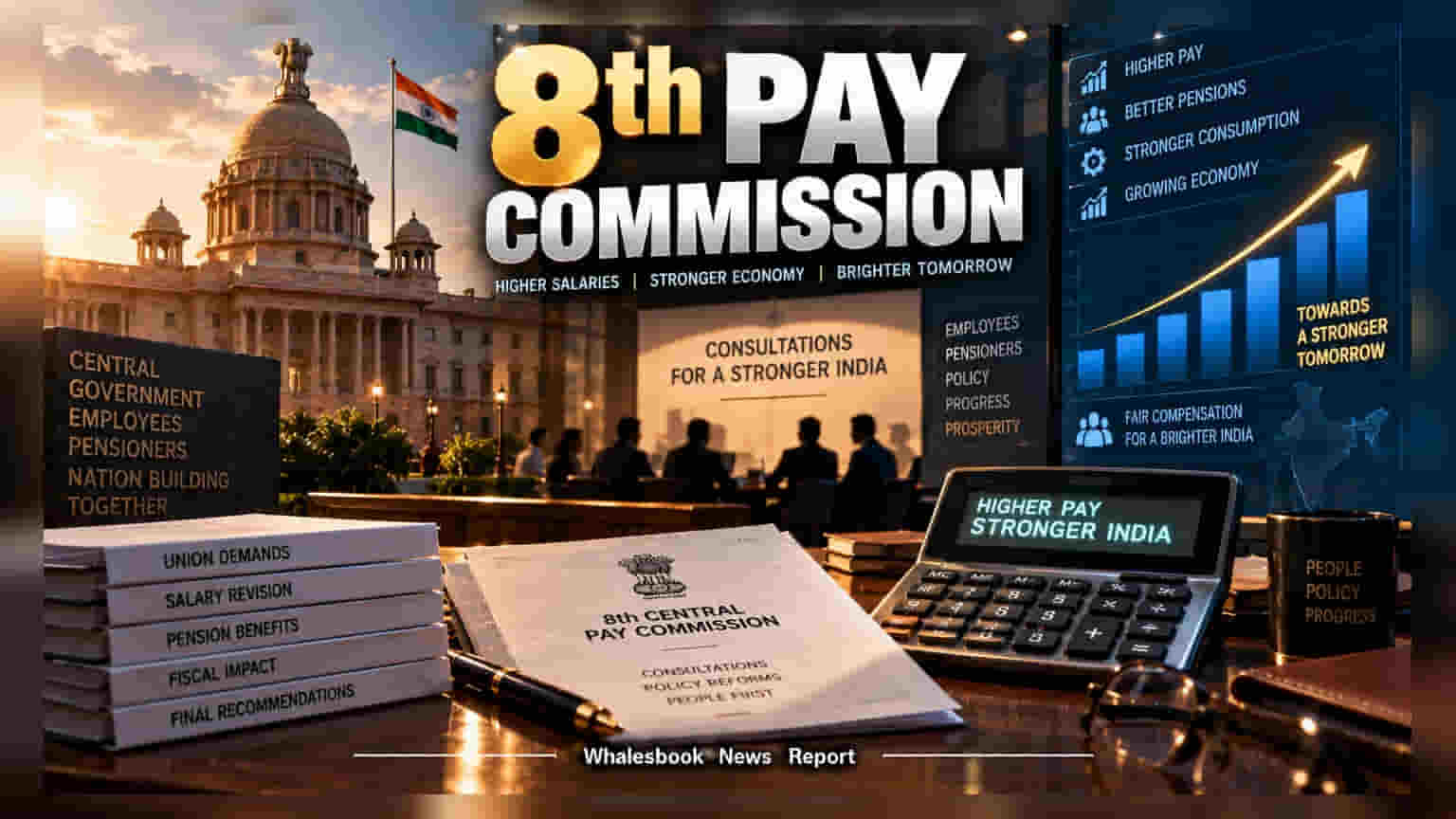
The 8th Central Pay Commission has started consultation meetings with employee unions, though no official fitment factor or pay hike has been confirmed. While various unions have proposed a higher minimum pay and fitment ratio, the government is currently in the early stages of evaluating the fiscal impact. These discussions, which began in September 2026, are expected to shape retirement and salary structures over the coming months.
The 8th Central Pay Commission (CPC) has officially commenced its consultative process with employee and pensioner unions, marking the start of a long negotiation cycle regarding government salary and retirement benefits. The commission held its first round of meetings in Chennai on September 7, 2026, with further sessions planned for cities including Puducherry, Chandigarh, and Bengaluru through October. These discussions are part of an 18-month timeline set for the commission to submit its final recommendations to the government.
While the commencement of these meetings has sparked widespread public interest, it is important for observers to distinguish between union demands and confirmed government policy. Employee and pensioner bodies, including the National Council-Joint Consultative Machinery (NC-JCM), have put forward several proposals, including a push for a minimum pay floor of Rs 69,000 and a fitment factor of 3.833. Some unions are also seeking to raise the annual increment rate from the current 3 percent to a range of 5 to 7 percent. However, the government has not yet announced or endorsed any specific fitment factor, and the figures being discussed remain, at this stage, aspirational targets set by the staff-side unions.
From a macroeconomic perspective, the primary concern for the government and financial analysts is the potential fiscal burden. Estimates regarding the cost of implementing the 8th CPC vary widely, with reports suggesting that a significant revision could impose a burden on the exchequer ranging from approximately ₹3.7 lakh crore to over ₹9 lakh crore, depending on the final payout structure. Such a large injection of liquidity into the economy could influence inflation trends, prompting the government to balance employee demands against the need for fiscal discipline.
Another point of contention is the scope of the potential revision. Pensioner associations have raised concerns regarding the treatment of pre-2026 retirees, urging the commission to include them in the new benefits framework. The commission’s challenge lies in creating a recommendation that addresses these diverse demands without causing an unsustainable strain on public finances or widening the gap between public and private sector compensation structures.
Investors and stakeholders should note that the commission serves as an advisory body. The final implementation strategy, including the effective date—generally anticipated to be retrospectively from January 1, 2026—will be subject to cabinet approval. The next major monitorable will be the release of any official interim findings or guidelines, which will provide a clearer picture of the government’s stance on the proposed fitment factors and fiscal limits.