 Whalesbook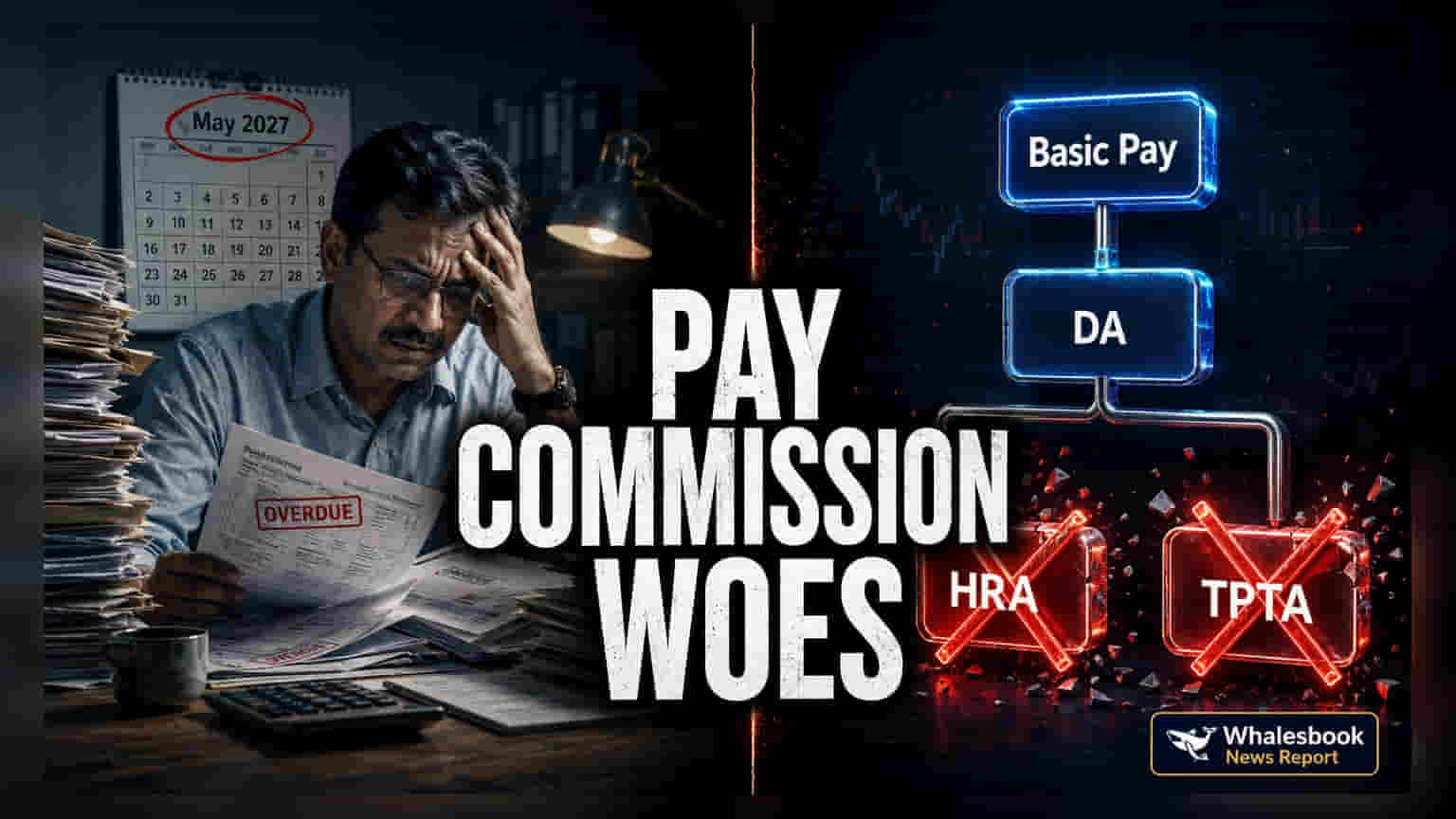


Arrears Uncertainty for Allowances
The 8th Pay Commission, established in November 2025, faces a significant timeline gap. Its reporting deadline is May 2027, but the notional effective date for pay adjustments is January 1, 2026. This creates a potential large financial liability. While back pay for basic salary is usually expected, how House Rent Allowance (HRA) and Transport Allowance (TPTA) will be handled remains unclear. Unlike basic pay, these allowances are increasingly seen as prospective policy tools rather than rights for back payments. Employees hoping for full lump-sum payouts may find the government prioritizing fiscal stability over comprehensive retroactive adjustments.
Budget Goals and Union Pressure
Employee unions, including the NC-JCM, are demanding higher fitment factors to keep pace with living costs. However, the government aims to keep its GDP deficit at 4.3%. The consultation process, extended to May 31, 2026, shows a deliberate, slow approach. Unlike the 7th Pay Commission, which had a quicker implementation, the 8th Pay Commission operates in a more sensitive economic climate. Policymakers are concerned that a large, backdated cash infusion could fuel inflation. This might lead to phased or delayed payment schedules instead of immediate, full retroactive settlements.
New Precedents for Allowances
Guaranteed arrears are facing new fiscal realities. There's a strong possibility that HRA and TPTA will be excluded from retroactive calculations. This would set a precedent favoring budget stability over past pay parity. Discussions around graded fitment factors, proposed by groups like the Indian Railway Technical Supervisors' Association, also suggest a move away from a single pay multiplier. For employees, this could complicate final payouts and reduce the chance of a straightforward, universal retroactive benefit. A phased implementation to manage the fiscal burden would also reduce the present value of expected arrears.
What to Expect by 2027
The commission's regional consultations are set to continue through mid-2026, focusing on balancing wage demands with budget limits. While the government supports inflation-linked wage protection, the final decision will depend on the wider economy, including interest rates and global commodity prices. Analysts expect an implementation framework to be announced in the latter half of 2027. The main goal will be to lessen the immediate impact on government finances while addressing key union demands for modernizing pay structures.