

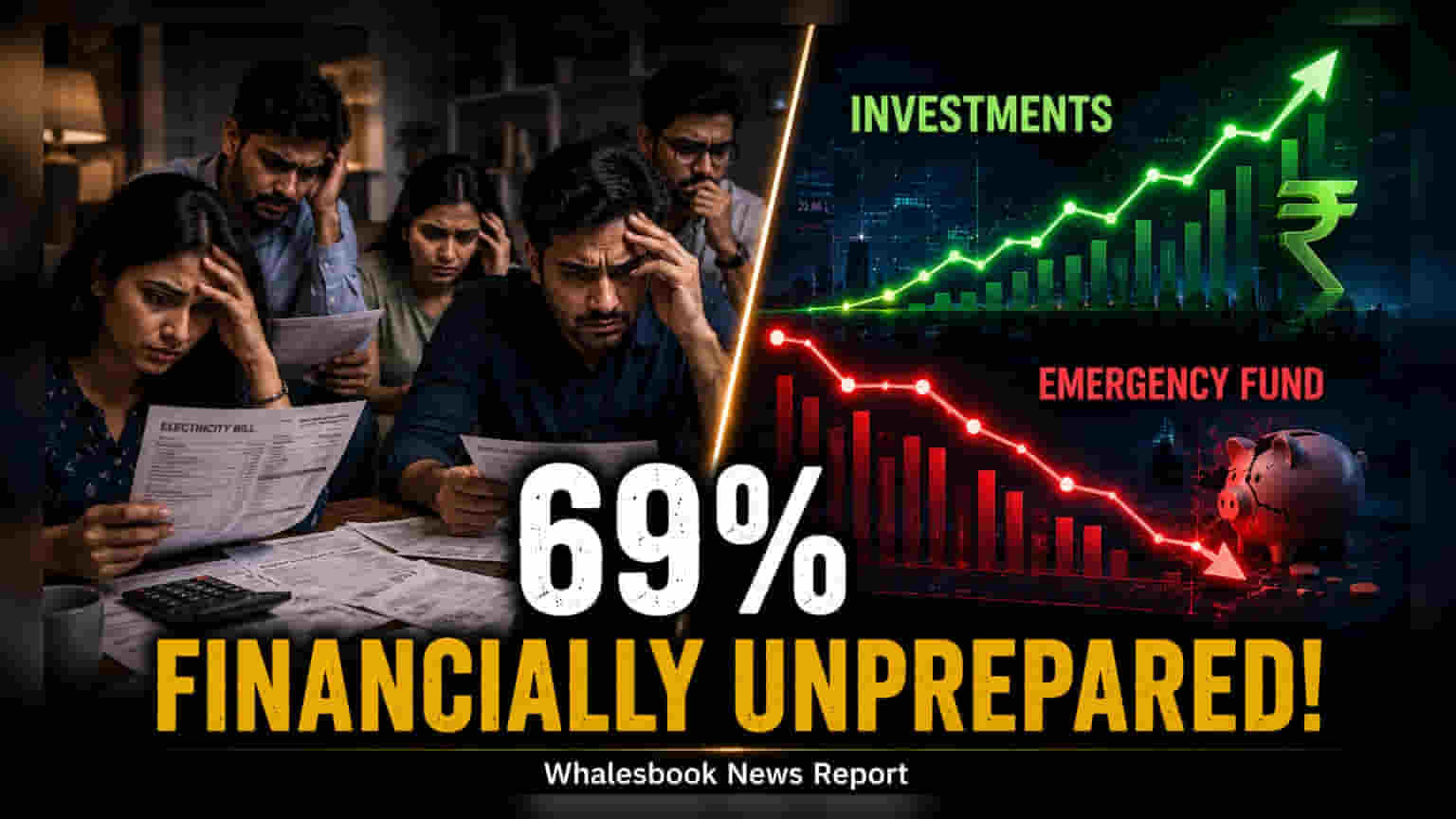
A new Finsafe survey shows that while market participation is rising, 69% of Indian employees remain financially vulnerable. Only 31% possess sufficient emergency funds and insurance, revealing a critical gap between investment activity and true financial security for the workforce.
The surge in Indian retail investment participation is masking a deeper issue of financial vulnerability among the salaried workforce. According to a recent Finsafe report surveying over 4,500 professionals for FY2025-26, nearly seven out of ten employees lack the necessary financial safety net to handle unexpected emergencies. The findings highlight a troubling trend where wealth creation efforts, such as stock market and mutual fund investments, are moving faster than the establishment of fundamental financial protections.
The Reality of Financial Preparedness
While the report indicates that 58% of employees are now active in equity and mutual fund markets, this enthusiasm is not matched by basic risk management. The data reveals that only 31% of the workforce has both adequate savings and insurance to cover unforeseen events. For the rest, the situation varies significantly. About 45% of employees are almost entirely dependent on benefits provided by their employers to stay afloat, while 24% are categorized as completely unprepared, possessing no meaningful cushion for job loss or medical crises.
Challenges Beyond Wealth Creation
Long-term financial health is facing pressure from multiple fronts. Retirement planning and the cost of children’s education remain the top two financial hurdles for 70% of those surveyed. Adding to this pressure is the 'sandwich generation' dynamic, where 30% of respondents reported a doubling of their financial responsibilities toward aging parents compared to previous periods. Furthermore, debt management continues to be a significant barrier to savings, with 13% of employees unable to set aside any money at all due to existing loan obligations. This suggests that for a large portion of the workforce, high-interest debt is actively cannibalizing their ability to build long-term capital.
Shifting Priorities for Financial Health
The report argues that the current approach to financial education is misaligned. While many employees show high interest in complex topics like tax optimization and stock selection, the data suggests that these individuals often lack the foundational steps of budgeting and risk coverage. Financial advisors and industry experts often note that investing in high-risk assets without an emergency fund can lead to panic-selling during market volatility. As the workforce balances wealth creation with rising living costs and family obligations, the primary monitorable for long-term stability will be whether employees prioritize liquid emergency savings and adequate life and health insurance coverage before committing more capital to market-linked investments.