

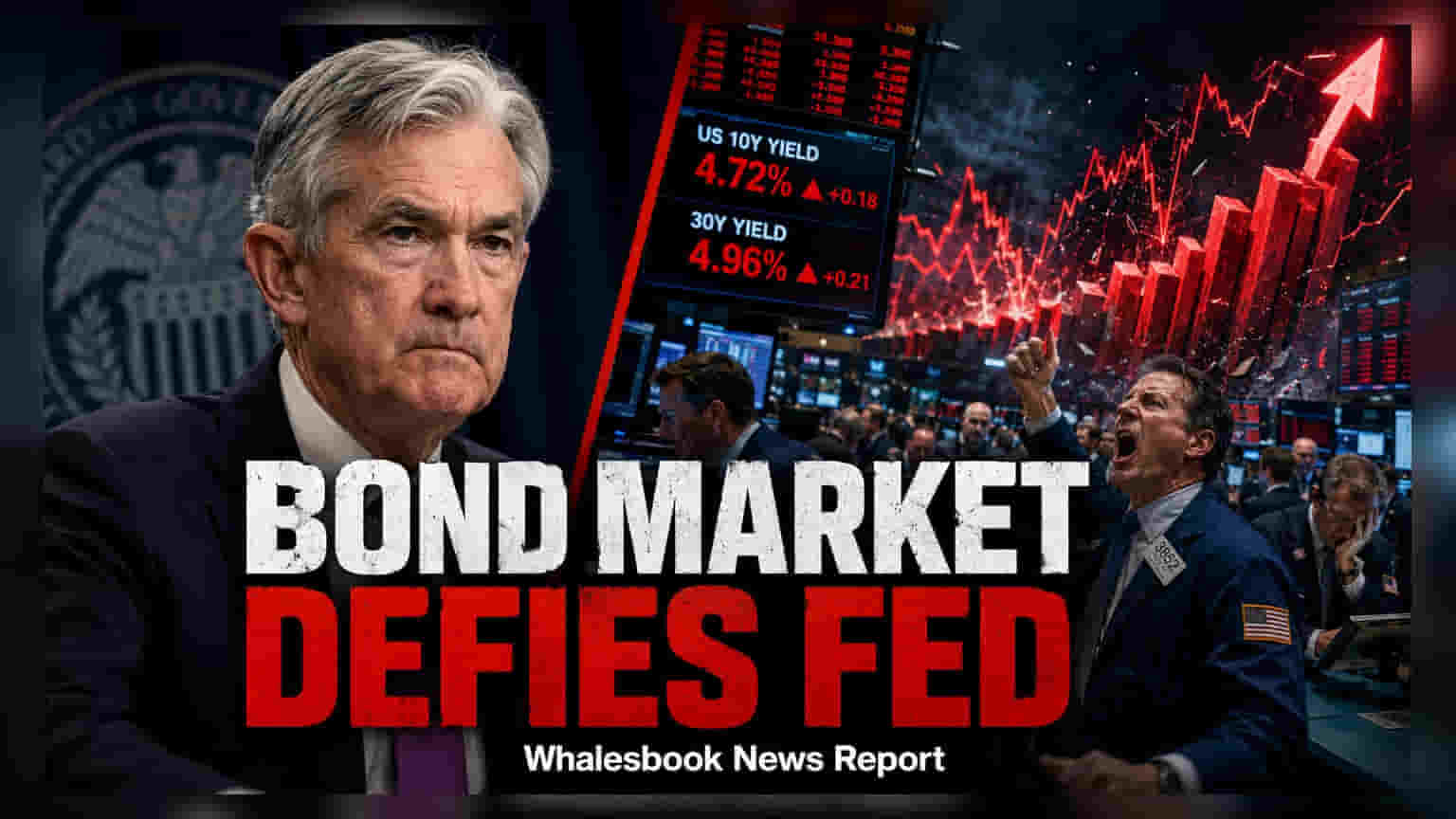
Benchmark 30-year U.S. Treasury yields have reached their highest level since 2007 following the Federal Reserve’s decision to keep interest rates steady. This movement reflects rising investor concern over inflation and fiscal deficits, which may impact broader economic growth and stock valuations.
The U.S. bond market is currently signaling significant inflation and deficit concerns, with the yield on the 30-year Treasury bond climbing to levels not seen since 2007. This surge comes immediately after the Federal Reserve opted to hold interest rates steady for the fifth consecutive session, a move that markets have interpreted as being less firm on inflation than previously expected.
Market Skepticism Toward Federal Reserve Policy
While Federal Reserve Chairman Kevin Warsh has emphasized a commitment to controlling inflation through what he calls watchful thinking, the market's reaction suggests a growing disconnect. Investors appear to be looking past the central bank’s stated rhetoric, focusing instead on underlying economic pressures such as crude oil prices trading near $90 per barrel. By pushing long-term yields higher, the bond market is effectively tightening financial conditions on its own, a phenomenon often associated with the behavior of bond market participants known as vigilantes.
Potential Impact on Economic Growth and Equities
The steepening of the yield curve, which has reached its most significant point since the mid-1990s, presents a challenging environment for financial markets. When long-term yields rise, the cost of borrowing for businesses and consumers increases. This pressure can slow down economic growth and reduce the present value of future corporate earnings, which typically weighs on stock valuations. Following the Federal Reserve's recent announcement, major U.S. equity indices like the Nasdaq Composite and the S&P 500 experienced declines as investors re-evaluated the risk-return profile of stocks in a high-interest-rate environment.
Risks and Future Monitorables
For investors, the primary risk is that persistent inflation and federal deficit concerns could force long-term rates to remain elevated, even if the Federal Reserve does not raise short-term policy rates. This shift in the yield environment often forces a reassessment of valuation multiples, particularly for companies that rely on debt for expansion or those with high growth expectations. The key monitorable in the coming weeks will be the Federal Open Market Committee's future communications and whether incoming economic data on inflation and employment begins to align with market expectations or continues to diverge from the central bank’s current stance.