 Whalesbook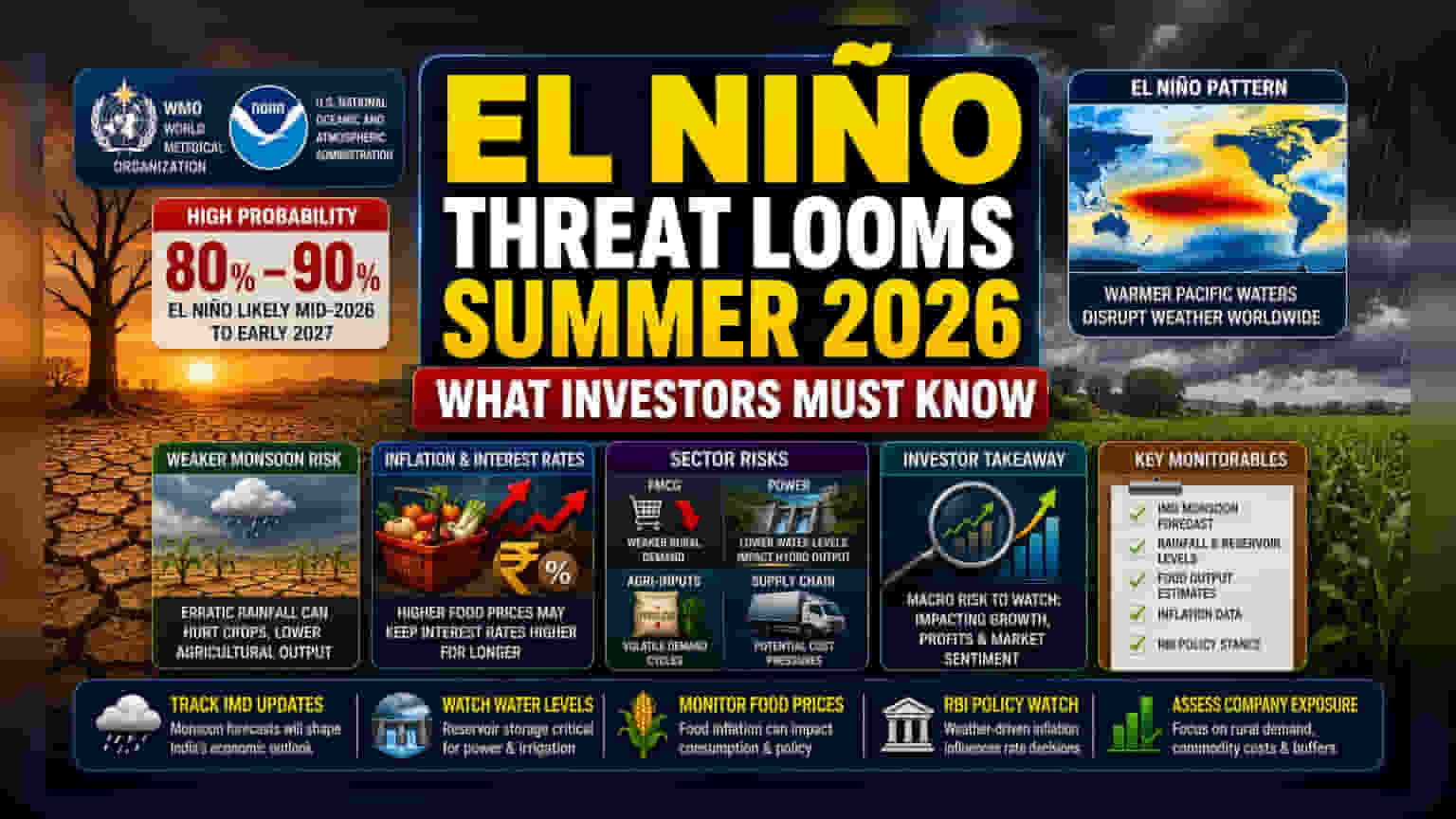


Scientists warn of a potential 'super' El Niño developing by mid-2026, a weather pattern often linked to erratic monsoons in India. For investors, this creates uncertainty regarding agricultural output, food inflation, and rural demand. Markets will monitor how this weather shift impacts sectors like FMCG and power, as well as the Reserve Bank of India’s inflation management strategy in the coming months.
What Happened
Global meteorological agencies, including the World Meteorological Organization (WMO) and the U.S. National Oceanic and Atmospheric Administration (NOAA), have issued warnings regarding a potential significant El Niño event expected to emerge by the summer of 2026. Data indicates an 80% to 90% probability of this weather phenomenon developing between mid-2026 and persisting through early 2027. Climate scientists caution that this episode could be severe, potentially rivaling historical weather anomalies that have led to widespread temperature shifts and drought conditions in the past.
Why It Matters for India
For the Indian economy, El Niño is historically associated with the weakening of the monsoon season. A significant portion of India’s agricultural sector depends on timely and adequate rainfall. If the 2026 event leads to erratic or below-average precipitation, it could result in crop damage and reduced agricultural productivity. This uncertainty is critical for investors because the agricultural performance remains a backbone for rural demand and national food security.
The Inflation and Interest Rate Connection
One of the most immediate concerns for the financial markets is the impact on food prices. If monsoon rains are disrupted, the resulting supply-side constraints often lead to higher food inflation. Elevated food prices generally force the Reserve Bank of India to maintain tighter monetary policy or keep interest rates higher for longer to control consumer price index pressures. This scenario can affect borrowing costs for companies and sentiment across the broader stock market.
Sector-Specific Risks
Investors typically watch several sectors when weather patterns become unpredictable. The Fast-Moving Consumer Goods (FMCG) sector often faces pressure during poor monsoon years, as rural income constitutes a significant part of total sales. A slowdown in rural demand can weigh on the revenue growth of major consumer companies. Furthermore, the power sector, particularly hydropower generation, could face operational challenges if water levels in reservoirs fall short due to reduced rainfall. Companies in the agri-inputs space, such as fertilizer and pesticide manufacturers, may also see volatile demand cycles depending on how farmers adjust their sowing plans in response to weather forecasts.
How Investors May Read This
Market participants often view such weather warnings as a macroeconomic variable that adds to the risk premium. While these forecasts are based on scientific models and are not guaranteed, the market tends to factor in potential supply chain disruptions and inflation risks well in advance. Investors may analyze whether companies have diversified their geographic exposure or if they have adequate inventory buffers to handle potential raw material cost increases. The focus remains on management commentary regarding demand outlooks in rural and semi-urban markets.
What Investors Should Track
The most critical monitorable will be the official updates from the India Meteorological Department (IMD) regarding the monsoon forecast. As the timeline for the 2026 summer approaches, updates on rainfall distribution, reservoir levels, and food output estimates will provide clearer insights into the economic impact. Additionally, tracking monthly inflation data and the Reserve Bank of India’s policy stance will be important to understand how the weather situation influences overall macro stability.