 Whalesbook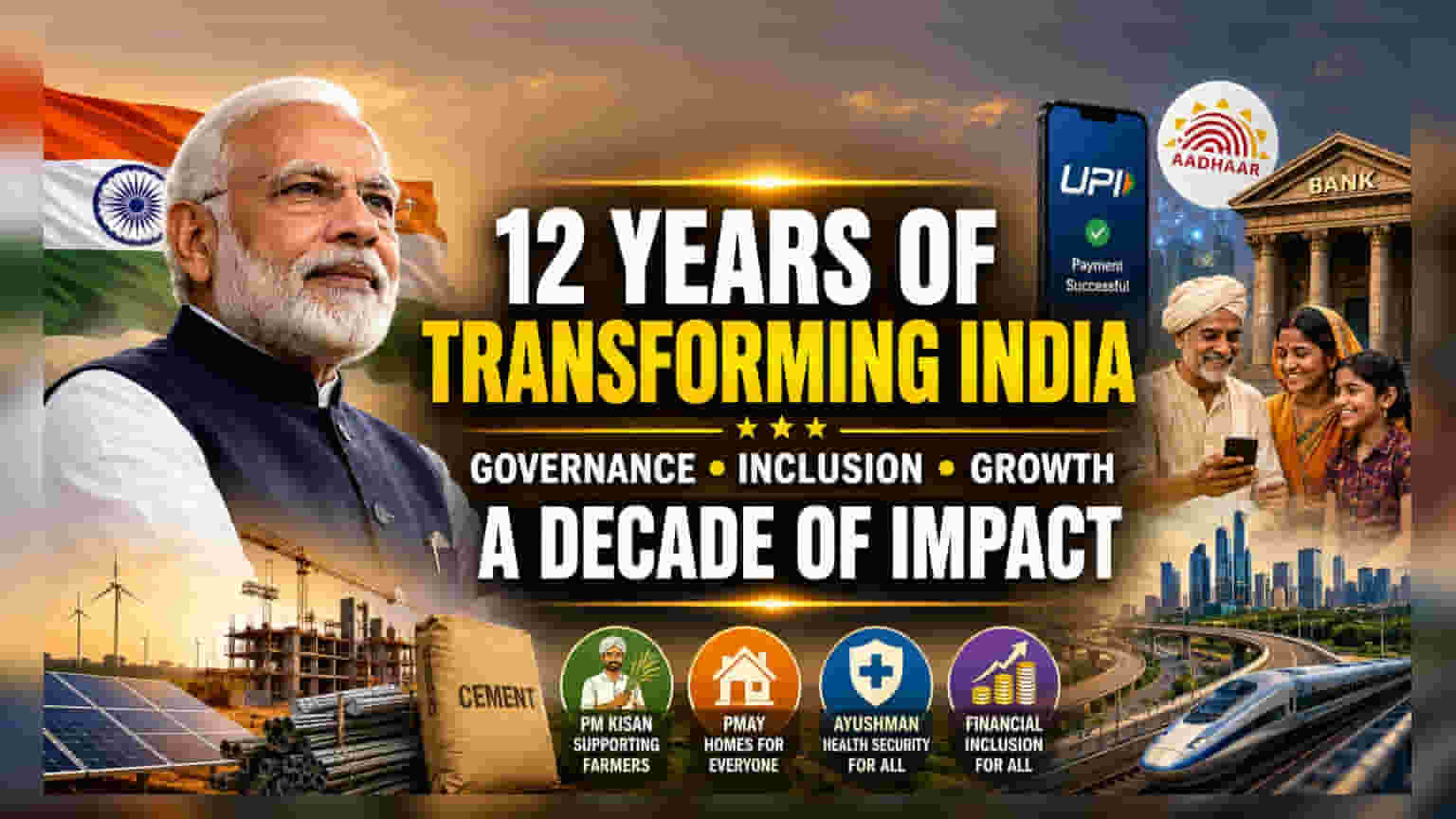


Prime Minister Narendra Modi completes 12 years in office, marking a period defined by major structural reforms. For investors, this era has reshaped the economy through rapid digital adoption, deep financial inclusion, and formalized spending, directly impacting consumption patterns and banking reach across India.
What Happened
As of June 10, 2026, Prime Minister Narendra Modi has completed 12 years of continuous governance, becoming India’s longest-serving elected Prime Minister. This period has been characterized by a significant shift in policy focus, moving toward large-scale, technology-driven social welfare and structural economic reforms. The government’s approach has centered on integrating the unorganized sector into the formal economy through technology, financial inclusion, and direct benefit transfers.
Impact on Financial Inclusion
For investors, the most significant change over this decade-plus has been the deepening of financial inclusion. Through schemes like the Atal Pension Yojana and the widespread adoption of Jan Dhan accounts linked to Aadhar, the government has brought millions of citizens into the formal banking system. This structural change has provided banks with a wider base of depositors and borrowers. The use of Direct Benefit Transfer (DBT) and Unified Payments Interface (UPI) has been a cornerstone of this shift, ensuring that welfare funds reach the intended beneficiaries without leakages. This technological leap has created a more transparent and efficient digital payment ecosystem, benefiting the fintech and banking sectors.
Driving Consumption and Housing Demand
Government initiatives have also played a role in shaping consumer demand patterns. Schemes such as the PM Kisan Samman Nidhi have provided direct liquidity to small and marginal farmers, which acts as a support layer for rural consumption. Similarly, the Pradhan Mantri Awas Yojana (PMAY) has facilitated a massive scale of housing construction. For the markets, this has translated into sustained demand for materials like cement, steel, and other construction-related goods. By prioritizing permanent housing and financial security for families, these schemes have aimed to create a more stable domestic demand environment, particularly in lower-income segments that were previously harder to reach.
Healthcare and Social Security
The focus on healthcare through Ayushman Bharat has introduced a large segment of the population to formal health insurance systems. While this addresses a critical societal need, it also signals a shift toward a more formalized healthcare sector. Increased penetration of health coverage can influence the long-term growth and pricing power of hospitals and diagnostic service providers as the addressable market for private healthcare services expands.
What Investors Should Track
While these schemes have driven significant structural changes, the long-term impact on the economy involves several variables that investors monitor closely. A key monitorable is the sustainability of the fiscal deficit, as large-scale social spending requires consistent revenue growth. Investors also watch the pace of infrastructure spending and the execution of ongoing projects, as these are often tied to the broader goals of housing and agricultural support. Furthermore, the sensitivity of corporate earnings—particularly in the fast-moving consumer goods (FMCG) and banking sectors—to rural demand and consumption trends remains a critical factor. The ability of the economy to balance these social welfare expenditures with fiscal prudence and private capital investment will continue to be a primary area of focus for market analysis.