 Whalesbook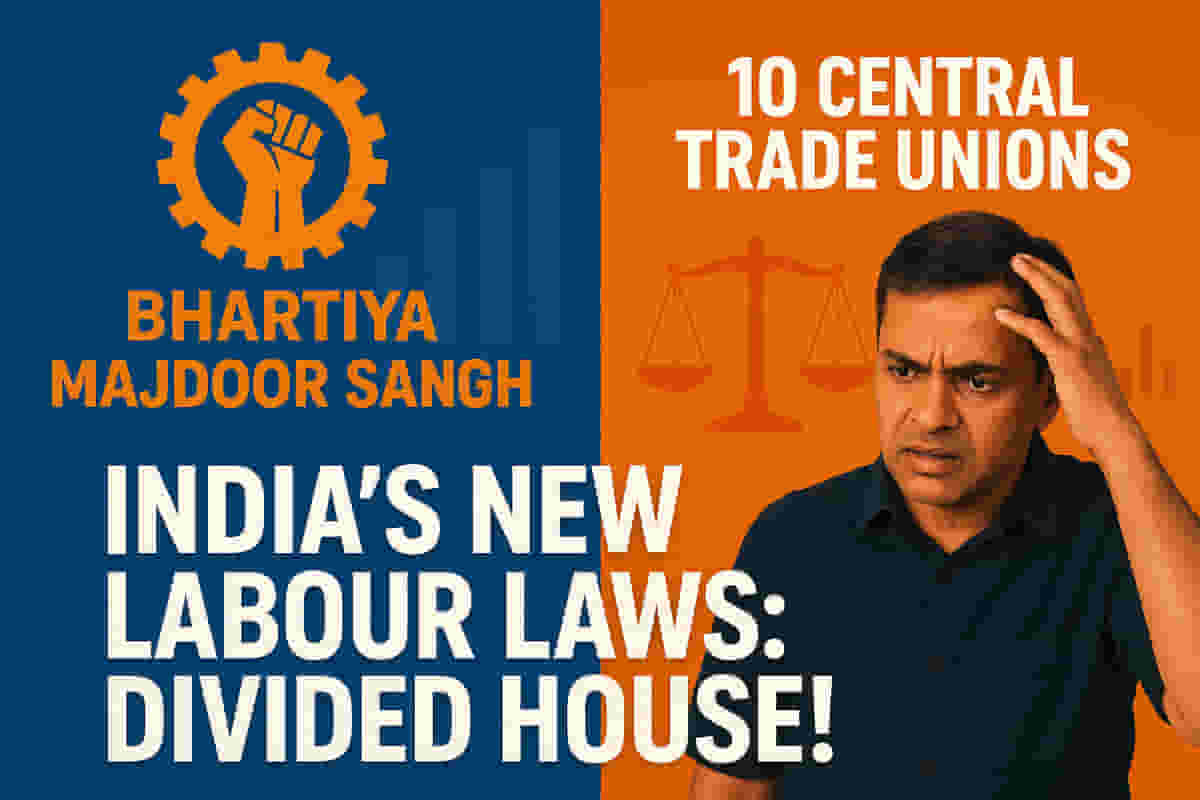
The Union Government has officially implemented four significant Labour Codes, marking a substantial shift in India's labor regulations. The Bhartiya Majdoor Sangh (BMS), the country's largest trade union affiliated with the RSS, has expressed support for these codes, viewing them as dynamic, future-ready reforms designed to adapt to the evolving labor market. BMS General Secretary Ravindra Himte highlighted that the expansion of wage coverage and social security to new and unorganized sectors aligns with the aspirations of the modern workforce. A BMS delegation also met with Union Labour & Employment Minister Mansukhlal Mandaviya to discuss specific concerns, receiving assurances of sincere consideration and potential amendments.
Conversely, a joint platform of ten Central Trade Unions, including those linked to opposition parties, has strongly condemned the implementation, labelling the codes 'anti-worker'. They have a history of resisting these codes since their enactment, which repealed 29 existing central labor legislations. These unions have called for nationwide protests at worksites on November 26 and have previously organized general strikes, citing the government's unresponsiveness to their demands, including convening the Indian Labour Conference (ILC) since 2015.
Legal experts note that with the old laws repealed, the focus shifts to implementing state-level rules and the various schemes envisioned by the new codes. Organizations are advised to immediately assess the implications of the new provisions, such as updated definitions of wages and contract labor, revised grievance redressal mechanisms, and new union recognition rules. Atul Gupta of Trilegal warns that without a grace period, companies must act swiftly to ensure compliance, though existing rules may apply during the transition for provisions requiring new regulations.
Impact:
This development has a moderate to high impact on the Indian stock market and businesses. Changes in labor laws can affect operational costs, employee relations, compliance burdens, and investment sentiment. The potential for widespread protests and strikes could disrupt economic activity. Rating: 7/10
Difficult Terms:
Labour Codes: A set of laws that consolidate and reform various aspects of labor and employment in India.
Bhartiya Majdoor Sangh (BMS): A major trade union in India, affiliated with the Rashtriya Swayamsevak Sangh (RSS).
Central Trade Unions: Major labor organizations recognized at the national level in India.
Unorganized Sectors: Sectors of the economy that are not regulated by the government or subject to labor laws.
Social Security Protection: Measures and benefits provided to workers, such as insurance, pensions, and healthcare.
Indian Labour Conference (ILC): A tripartite body (government, employers, workers) that discusses labor issues.
Trilegal: A law firm that provides legal services.
Graduity: A lump sum payment paid to an employee upon leaving a company, based on years of service and last drawn salary.
Grievance Redressal Mechanisms: Processes established to handle and resolve employee complaints and disputes.