 Whalesbook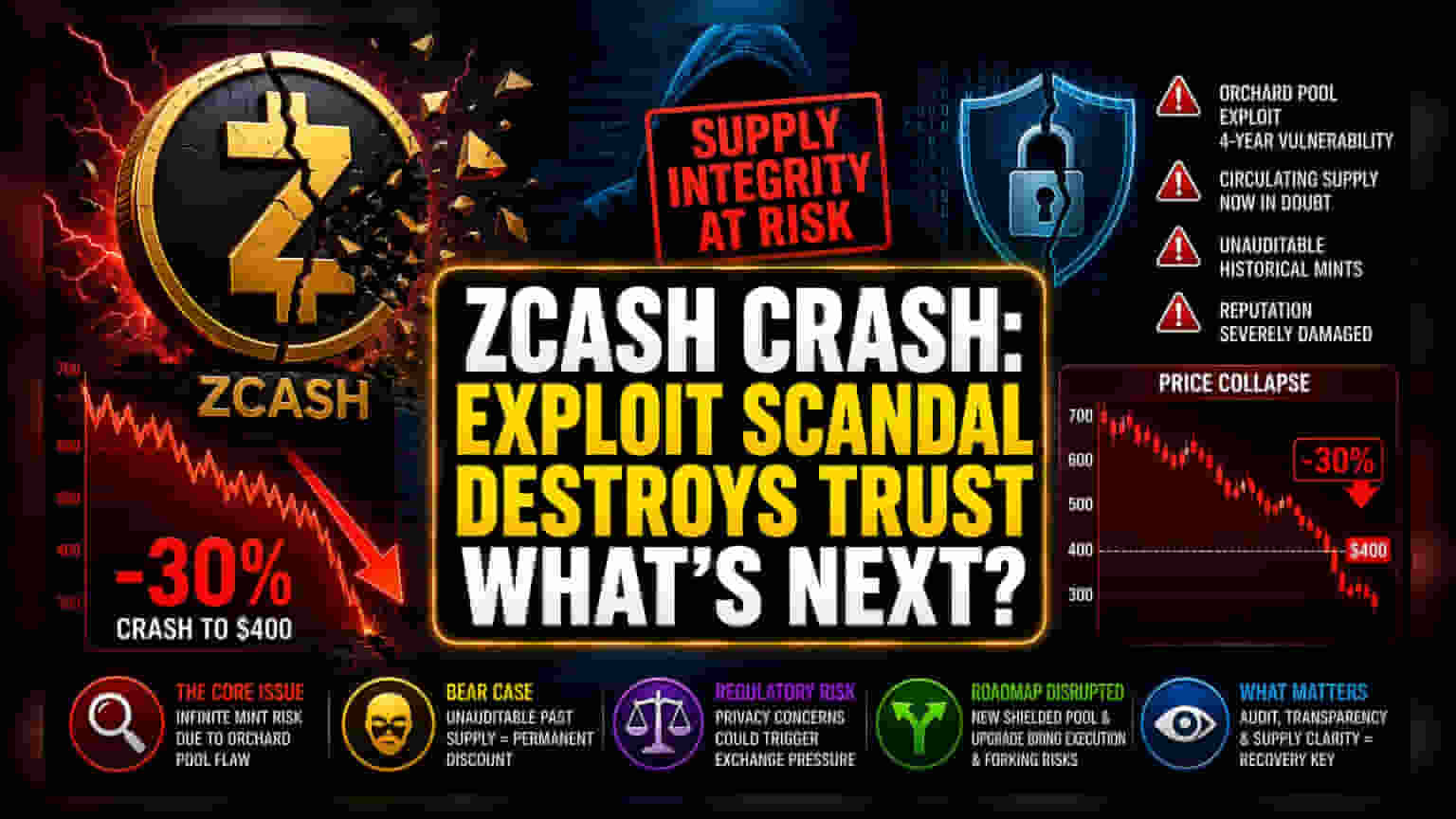


The Valuation Gap and Market Sentiment
The abrupt 30% retreat to the $400 level represents more than a technical correction; it reflects a fundamental breakdown in the trust mechanism underlying privacy coins. Unlike traditional assets where auditors can verify ledgers, the obfuscated nature of the Orchard pool means the total circulating supply is currently subject to speculative doubt. Market participants are pricing in an 'inflation risk premium,' as traders exit positions to avoid being caught in a potential dilution event. Volume spikes accompanying the sell-off suggest high-conviction liquidations, with institutional holders potentially de-risking ahead of clarity on network supply audits.
The Forensic Bear Case
The core of the investment risk here is the permanent opacity regarding historical data. Security engineers have confirmed that the underlying cryptographic design makes it functionally impossible to retrospectively audit the chain for illicitly minted tokens. This creates a binary outcome for Zcash: either the community accepts the word of developers that the exploit went unnoticed, or the market permanently discounts the token as a compromised asset. Furthermore, while the patch addresses future minting, the reputation hit is compounded by the fact that the vulnerability existed for four years. This timeline casts a shadow over the rigor of previous code audits and development oversight. Compared to privacy-focused peers like Monero, which has avoided similar systemic integrity crises, Zcash now faces a difficult uphill battle to reclaim its status as a reliable store of value.
Structural Risks and Regulatory Exposure
The reliance on emergency fixes and subsequent proposals for a new shielded pool signals a significant disruption in the project roadmap. Regulatory scrutiny often follows such 'integrity events,' particularly when privacy-enhancing technologies are involved. If regulators interpret this vulnerability as evidence of systemic instability, the asset could face increased pressure from centralized exchanges seeking to avoid the liability of hosting tokens with questionable supply histories. The proposed network upgrade, while necessary for security, introduces execution risk and the potential for a contentious fork if stakeholders disagree on the mechanism for reconciling past supply figures.
Future Outlook
Market stability hinges entirely on the efficacy of the planned formal verification project and the ability of the development team to provide a transparent accounting method that does not violate user privacy. Until a third-party audit can confirm the total supply matches the protocol's issuance schedule, the price action is likely to remain volatile with a downward bias. Investors are waiting for the formalization of the new shielded pool implementation, which serves as the next litmus test for project credibility.