

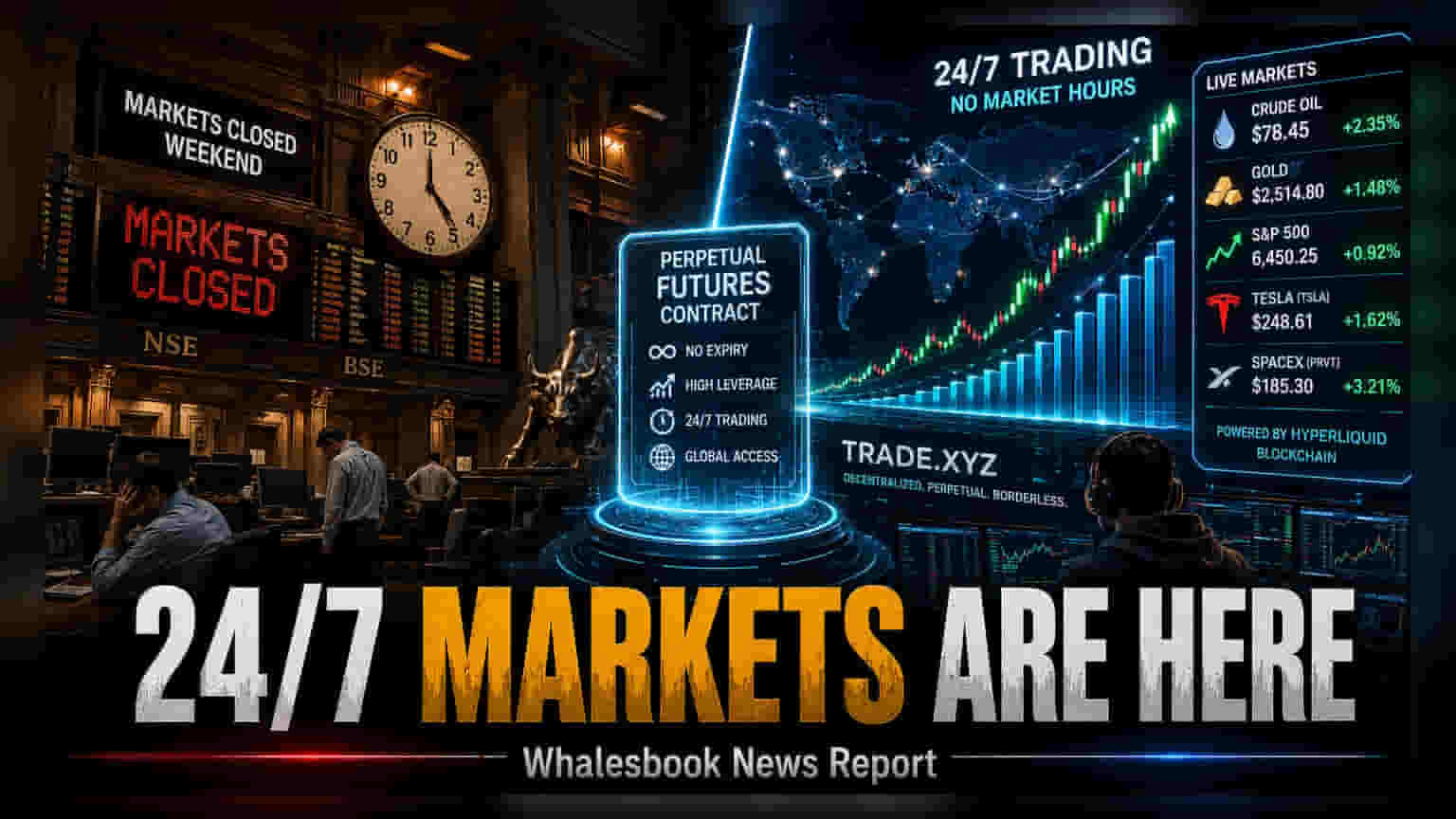
Decentralized platform Trade.xyz has processed over $500 billion in trading volume by offering round-the-clock perpetual futures for assets like oil and pre-IPO stocks. While this allows continuous price tracking, investors face risks from extreme leverage and lack of traditional regulatory oversight compared to standard stock exchanges.
A new wave of decentralized platforms is challenging the traditional way global markets operate. Trade.xyz, a platform built on the Hyperliquid blockchain, has gained attention by facilitating over $500 billion in trading volume for perpetual futures tied to real-world assets. These assets include crude oil, precious metals, major stock indices, and shares of private companies before they go public, such as SpaceX.
Unlike traditional stock exchanges that operate on set hours, Trade.xyz offers 24/7 trading. This allows traders to bet on price movements even when conventional markets in New York, London, or Mumbai are closed. The platform uses perpetual contracts, which are agreements that do not have an expiry date, allowing investors to hold positions indefinitely as long as they maintain enough collateral.
How the Trading Model Works
Trade.xyz allows users to trade these contracts with high leverage. In simple terms, this means an investor can take a position much larger than their actual cash balance by borrowing funds. While this can magnify gains, it also increases the risk of rapid losses. For instance, if an asset’s price moves against a trader’s position, they may be forced to close it immediately, a process known as liquidation. Past volatility in contracts for companies like SpaceX has triggered millions of dollars in liquidations, highlighting the risks involved in these high-leverage products.
Regulatory and Structural Risks
For investors used to regulated environments like the National Stock Exchange (NSE) or the Bombay Stock Exchange (BSE), the structure of these platforms is different. Trade.xyz operates without a centralized clearinghouse, which is the entity in traditional finance that guarantees trades and manages risk. This means the platform relies on automated systems to keep prices stable and ensure that winners get paid.
This decentralized nature creates regulatory uncertainty. The U.S. Securities and Exchange Commission (SEC) and other global watchdogs are currently evaluating how such platforms fit into existing financial laws. Because these platforms operate internationally and often outside traditional banking rules, there is a risk that liquidity could shift away from regulated exchanges. Experts also warn that a large liquidation event on a crypto-native platform could create a ripple effect, potentially impacting traditional financial entities that hold positions in both markets.
What Investors Should Track
Investors monitoring these developments should focus on two main areas. First, how regulators decide to treat these perpetual contracts will be crucial. Any move to bring these platforms under tighter supervision could change how they operate and who can access them. Second, the ability of these decentralized platforms to handle extreme market volatility without causing major losses for their users remains a key test. As the market for these assets grows, the impact of 24/7 trading on global price discovery will continue to be a subject of intense observation.