 Whalesbook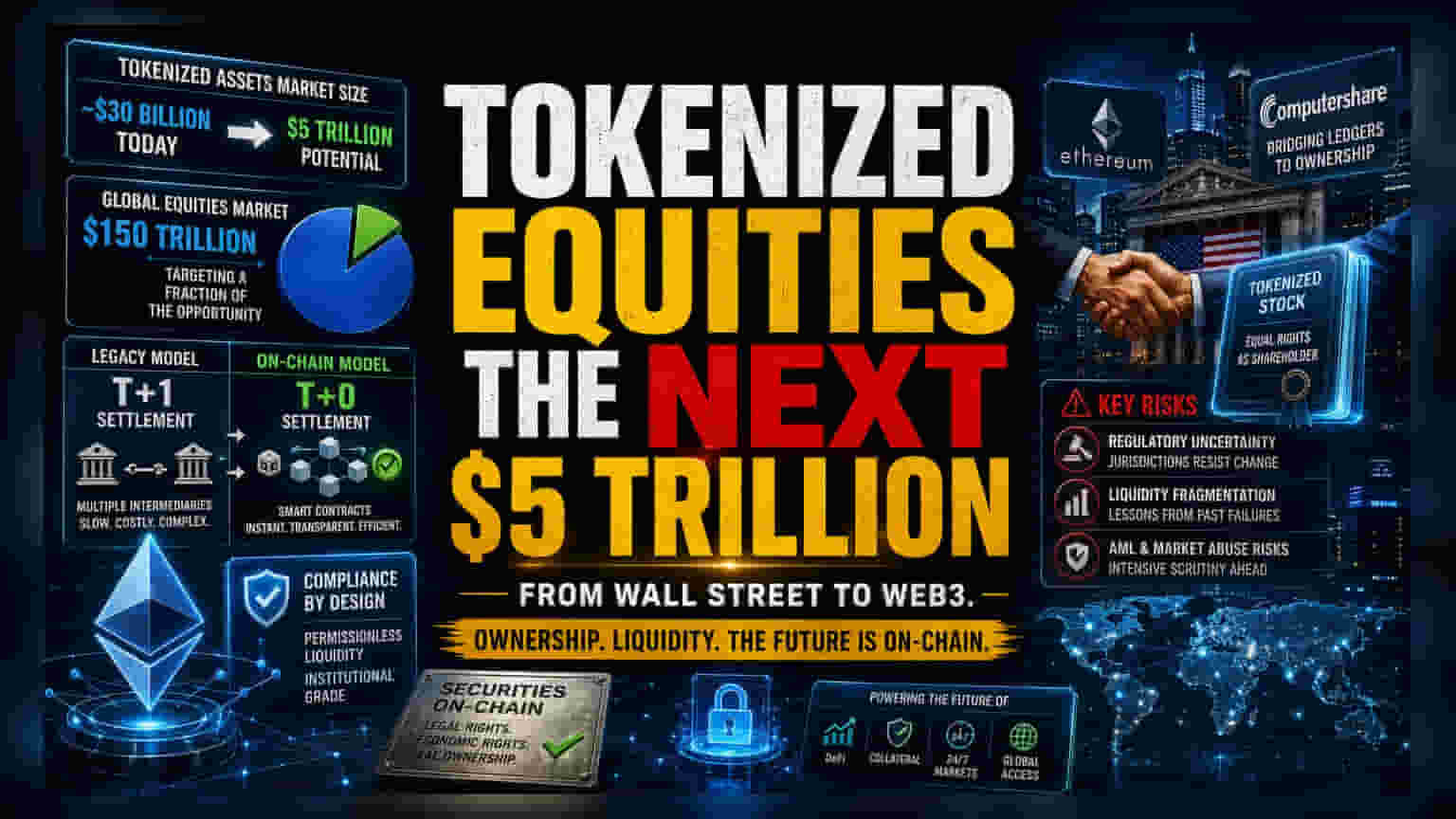


The Shift From Yield to Ownership
The narrative surrounding real-world assets has pivoted away from the short-term yields of tokenized Treasuries toward the structural transformation of global equity markets. By targeting a fraction of the $150 trillion equities market, institutional platforms are attempting to solve the inefficiencies inherent in T+1 settlement cycles and complex intermediary layers. While the current tokenized asset sector hovers near $30 billion, the migration of blue-chip stocks onto public ledgers implies a fundamental redesign of clearing and settlement, moving the operational burden from legacy transfer agents to automated smart contract protocols.
The Infrastructure Disconnect
Recent institutional movements suggest a move toward Ethereum-based architectures that balance permissionless liquidity with strict compliance. Unlike earlier attempts at blockchain-based equities which relied on synthetic wrappers or collateralized tokens, the industry is now pushing for tokenized securities that mirror the legal and economic rights of traditional shareholder status. This alignment with conventional financial law is intended to facilitate seamless integration with decentralized finance, effectively allowing investors to leverage on-chain assets as collateral without exiting the blockchain ecosystem. However, this relies heavily on the cooperation of entities like Computershare to bridge the gap between digital ledger entries and recognized stock ownership records.
Structural Weaknesses and Regulatory Friction
Investors should view the $5 trillion projection with extreme caution due to the formidable regulatory and operational barriers still hindering adoption. The primary risk is not technological but jurisdictional; national securities regulators have shown little appetite for a system that bypasses established broker-dealer requirements. Furthermore, tokenizing equities requires overcoming the liquidity fragmentation that plagued previous efforts by issuers like tZERO, which struggled to maintain robust order books compared to established exchanges like the NYSE or Nasdaq. While proponents highlight 24/7 trading as a key benefit, global market hours are currently synchronized by centralized clearing houses, and an uncoupled, on-chain equity market could face severe pricing disparities and regulatory scrutiny regarding market manipulation and anti-money laundering compliance.
The Future Outlook
Market participants should watch for increased collaboration between blockchain-native firms and established financial infrastructure giants. As BlackRock and other asset managers increase their footprint in the tokenized space, the focus will likely shift from the feasibility of the technology to the creation of standardized digital legal frameworks. If successful, this could reduce administrative costs for issuers, yet the competitive landscape remains crowded with providers vying to become the dominant layer for institutional capital. Whether these assets can achieve mass adoption before a comprehensive regulatory overhaul occurs remains the central uncertainty for the sector.