 Whalesbook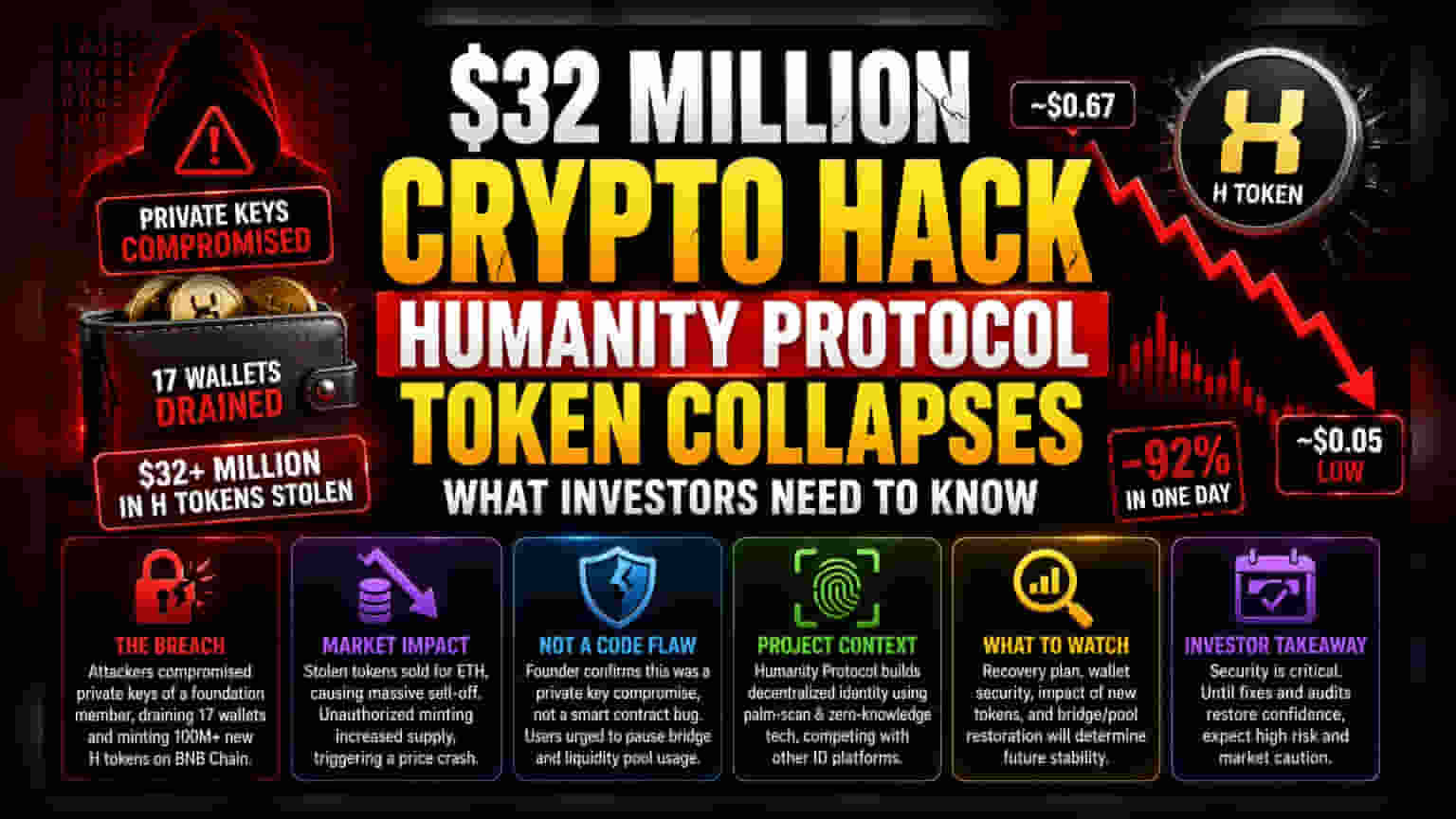


What Happened
The Humanity Protocol, a decentralized identity project, faced a severe security breach resulting in the loss of over $32 million in its native token, H. Attackers successfully compromised the private keys belonging to a member of the Humanity Foundation. These keys, which serve as the digital access codes for cryptocurrency wallets, allowed the attackers to drain approximately 17 wallets. Following the news of the breach, the price of the H token fell sharply, dropping from approximately $0.67 to a low near $0.05, marking a significant decline in a single day.
Why The Market Reacted Negatively
The price collapse was driven by two main factors. First, the attackers immediately began selling the stolen H tokens in exchange for Ether, which created massive selling pressure in the open market. Second, the breach involved an unauthorized minting of 100 million additional H tokens on the BNB Chain. This move effectively increased the total supply of the token, which dilutes the value of existing holdings. Investors often react negatively to such events because they signal a breakdown in security and potential long-term damage to the asset's scarcity and value.
The Nature of the Breach
Founder Terence Kwok confirmed that the incident stemmed from a private key compromise rather than a flaw in the project's underlying software code. In the crypto sector, this distinction is important. Smart contract hacks occur when there is an error in the programming code, whereas private key compromises occur when the administrative access, or the "keys" to the vault, are seized. The project has requested that users pause all interactions with its bridge—a tool used to transfer tokens across different blockchains—and its liquidity pools to prevent further losses while the team collaborates with security experts.
Broader Sector Context
Humanity Protocol aims to build a system for identity verification using palm-scan biometrics and zero-knowledge cryptography. The project positions itself as a competitor to other digital identity initiatives like Worldcoin. This incident highlights a recurring challenge for decentralized projects: the reliance on bridge infrastructure and administrative keys. When these security layers fail, it impacts the entire ecosystem, as seen in recent industry trends where similar key-based thefts have occurred across various decentralized finance platforms.
What Investors Should Track
The immediate focus for stakeholders will be on the project's official recovery plan. Investors are looking for updates on whether the foundation can secure the compromised wallets, mitigate the impact of the newly minted tokens, and eventually restore the functionality of the bridge and liquidity pools. The timeline for these fixes, along with any independent security audit reports, will be key to understanding whether the project can restore user confidence and stabilize its token price. Until these structural issues are resolved, the market will likely remain cautious regarding the project's liquidity and security.