 Whalesbook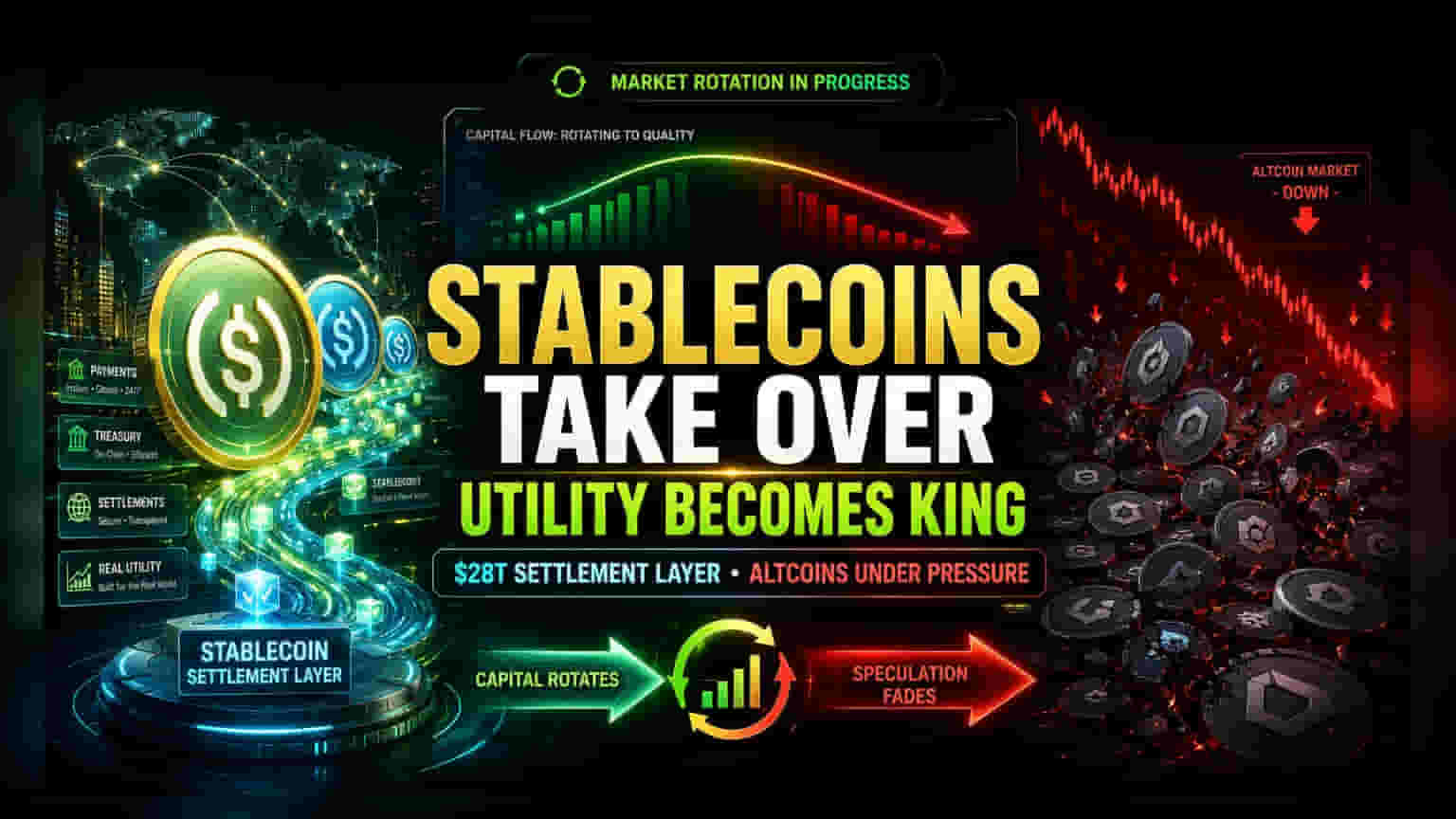


Stablecoins have surged to represent 14% of the crypto market, processing a massive $28 trillion in transaction volume during 2025. This shift toward practical utility creates a tough environment for smaller altcoins, which now face increased pressure to demonstrate real-world value as the broader market contracts.
What Happened
The cryptocurrency market is undergoing a fundamental shift in how value is perceived and generated. Stablecoins, which are digital assets pegged to stable values like the U.S. dollar, have emerged as the primary engines of economic activity within the blockchain ecosystem. By mid-2026, stablecoins accounted for nearly 14% of the total crypto market capitalization, a notable climb from under 3% in 2020. Perhaps more importantly, these assets processed an estimated $28 trillion in transaction volume throughout 2025, a figure that highlights their role as the industry's critical settlement layer for exchanges and payments.
The Rise of Practical Utility
This massive transaction volume signals that blockchain technology is moving beyond pure speculation. Stablecoins like USDT and USDC are increasingly being used as infrastructure rather than as volatile investments. They provide the liquidity necessary for decentralized finance, or DeFi, and facilitate cross-border transactions that are often faster and cheaper than traditional banking systems. This is a clear indicator that the market is favoring networks that can support functional, everyday economic activity. When users or institutions need to move value, they are choosing stablecoins, which serves as a testament to the technology's practical utility.
The Challenge for Altcoins
For the thousands of other cryptocurrencies, collectively known as altcoins, this trend poses a significant hurdle. In a market where total capitalization fell by over 20% in the first quarter of 2026, the era of easy money driven by speculation seems to be fading. Investors are becoming more selective, moving away from projects that only offer a narrative and toward those that can show tangible metrics like active users, application development, and actual economic transactions. With over 17,000 digital assets in existence, the market is becoming crowded and fragmented. Only networks that successfully host useful applications—such as Ethereum, which secures billions in DeFi value, or Solana, which supports robust transaction ecosystems—are managing to maintain investor attention.
Why This Matters for Investors
For investors, this environment suggests a flight to quality. The market is distinguishing between assets that act as utility layers and those that serve merely as speculative bets. If an altcoin cannot demonstrate how it attracts capital or facilitates real-world business, it faces the risk of becoming irrelevant in a landscape where utility is the new benchmark. The concentration of economic activity on a few dominant networks means that smaller, less-established projects may struggle to survive without a clear, functional purpose.
Risks and Market Pressures
The growth of stablecoins also brings its own set of risks. As they become systemic components of the financial system, they attract higher levels of regulatory scrutiny and compliance requirements. Any restriction or negative regulatory event affecting major stablecoins could have a ripple effect across the entire crypto ecosystem. Furthermore, the 20.4% decline in total market capitalization during early 2026 indicates that capital is exiting the space, which reduces the liquidity available for smaller altcoin projects. This macro-level contraction puts immense pressure on development teams to maintain project viability with fewer resources.
What Investors Should Track Next
Investors will likely need to shift their focus toward key performance indicators that show real business health. This includes monitoring the actual number of active users, the volume of transactions occurring on specific networks, and the growth of decentralized applications. It is also important to watch for changes in regulatory policy regarding stablecoins, as these will likely determine the future operational landscape. The ability of an altcoin network to evolve from a speculative asset into a platform that generates actual revenue or facilitates essential services will be the primary factor separating long-term survivors from those that fade away.