

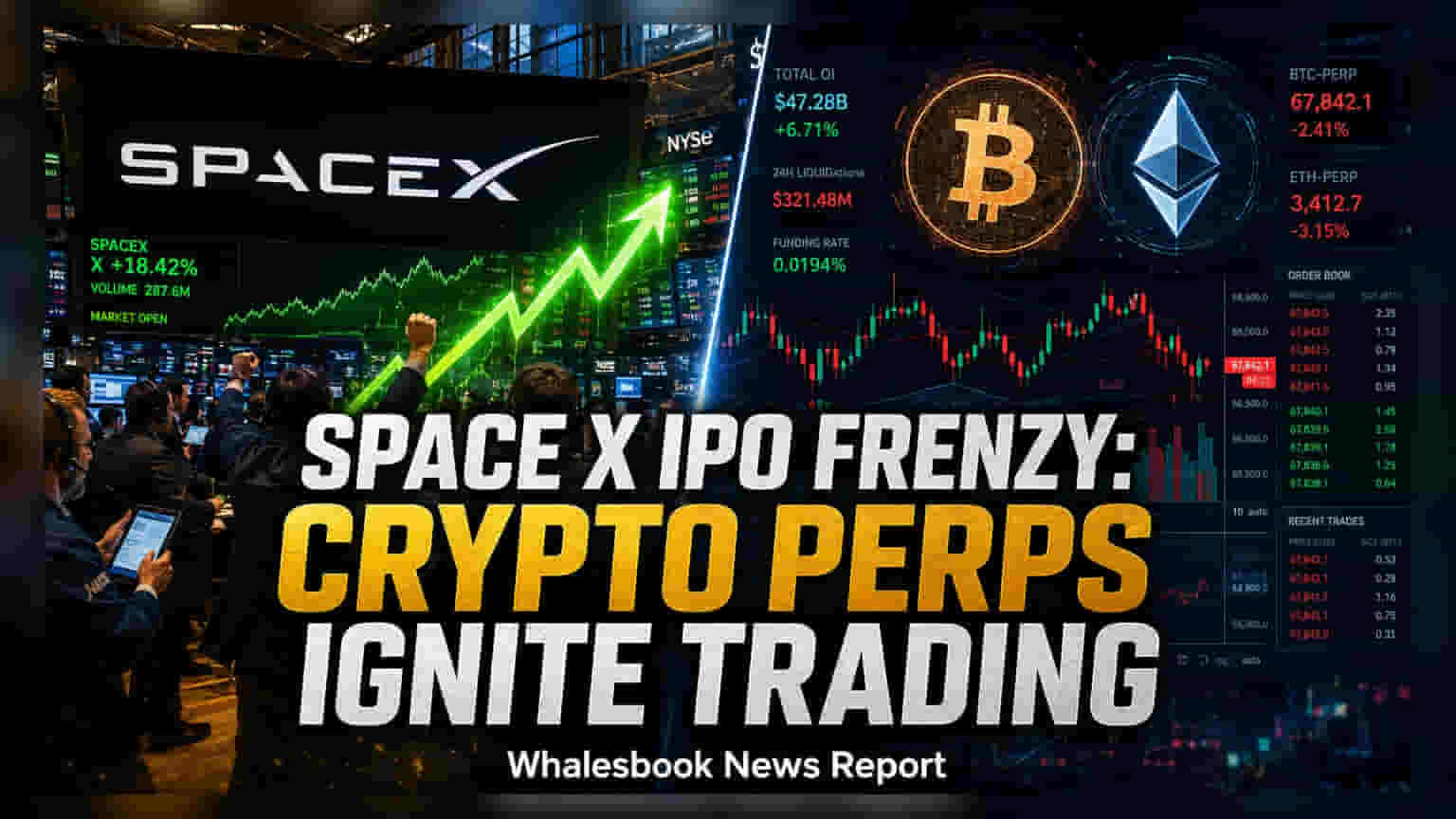
Major cryptocurrency platforms are offering speculative pre-IPO futures tied to SpaceX’s valuation, drawing billions in trading volume. These high-risk derivatives lack a direct link to actual company shares and are currently unregulated, raising significant concerns among financial experts about investor protection and market stability.
Cryptocurrency exchanges are increasingly offering pre-IPO perpetual futures tied to Elon Musk’s SpaceX, allowing traders to speculate on the future share price of the space exploration company. These financial instruments, which are not backed by actual equity, allow investors to bet on SpaceX’s valuation before it officially lists on a public stock exchange. While these products aim to capture the intense market interest surrounding the potential IPO, they operate entirely outside the framework of traditional, regulated financial markets.
High Volume and Speculative Nature
Trading data indicates that these speculative contracts have attracted significant interest. Between mid-May and July 2026, trading volume for SpaceX pre-IPO futures reached approximately $3.2 billion across eight different crypto platforms. Binance accounted for $2.1 billion of this total within an 18-day window. While standard crypto futures often allow for extremely high leverage, these pre-IPO contracts generally limit leverage to between 3x and 5x. Despite this lower leverage, the instruments remain highly volatile, with prices reportedly fluctuating from over $200 down to around $160, even as the company's anticipated IPO price remains near $135.
Regulatory and Market Risks
Unlike traditional stocks or even tokenized assets that may have some form of underlying backing, these pre-IPO futures are essentially synthetic contracts based on internal valuations. Financial lawyers and the World Federation of Exchanges have flagged concerns that participants may misinterpret these derivatives as regulated, secure products. There is currently no direct regulatory oversight for these contracts, which are typically restricted for U.S. investors, making it difficult for traders to seek recourse if pricing mechanisms or platform liquidity fail.
Historically, the prospect of crypto platforms encroaching on equity-like trading has pressured traditional financial stocks. When reports surfaced that U.S. regulators might consider allowing certain crypto derivatives, shares of major incumbents like the Intercontinental Exchange, which owns the New York Stock Exchange, experienced selling pressure. Traditional exchanges view these products as a competitive threat to their regulated model of price discovery and investor protection.
Investor Monitorables
The primary risk for investors is the lack of a legal link between these derivatives and the actual SpaceX company. Because the contracts are not tokenized shares, they do not provide ownership rights or dividends. Investors should track whether global regulators move to curb these products, as increased oversight could lead to abrupt changes in liquidity or trading access on these platforms. Additionally, as other high-profile tech firms prepare for potential public offerings, the reliance of crypto exchanges on these speculative 'pre-IPO' fee models may face further scrutiny regarding their long-term business sustainability and compliance standards.