

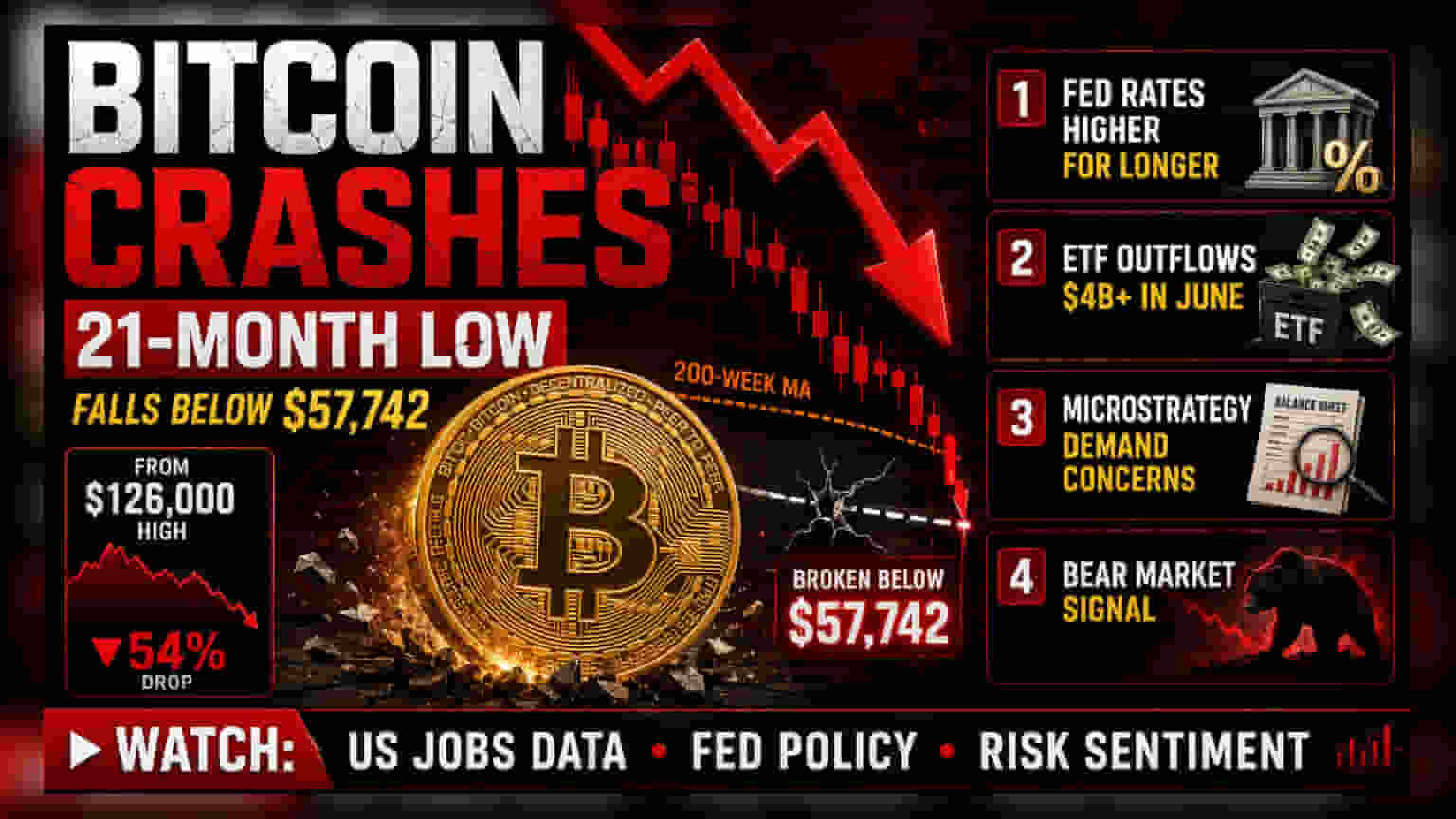
Bitcoin prices have hit a 21-month low, dropping under $57,742, driven by worries over U.S. Federal Reserve interest rate hikes. Record outflows of over $4 billion from U.S. Bitcoin ETFs in June highlight a shift in investor sentiment toward safer assets.
What Happened
Bitcoin, the world’s largest cryptocurrency, has fallen to a 21-month low, dropping below $57,742. This sharp decline marks a significant downturn from the all-time highs of over $126,000 recorded in October last year. The price drop has pushed the asset below its 200-week moving average, a technical level that analysts often monitor to gauge the strength of a market trend. When an asset trades below this level, it is often interpreted by technical analysts as a sign of a prolonged bear market.
The Impact of U.S. Federal Reserve Policy
The primary pressure on Bitcoin comes from shifting expectations around U.S. interest rates. Policymakers at the U.S. Federal Reserve have signaled that they may keep interest rates higher for longer to bring inflation under control. When interest rates rise, borrowing becomes more expensive, and the opportunity cost of holding non-yielding assets like cryptocurrencies increases. This environment naturally encourages investors to move capital out of speculative or risk-heavy assets and into safer options like bonds or cash.
Why ETF Outflows Matter
One of the most concerning indicators for the market is the record level of outflows from U.S.-listed Bitcoin exchange-traded funds (ETFs). In June alone, investors withdrew over $4 billion from these funds, marking the largest outflow since they were launched two years ago. These funds act as a bridge for institutional investors to access Bitcoin. Large-scale withdrawals from these ETFs suggest that big institutional players are actively reducing their exposure to the digital asset class, which removes a key layer of buying support in the market.
The MicroStrategy Factor
Market confidence has also been affected by changes at MicroStrategy Inc., a company known for its large-scale accumulation of Bitcoin. Investors are closely watching the company’s revised financing strategy, which suggests a shift toward prioritizing balance sheet management over the aggressive, consistent buying that previously supported demand for the cryptocurrency. This change has led to concerns that a significant source of corporate demand may be cooling, leaving the market more vulnerable to selling pressure.
What Investors Should Track Next
The immediate focus for market participants is upcoming U.S. economic data, particularly nonfarm payrolls. If this data confirms that the economy remains robust, the Federal Reserve may feel more comfortable maintaining a strict monetary policy. For investors, the key monitorable is how this macroeconomic environment influences global liquidity. If rates stay high, the pressure on risk assets like cryptocurrencies is likely to persist until there is a clear change in the central bank's stance or an improvement in global risk sentiment.