

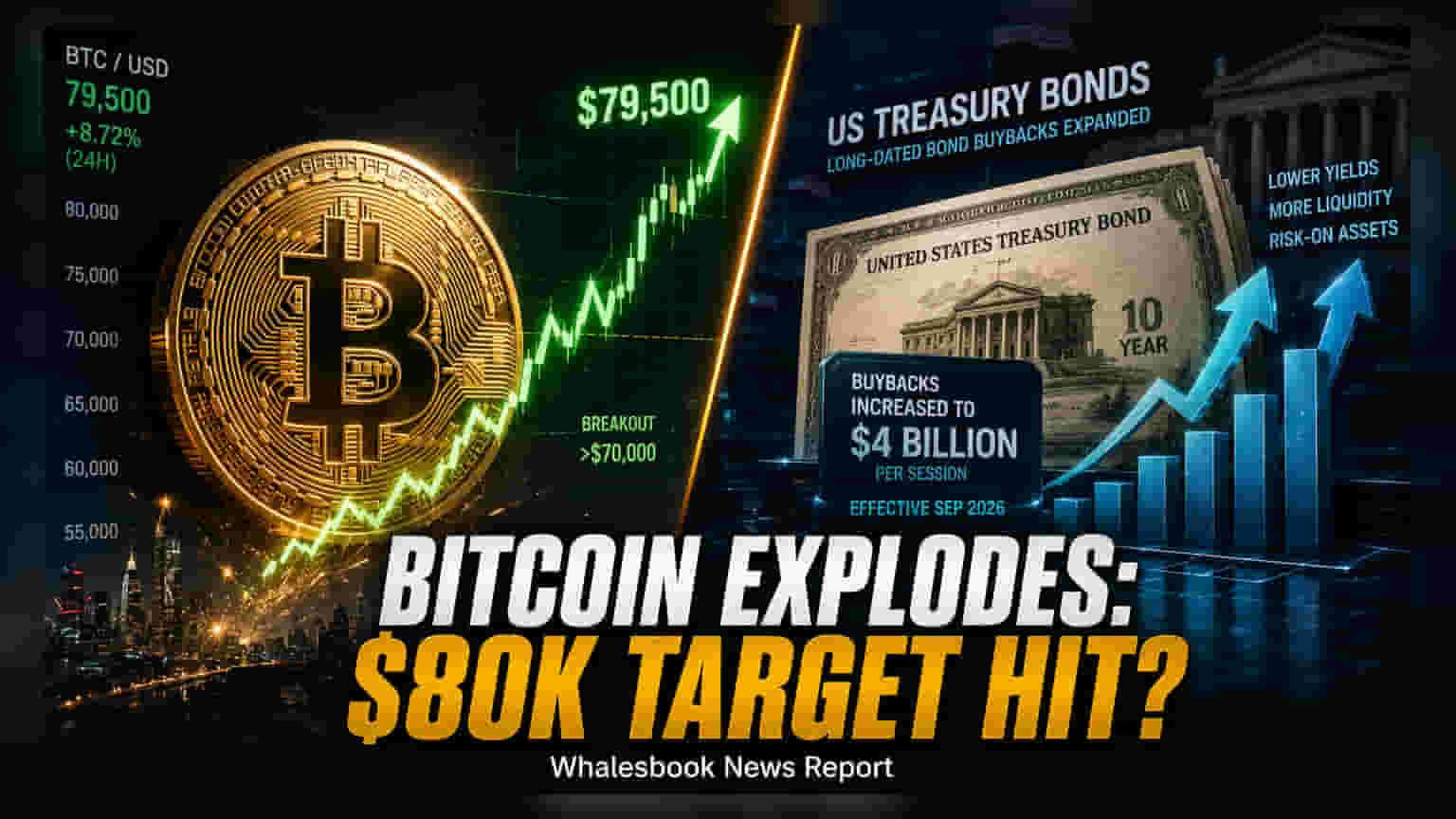
Bitcoin has rallied toward $79,500, fueled by the US Treasury's decision to double long-dated bond buybacks and sustained demand in spot ETFs. The rapid price increase was accelerated by a massive liquidation of short positions, though market analysts remain cautious regarding underlying volatility and regulatory uncertainties.
Bitcoin has experienced a significant price surge, climbing toward the $79,500 level in late August 2026. This upward momentum, which saw the cryptocurrency break past key resistance levels of $69,000 and $70,000 earlier in the week, marks a major shift in market sentiment. The rally is being driven by a combination of macroeconomic policy changes and renewed institutional interest, though it has also highlighted the inherent risks of a market driven by forced trading.
Treasury Policy and Institutional Demand
The primary catalyst for the current market movement is the US Treasury's decision to increase its long-dated bond buyback operations. By raising the maximum operational size from $2 billion to at least $4 billion per session—effective September 2026—the Treasury aims to maintain market liquidity, a move that typically lowers bond yields and encourages investment in risk-on assets like Bitcoin. This policy shift was accompanied by a high-profile White House meeting on August 19, 2026, where President Donald Trump and technology executives discussed the proposed 'CLARITY Act,' aimed at establishing a clearer regulatory framework for the digital asset industry.
Beyond these policy developments, institutional demand remains a structural pillar of the current cycle. US-listed spot Bitcoin ETFs have recorded massive inflows, with single-session volume exceeding $500 million, signaling that large-scale investors are actively accumulating the asset. This consistent institutional buying is distinct from retail speculation, providing a layer of support that many analysts suggest differentiates this cycle from past market movements.
Market Mechanics and Risks
While the price appreciation is notable, a significant portion of this week’s rapid ascent was technical rather than purely organic. Market data indicates that over $1 billion in leveraged bearish bets, known as short positions, were liquidated in a matter of days. This 'short squeeze' occurs when traders betting against the price are forced to buy back the asset to cover their losses, unintentionally pushing the price higher in a rapid, self-reinforcing cycle.
Investors should exercise caution, as rallies fueled by short liquidations can often be followed by periods of consolidation or profit-taking. Furthermore, the macroeconomic environment remains complex. The US national debt has recently surpassed $40 trillion, and there is ongoing debate regarding whether Treasury bond buybacks can effectively manage long-term yields without contributing to broader inflationary pressure. Additionally, while the discussion around the 'CLARITY Act' is viewed as a positive development, regulatory policy in the US remains in flux, and any legislative delays or unfavorable updates could reintroduce volatility.
The key monitorables for market participants in the coming weeks will be the sustained flow of capital into spot ETFs and official updates regarding the implementation of the new bond buyback schedule. As with any volatile asset class, investors may watch for signs of whether this momentum is supported by long-term holders or if it remains sensitive to short-term macroeconomic news and forced market liquidations.