

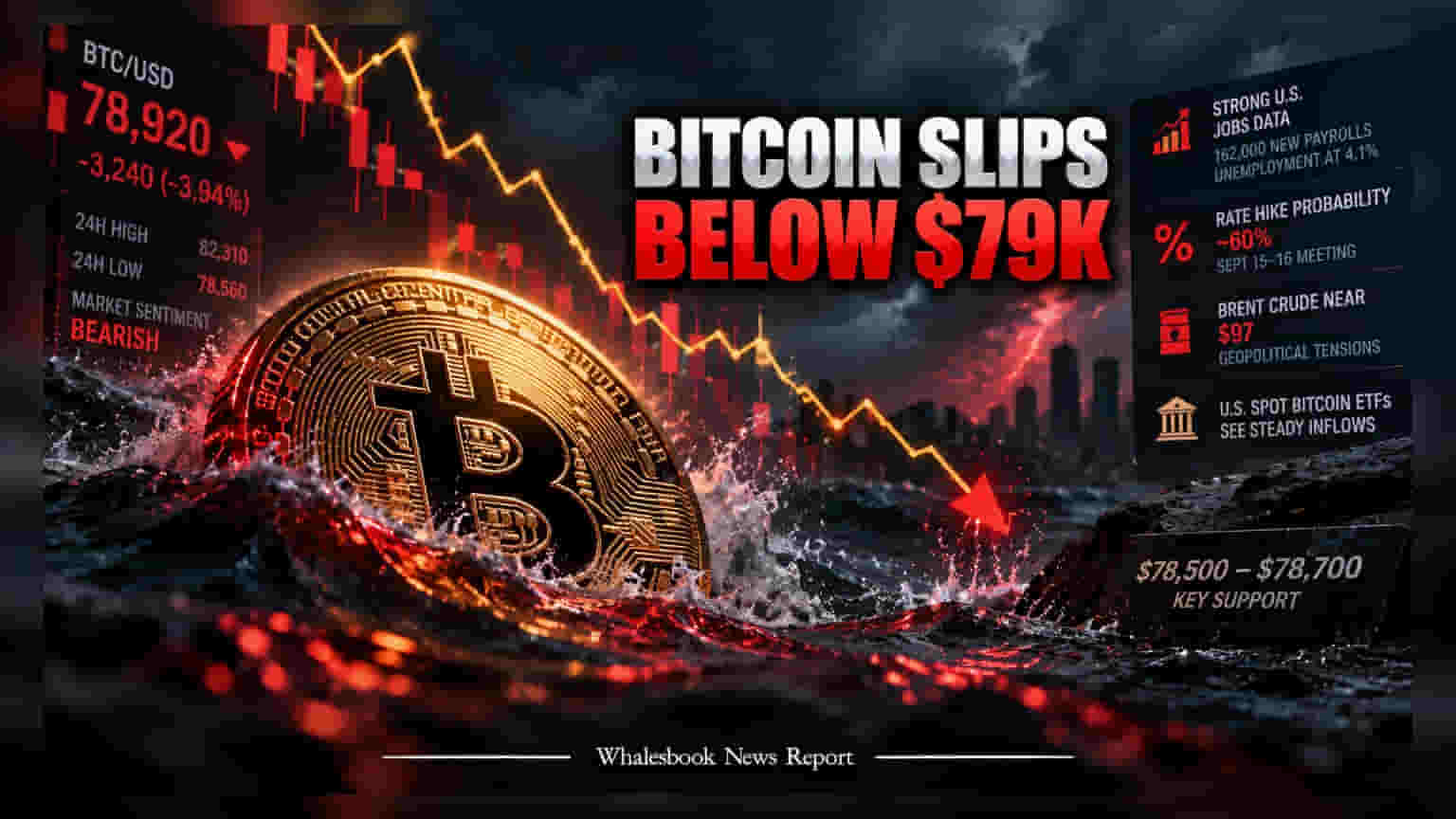
Bitcoin slid under $79,000 as a strong US jobs report boosted the chances of a September Federal Reserve rate hike. Escalating US-Iran tensions have pushed oil prices higher, adding to inflationary fears and pressuring riskier assets. While the price is cooling, steady inflows into spot Bitcoin ETFs continue to provide some support for institutional demand.
Bitcoin is trading below the $79,000 mark after losing momentum from its recent peak of over $82,000. The decline comes as global investors react to a stronger-than-expected US labor market update. The report, which highlighted 162,000 new payrolls added in August and a 4.1 percent unemployment rate, has significantly changed market expectations regarding the Federal Reserve's next move. Current estimates place the probability of an interest rate hike at the September 15–16 meeting at roughly 60 percent.
Rising geopolitical tensions between the US and Iran have further complicated the economic outlook. Brent crude oil prices have climbed toward $97 per barrel, while WTI crude is trading above $92. Higher energy costs often feed into broader inflation fears, which may force central banks to keep interest rates higher for longer. For assets like Bitcoin, which do not pay regular interest or dividends, this environment changes the investment math. As bond yields rise, the opportunity cost of holding non-yielding digital assets increases, often leading investors to favor more traditional, interest-bearing investments.
Despite the recent downward pressure on prices, institutional interest appears to be holding steady. Market data indicates consistent net inflows into US spot Bitcoin ETFs, suggesting that while speculative retail momentum has cooled, institutional confidence remains relatively resilient. This institutional support acts as a buffer against broader market volatility.
From a technical perspective, the asset is currently navigating a sensitive support zone between $78,500 and $78,700. Market participants are watching these levels closely to gauge the next move. A failure to maintain this support range could lead to further testing near the $77,000 level. Moving forward, investors will likely monitor upcoming central bank commentary on interest rates and any new developments in Middle East energy supply, as these factors will remain key drivers of price action in the near term.